Free tool
Ceiling leak tracer for stacked homes
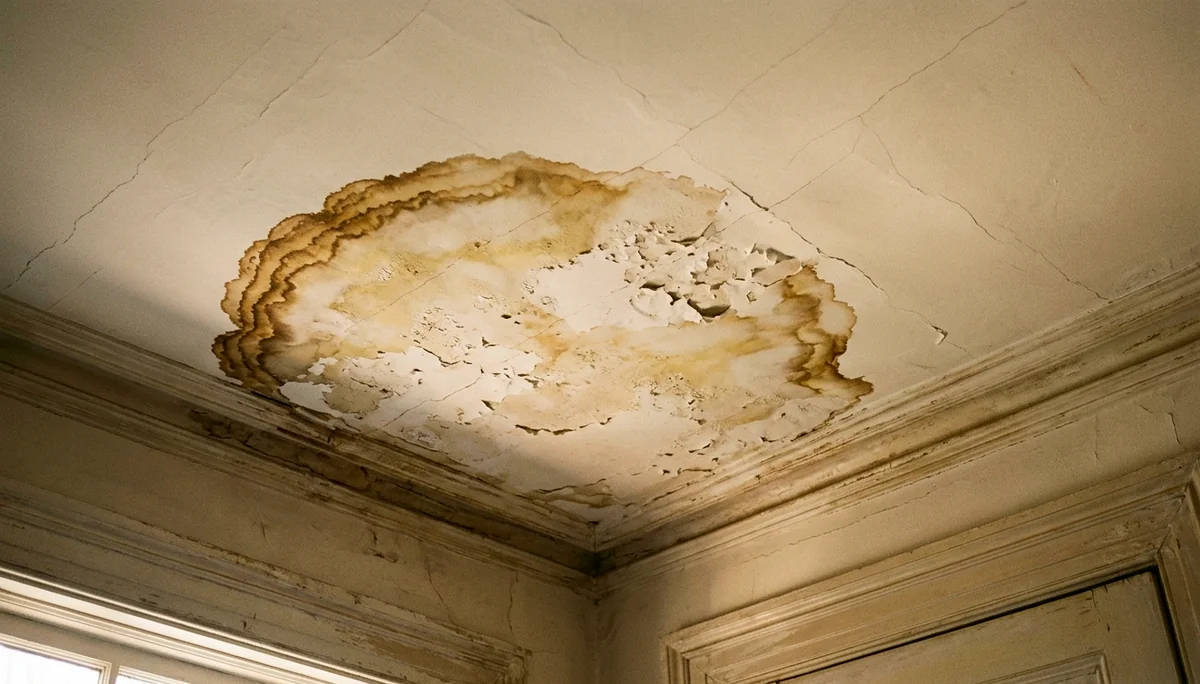
In stacked houses, the stain you see is almost always caused by the floor above. Tell the tracer where the stain is and what sits over it.
Two answers
Trace the stain to its source
Pick both answers
The tracer lights up the floor above and the fixture that most often causes a stain in that spot.
Why the floor above is almost always the answer
Water runs downhill and sideways. In a two- or three-family house the bathrooms and kitchens are usually stacked one over another so they can share the same cast-iron drain stack. A leak upstairs soaks the floor, runs along a joist, and shows up on the ceiling below, sometimes several feet away from the fixture that caused it.
That is why the tracer asks what sits above the stain rather than what is next to it. Once you know the likely fixture, a simple test usually confirms it: run that one fixture for five minutes and watch the stain.
When to stop testing and call
If the stain is soft, sagging or dripping, stop running water above it and shut the fixture valve or the main. Wet plaster ceilings can come down without much warning. If the stain is near a light fixture, keep the switch off. Then call (860) 926-8723 and a plumber will trace it with a moisture meter and, if needed, a small inspection opening rather than tearing out a whole ceiling.
FAQ
Ceiling leak questions
No. The tracer points you to the most likely fixture so you can test it or describe it on the phone. A plumber confirms the source with a moisture meter and by isolating fixtures, which matters when several units share a drain stack and the leak may belong to a neighbor.
Because it follows use. A stain that grows in the morning often tracks showers upstairs; one that grows after dinner points to the kitchen sink or dishwasher. A stain that grows around the clock usually means a pressurized supply leak, which is more urgent.
Water coming through right now?
Shut the fixture valve or the main, then call. We answer 24/7.