Boiler Repair
When the boiler quits on a January night, the radiators go cold fast and the pipes are next. We repair steam and hot-water boilers, from the burner to the last radiator.
Learn moreBoilers & specialty
When an old boiler is cracked, rusted through or costing a fortune in repairs, a new one sized right for the house can heat better and burn less fuel. Sizing is where most installs go wrong.
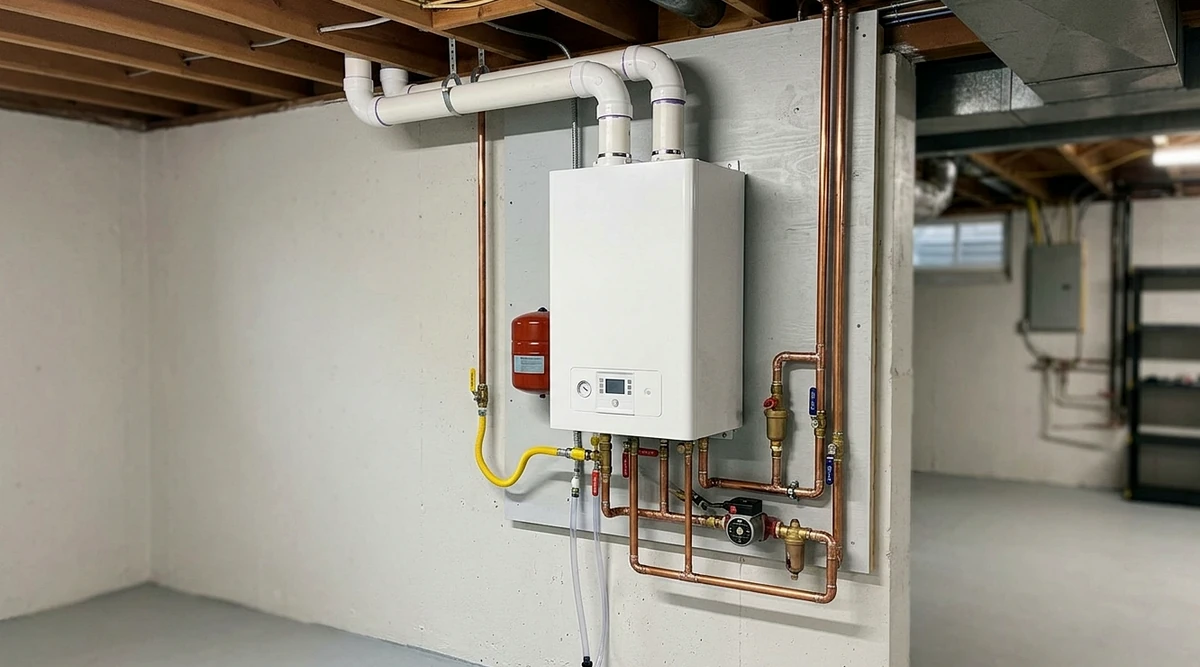
Boiler replacement removes your old steam or hot-water boiler and installs a new one sized to the home's heat loss or radiation, with proper near-boiler piping, venting and controls. Typical Hartford-area costs run about $6,840 to $16,960 depending on type and fuel. We answer 24/7, visit to size the system and quote the full price before work starts.
Hot-water boilers should be sized to the home's heat loss, calculated from insulation, windows, wall area and the local design temperature, not by copying the old boiler's rating off its data plate. Many older boilers were oversized from the start, and the gap grew after insulation and window upgrades. An oversized boiler short cycles, wastes fuel and wears out faster.
Steam boilers are sized differently: by measuring every radiator in the house and adding up their equivalent direct radiation, plus a pickup allowance for the piping. Undersized steam boilers never fill the mains; oversized ones waste fuel and push water into the pipes. We measure each radiator, count sections, check the mains and look at past fuel use before picking a boiler.
Steam systems usually get a new steam boiler, since converting a steam system to hot water means replacing pipes and often radiators. Modern steam boilers need careful near-boiler piping with the manufacturer's riser height, header layout and equalizer; skipping that is the main reason new steam boilers run wet, surge and bang in otherwise healthy systems.
Hot-water systems can use a high-efficiency condensing boiler, which captures extra heat from flue gas and vents through plastic pipe. They work best with lower water temperatures, so radiators and outdoor reset controls matter. A cast-iron hot-water boiler is simpler and tolerates older systems. We explain which fits your house, your radiators and your budget, including the vent route each one needs.
A full replacement includes disconnecting and removing the old boiler, setting the new one, near-boiler piping, venting, gas or oil connections, wiring and controls. Hot-water systems get a new expansion tank, air separator, circulators and fill valve where needed. Steam systems get a new low-water cutoff, pressuretrol and sight glass with the boiler, plus new main vents if the old ones have failed.
Before startup, we flush or skim the system to remove sludge and oil from the new boiler, then fire it, check combustion, set controls and test safety devices. We bleed air or check steam vents and walk you through the controls. Many boiler replacements need a permit and inspection, which we handle with the town.
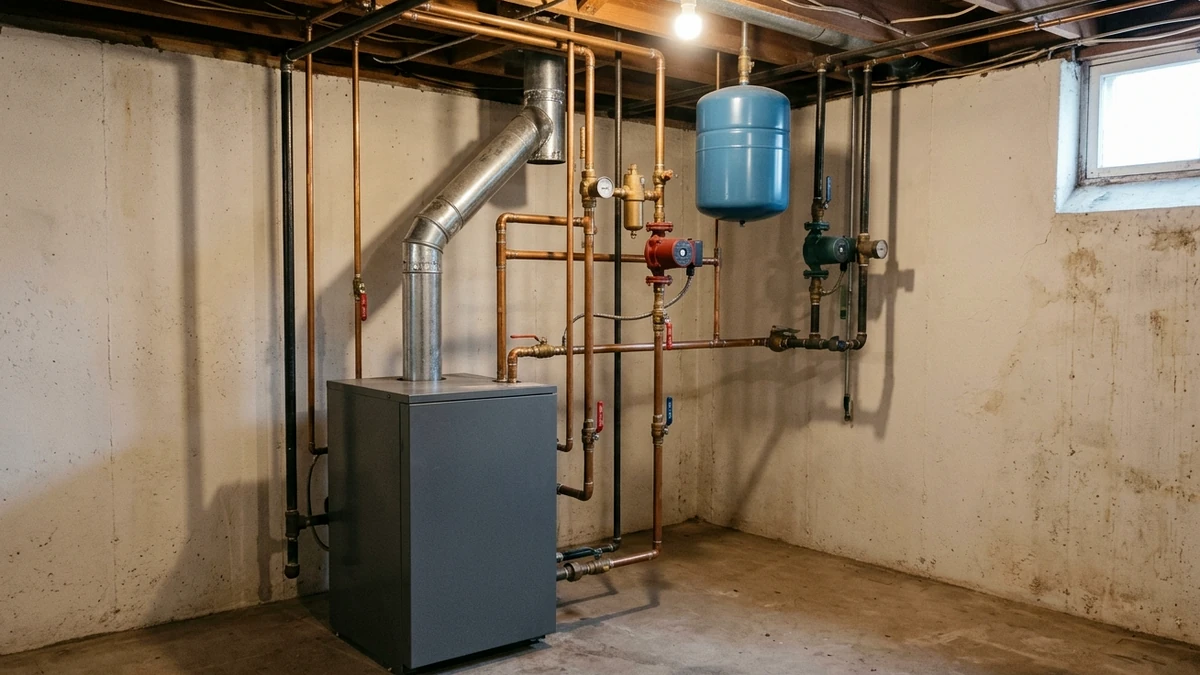
Many Hartford homes and multi-family buildings still heat with original steam or hot-water systems, sometimes with boilers replaced several times on the same old piping. Two- and three-family houses may have one boiler serving all units or separate boilers per apartment. Some homeowners are converting from oil to natural gas, and Energize CT may offer efficiency incentives, so check current Energize CT offers before choosing a boiler.
Boiler type, size, fuel, venting changes and the amount of near-boiler piping and controls work move the price. Typical Hartford-area range, confirmed on site before work starts. Compare all prices.
Process
We calculate heat loss or measure radiators, check piping, venting and fuel.
We recommend a boiler and quote the full price before work starts.
We remove the old boiler, then set, pipe, vent and wire the new one.
We fire the boiler, test safeties, set controls and haul away the old boiler.
FAQ
Many boiler replacements take two to three days, depending on the system and how much piping and venting needs to change. Steam boilers with new near-boiler piping and oil-to-gas conversions often take longer. We plan the work to limit time without heat and can bring temporary heat if replacement happens in cold weather.
It is possible, but it usually means replacing pipes and often radiators, since steam systems use larger mains and different piping. Most steam homes get a new steam boiler sized and piped correctly. We explain the cost and work involved if you are considering a conversion.
It can be for hot-water systems, especially when radiators can heat the house at lower water temperatures. Condensing boilers need proper venting and a condensate drain. Steam systems need a steam boiler, which works differently. We look at your radiators and house to explain the likely benefit.
Related work
When the boiler quits on a January night, the radiators go cold fast and the pipes are next. We repair steam and hot-water boilers, from the burner to the last radiator.
Learn moreOne cold room, a radiator that hisses and spits, or a puddle under a baseboard can make the whole heating system feel broken. Usually the problem sits at that...
Learn moreYour house already has a hot-water boiler, but domestic hot water comes from a tankless coil that runs lukewarm or a separate heater burning fuel on its own....
Learn moreA plumber answers, day or night, and gives you a price before any work starts.