Boiler Repair
When the boiler quits on a January night, the radiators go cold fast and the pipes are next. We repair steam and hot-water boilers, from the burner to the last radiator.
Learn moreBoilers & specialty
One cold room, a radiator that hisses and spits, or a puddle under a baseboard can make the whole heating system feel broken. Usually the problem sits at that one radiator, and it is fixable.
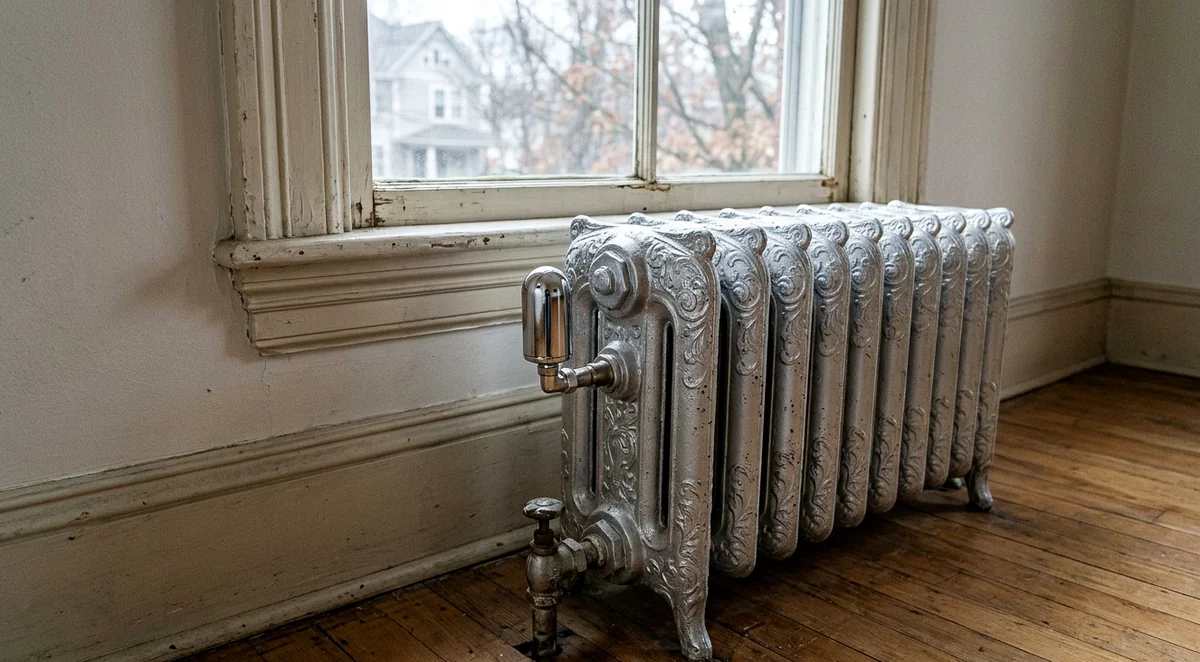
Radiator and baseboard repair fixes cold, leaking, noisy or stuck radiators and baseboard heaters, including valves, air vents, bleeders, leaking connections and pitch on steam radiators. Typical Hartford-area repairs run about $165 to $1,185. We answer 24/7, come out promptly in cold weather and quote the price before work starts.
Steam radiators depend on their air vents. When the boiler fires, air must leave the radiator so steam can enter; the vent then closes when steam reaches it. A vent that is clogged with minerals stays shut, and the radiator stays cold. A vent stuck open hisses steam and spits water. Replacing the vent often fixes the problem in minutes.
One-pipe steam radiators also need a slight pitch back toward the supply valve so condensate drains out. When floors settle or a radiator gets bumped, water pools inside and the radiator bangs or heats unevenly. We shim the far end so the water drains. Supply valves on one-pipe radiators must be fully open; a half-closed valve traps water.
Hot-water radiators and baseboard heat by circulating water, and trapped air is the most common reason one is cold, especially at the top or on upper floors. Bleeding the radiator with a key at the small vent lets the air escape. If air keeps returning, the system may have a leak, low pressure or a failing air separator.
Baseboard leaks usually show up at soldered joints, at the elbows behind the end caps or where a fin tube was damaged by a vacuum or furniture. We cut out and replace the bad section. Bent fins can be straightened to improve heat output. A cold baseboard loop may also point to a stuck zone valve or a circulator problem at the boiler.
Old radiator valves leak at the stem packing, and the fix is often new packing rather than a whole new valve. Cracked or seized valves need replacing, which means draining the system or, on steam, waiting until the boiler is off. Leaking unions between the valve and radiator can sometimes be resealed without replacing parts.
Cast-iron radiators are heavy, and moving one for floor refinishing or painting takes care and the right equipment. We disconnect, cap the pipes and reconnect afterward. Rarely, a cast-iron radiator section cracks, usually from freezing in an unheated house, and the radiator has to be replaced or rebuilt. We measure the room and check whether a replacement radiator of similar size and section count will heat it properly.
Cast-iron radiators are everywhere in Hartford's older homes, from Asylum Hill Victorians to West End two-families and Perfect Six buildings in the South End. Many still run on one-pipe steam with original piping, while others were converted to hot water decades ago. Floors in old houses settle over time, so radiator pitch is a common fix, and January cold quickly shows which radiators are not doing their share.
A vent or bleed is quick; replacing valves, baseboard sections or moving heavy radiators costs more. Typical Hartford-area range, confirmed on site before work starts. Compare all prices.
Process
Call (860) 926-8723 and tell us whether you have steam or hot water and what the radiator is doing.
We check vents, valves, pitch, air and leaks at the radiator and look at the boiler if needed.
We replace the vent or valve, bleed air or fix the leak, quoting the price before work starts.
We run the heat, confirm the radiator warms evenly and clean up drips and dust.
FAQ
On steam systems, the vent is often clogged or the supply valve is partly closed. On hot-water systems, trapped air is the most common cause, especially on upper floors. Both can also come from boiler or piping issues. We check the radiator first, then the system, so the fix targets the actual cause.
Usually, yes. Banging in one-pipe steam radiators often comes from trapped water, caused by a radiator pitched the wrong way or a supply valve not fully open. We shim the radiator, open the valve fully and check the vent. If the banging is in the mains, we look at pitch and boiler water level too.
Many homeowners bleed radiators at the start of the heating season, especially on upper floors. If air keeps coming back, the system may have a small leak, low pressure or an air separator problem. Steam radiators should not be bled the same way; they rely on their automatic air vents.
Related work
When the boiler quits on a January night, the radiators go cold fast and the pipes are next. We repair steam and hot-water boilers, from the burner to the last radiator.
Learn moreWhen an old boiler is cracked, rusted through or costing a fortune in repairs, a new one sized right for the house can heat better and burn less fuel. Sizing...
Learn moreWhen a pipe leaks in a three-family house, it is rarely one apartment's problem. Landlords need fast, organized repairs that keep units livable and tenants informed.
Learn moreA plumber answers, day or night, and gives you a price before any work starts.