Tankless Water Heater Service
The tankless heater is flashing an error code, the water goes hot then cold, or it simply will not fire. These units are reliable when maintained and...
Learn moreWater heaters
You want hot water that does not run out halfway through the second shower, and you want the basement floor space back. A tankless heater can do both, if the gas, venting and sizing are done right.
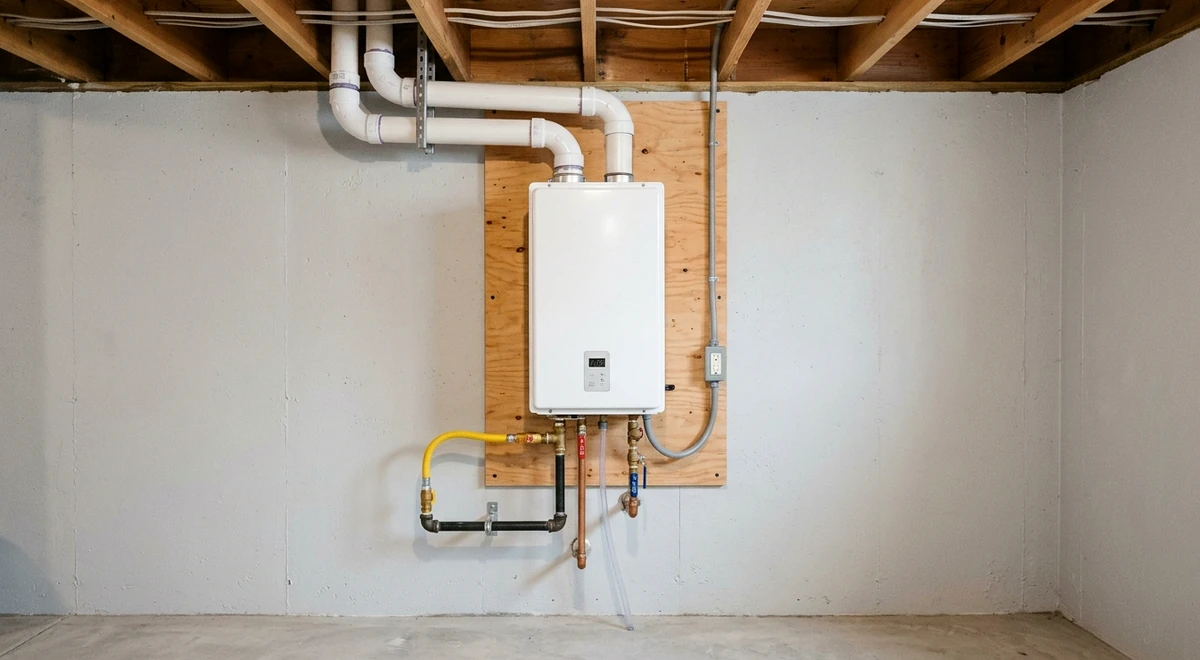
Tankless water heater installation replaces a storage tank with a wall-hung unit that heats water only as it flows, using gas or, less often, electric power. Typical Hartford-area installs run about $3,465 to $6,285, depending on gas line and venting work. We answer 24/7, survey the house first, and usually schedule the install within a week.
Tankless units are rated by how many gallons per minute they can heat by a given temperature rise. In a Connecticut winter, incoming water can be quite cold, so the heater has to lift it much further than in summer. A unit that handles two showers in July may only handle one in February. We size for the coldest incoming water you will see, not the label's best case.
We add up the fixtures likely to run at the same time, such as two showers and a dishwasher, and match that flow to the unit's capacity at your winter rise. For large homes or heavy demand, two units in a cascade setup may be the right answer. An undersized tankless heater is the most common reason owners end up unhappy.
A gas tankless heater can draw several times more gas at full fire than a standard tank. Many older houses have half-inch gas piping sized for a range and a small tank, and that cannot feed a tankless unit. We measure the pipe length and size from the meter, check the meter capacity, and often run a new, larger gas line to the heater.
Most condensing tankless units vent with PVC or polypropylene pipe through a side wall or roof, with a separate intake for combustion air. Vent terminations must keep proper distances from windows, doors, the ground and the gas meter, which matters in tight city lots. Condensing units also need a condensate drain, often with a neutralizer, routed to a floor drain or pump.
Tankless heat exchangers have narrow passages, and scale from hard water can restrict them. MDC water is soft, which helps, but homes on private wells east of the river can have harder water. Where hardness is high, a scale reduction filter or softener ahead of the heater protects it. We install isolation valves with service ports so the unit can be flushed easily.
Plan on a descaling flush and inlet filter cleaning on a regular schedule, often yearly, and more often on hard water. Many units have a recirculation option or work with a recirculation pump so hot water arrives faster at distant fixtures. We explain the controls and the error codes so you know what the heater is telling you.
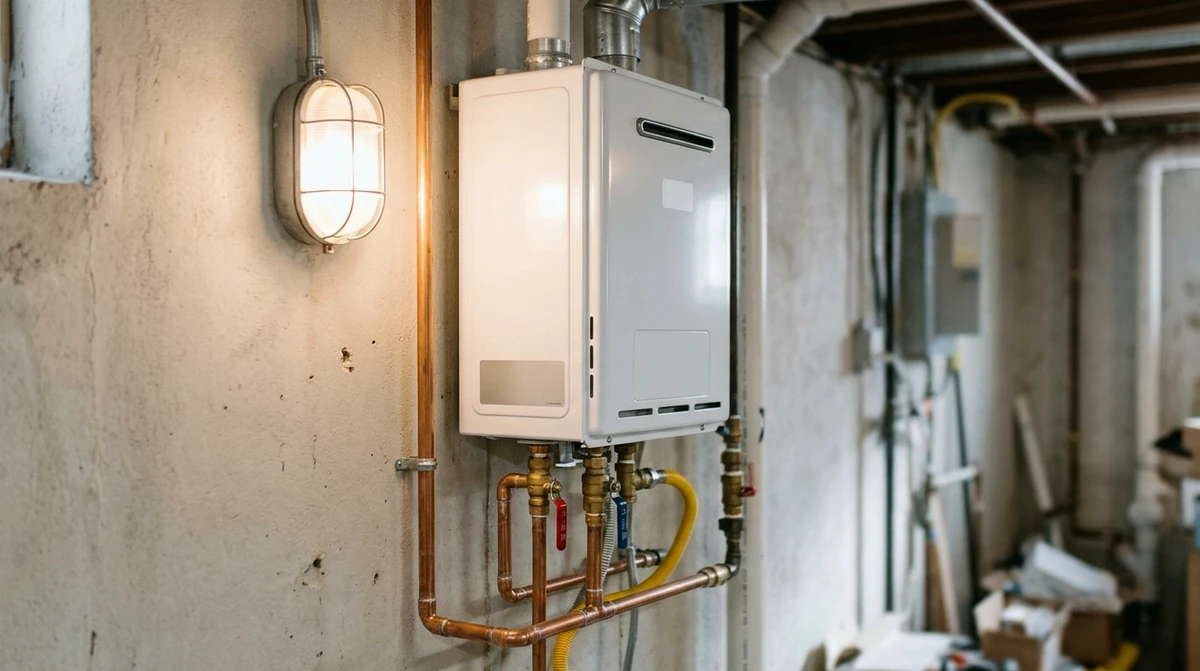
Hartford-area houses often have basements with old chimneys, narrow gas piping and limited outside wall space between neighbors, so venting and gas line work drive the cost of a tankless install more than the unit itself. In two- and three-family homes, each unit usually gets its own heater, and we plan vent locations so they meet clearances. Homes on wells in Vernon, Ellington and Tolland may need water treatment first. Check current Energize CT offers for high-efficiency equipment.
Gas line upgrades, venting route, unit size and whether a cascade or recirculation is needed change the price most. Typical Hartford-area range, confirmed on site before work starts. Compare all prices.
Process
We check fixtures, incoming water, gas piping, meter capacity and venting routes to choose the right unit.
You get one price covering the unit, gas line upgrade, venting, condensate drain and removal of the old tank.
We mount the unit, run gas and vent piping, add service valves and connect water and condensate lines.
We test gas joints, check combustion and flow, set the temperature and show you how to maintain it.
FAQ
Not always, but often in older homes. A tankless unit needs much more gas at full fire than a tank, so we measure your existing piping and meter. If the pipe is too small or too long, the heater will starve and throw error codes. We tell you after the survey whether an upgrade is needed.
Most installs take one full day, including removing the old tank, running gas and vent piping and testing. Jobs with long gas runs, roof venting or two units in a cascade can take longer. Hot water is off for most of that day, and we restore it before we leave.
A tankless unit avoids the standby loss of keeping a tank hot all day, so gas use usually drops, especially in smaller households. The savings depend on how much hot water you use and what you are replacing. We give an honest view of savings rather than promising a number.
Related work
The tankless heater is flashing an error code, the water goes hot then cold, or it simply will not fire. These units are reliable when maintained and...
Learn moreThe tank is leaking from the bottom, or it is old enough that every repair is money down the drain. A replacement done right means the right size, safe venting...
Learn moreAdding a gas range, dryer, generator or grill means running a new line that is sized right, supported properly and tested before gas ever reaches the...
Learn moreA plumber answers, day or night, and gives you a price before any work starts.