Burst Pipe Repair
A pipe has split and water is running into the walls, ceiling or basement. Every minute adds to the damage, so the first job is stopping the flow and the...
Learn moreEmergencies & leaks
You turn on the kitchen faucet on a frigid morning and get a trickle or nothing at all. A frozen pipe is a warning, and thawing it the right way is the difference between a service call and a flooded floor.
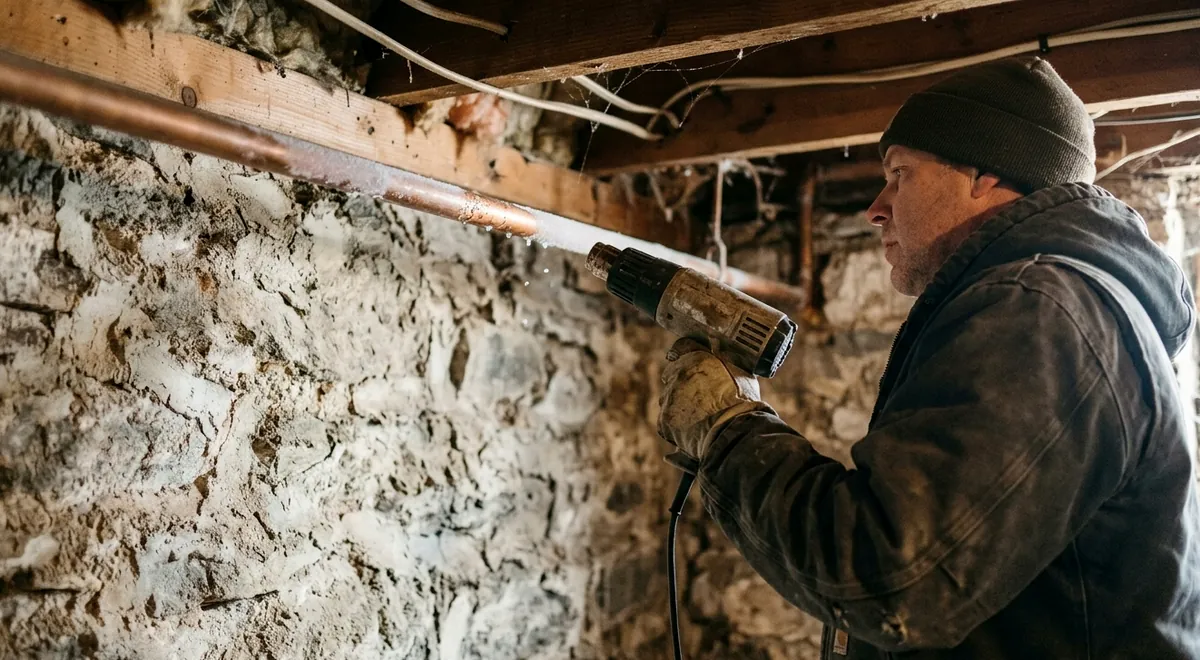
Frozen pipe service means finding the frozen section, thawing it with controlled heat, and repairing any splits before water flows through them. Most Hartford-area thaw visits run about $215 to $595, more if a pipe has cracked inside a wall. We answer 24/7 through cold snaps and get to no-water calls as quickly as our vans can reach you.
Pipes freeze where cold air reaches them, not just where the house feels cold. The usual spots are kitchen sink supplies on exterior walls, lines that run through a crawl space or over a garage, outside hose bibs that were never shut off, and pipes near a basement rim joist where a gap in the sill lets wind blow in. Bathrooms built onto back porches are another common trouble spot.
In many older Connecticut homes, the water service enters through a foundation wall that has little insulation. When the frost line drops deep in a long cold spell, the meter area and the first few feet of pipe can freeze too. A sudden loss of water to the whole house in a deep freeze usually points to the service line or the meter, not a branch line.
We never use an open flame against a wall cavity or near framing. We use heat guns, heat lamps, warm air and, on metal lines, electric pipe thawing equipment that warms the pipe from the inside by passing current through it. Each method has limits, so the plumber picks based on pipe type: PEX and CPVC cannot take the same heat as copper.
Before we thaw, we open the nearest faucet so melting ice and water have somewhere to go and pressure does not build. We start warming from the faucet end and work back toward the frozen section. When water begins to move, we watch the full run for drips, because a split hidden by ice will start leaking the moment it thaws.
Once water is flowing, we look at why that run froze. Often it is a simple fix: foam the gap in the rim joist, insulate an exposed pipe with closed-cell sleeve, or close a crawl space vent for winter. On kitchen sink lines along outside walls, leaving the cabinet doors open on frigid nights lets room heat reach the pipes.
For runs that freeze every winter, rerouting the line to an interior wall is the permanent fix. Where that is not practical, self-regulating heat cable listed for use on water pipes, plugged into a GFCI outlet, can keep the line above freezing. Replacing an old hose bib with a frost-proof sillcock stops a very common freeze point at the outside wall.
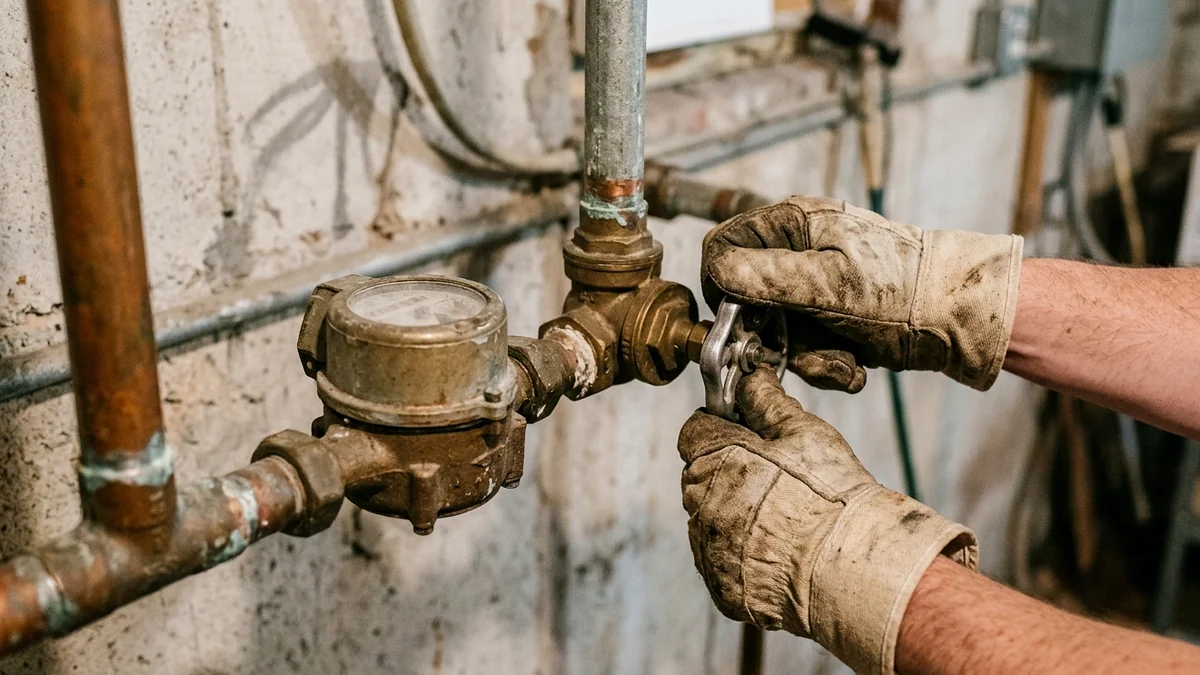
January and February cold snaps hit Hartford hard, and older two- and three-family homes are especially exposed: supply risers in outside walls, plumbing on enclosed back porches, and basements with fieldstone or brick foundations that let cold air in. In vacant or between-tenant apartments, a low thermostat setting is enough to freeze a line. We work frozen pipe calls in Hartford, Vernon, Manchester, Bloomfield and nearby towns through every cold stretch.
How deep in a wall or ceiling the frozen section sits, and whether it split, move the cost most. Typical Hartford-area range, confirmed on site before work starts. Compare all prices.
Process
We check which fixtures have water and trace the cold run to find the frozen section.
We open the downstream faucet and apply controlled heat suited to the pipe material, working back from the open end.
As water starts to flow we inspect the whole run and repair any crack before leaving.
We insulate, seal drafts or recommend a reroute or heat cable so the same pipe does not freeze next week.
FAQ
You can try gentle heat on an exposed pipe: a hair dryer or space heater kept a safe distance away, with the faucet open. Never use a torch, propane heater or open flame, especially near wood framing. If the pipe is inside a wall, if nothing changes after half an hour, or if you see any crack, shut the main and call us.
On the coldest nights, a thin steady drip from a faucet on an outside wall helps, because moving water is slower to freeze and an open tap relieves pressure if ice starts to build. Open the cabinet doors under that sink too. It is a short-term measure, not a fix, so a line that freezes every winter needs insulation or rerouting.
Often you cannot tell until the ice melts and water starts leaking through the split. Look for bulges, lengthwise cracks or frost on one spot of exposed pipe. If you suspect a burst, know where your main shut-off is before thawing begins, and keep watching the area closely as the pipe warms up.
Related work
A pipe has split and water is running into the walls, ceiling or basement. Every minute adds to the damage, so the first job is stopping the flow and the...
Learn moreAn outdoor faucet that drips, sprays from the handle or floods the basement the first time you hook up a hose in spring usually split during the winter. It is...
Learn moreWhen every fix uncovers another pinhole or rusty joint, patching stops making sense. Repiping swaps the tired supply lines in your house for new ones in a...
Learn moreA plumber answers, day or night, and gives you a price before any work starts.