Sink Installation
A new countertop, a cracked basin, or a laundry room that needs a utility sink. Swapping a sink looks simple until the drain height, trap arm and old stops get involved.
Learn moreKitchen & bath
The kitchen faucet drips all night, the bathroom handle is stiff, or water pools in the cabinet every time you rinse a dish. A faucet gets used more than any other fixture in the house, and it shows.
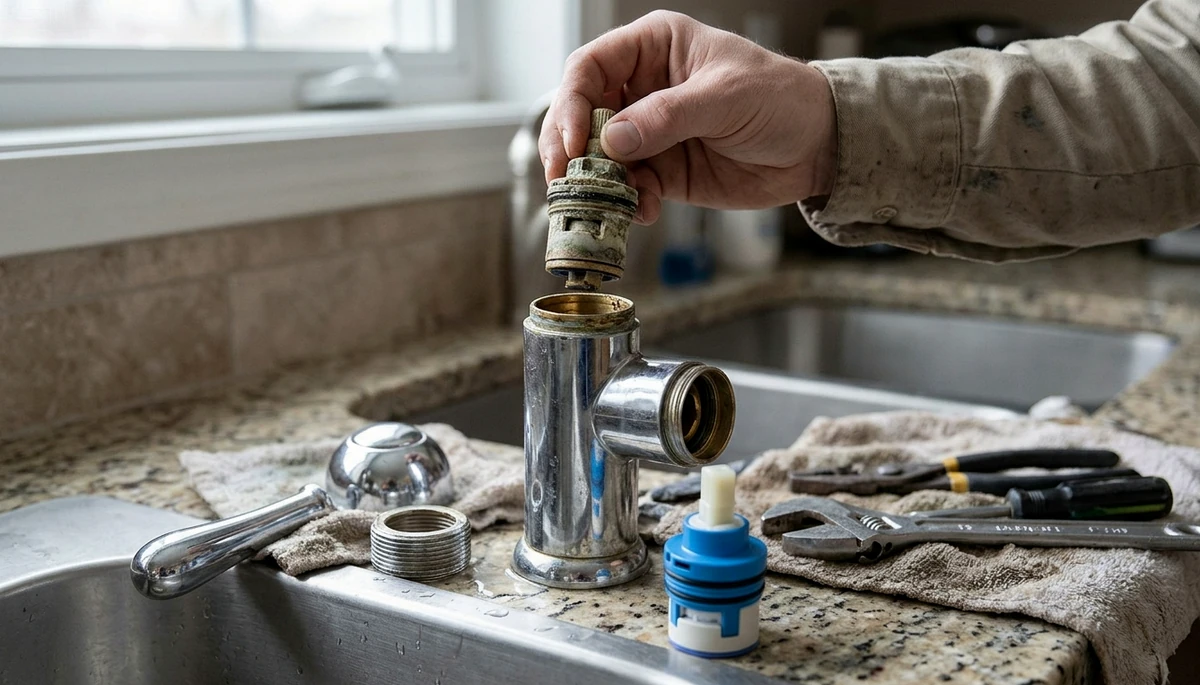
Faucet repair replaces worn cartridges, washers, O-rings and seats so a faucet stops dripping, while replacement swaps the whole faucet when parts are worn out or the style no longer suits. Typical Hartford-area jobs run about $145 to $485 plus the faucet. We answer 24/7, carry common cartridges and usually finish in a single visit.
Most dripping faucets have one worn internal part. Older two-handle compression faucets use rubber washers pressed against a brass seat, and both the washer and the seat wear down. Newer faucets use ceramic disc cartridges, ball assemblies or plastic cartridges sealed with O-rings. Identifying the faucet type and brand is the first step, because a cartridge that looks close but is a few millimeters off will never seal.
We close the stops under the sink, pull the handle and the cartridge or stem, and compare it against the parts on the van. Pitted brass seats get dressed with a seat tool or replaced outright. Weak flow from a single faucet is very often a clogged aerator or a cartridge screen packed with grit, especially after street work or a water main repair stirs up the pipes.
If the faucet body is corroded, the finish is flaking, parts are no longer made, or it has already been rebuilt twice, a new faucet usually costs less over time. Replacement also lets you move to a pull-down sprayer, a single handle or a style that fits a kitchen update. Before you buy, count the holes in the sink or counter and measure their spacing so the new faucet and its deck plate cover them.
On every replacement we install new braided supply lines and test the angle stops, replacing any that are seized, weeping or multi-turn. Old faucets fight back: mounting nuts fused by corrosion may need a basin wrench, penetrating oil or a careful cut with an oscillating tool. We take extra care around older porcelain-on-cast-iron sinks, since a slipped wrench can chip enamel that cannot be patched invisibly.
Water in the cabinet is not always coming from the faucet. It can be a supply line, a stop valve packing nut, the drain tailpiece, a loose trap nut, or the putty seal where the basket strainer meets the sink. We dry every surface, lay a paper towel on the cabinet floor, run hot and cold separately and then fill and drain the basin, so the exact drip point shows itself before we replace anything.
Pull-down kitchen faucets add another leak point: the sprayer hose and its quick-connect fitting under the sink. A worn hose leaks only while the sprayer is pulled out, so the cabinet base soaks slowly for weeks before anyone notices the swollen particleboard. We check the hose, the counterweight position and the quick-connect on every pull-down repair, and replace the hose when the outer braid is frayed.
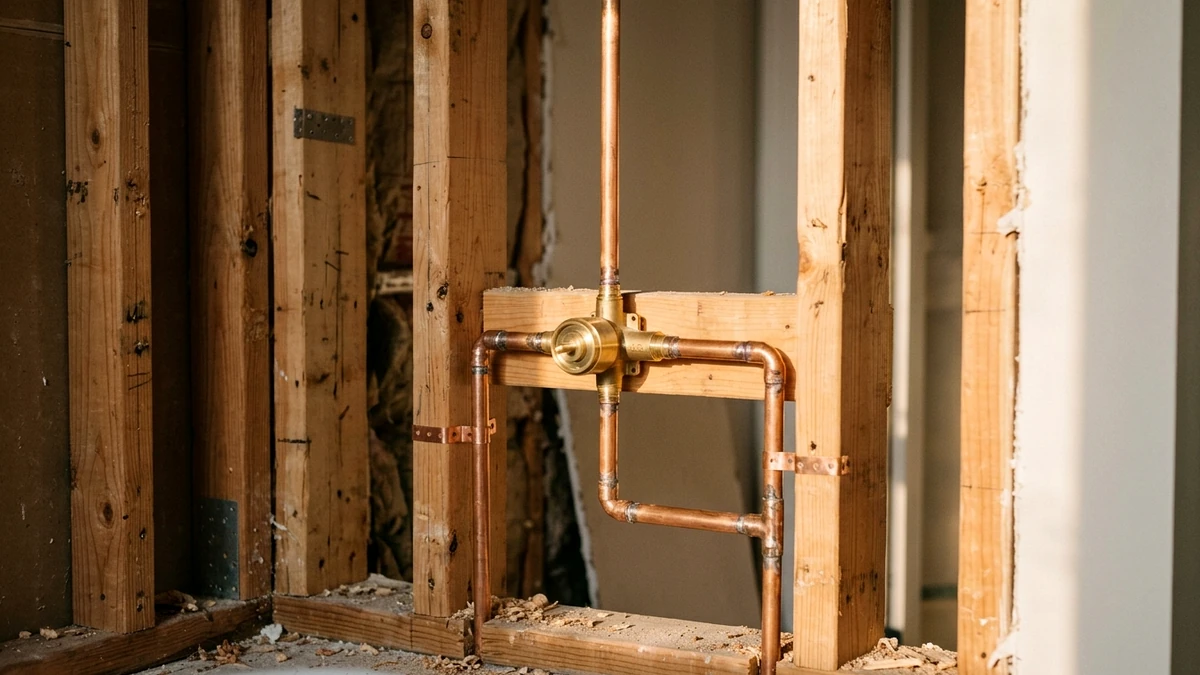
In older Hartford-area homes, many sinks still have original two-handle compression faucets and multi-turn stop valves that have not been turned in decades. Two- and three-family buildings often have several faucets of the same type, and landlords appreciate using one cartridge across every unit. MDC water is soft, so scale is milder than on hard water, but aerators still collect grit. We repair and replace faucets in Hartford, West Hartford, Wethersfield, Newington and nearby towns.
Repair versus replacement, faucet type, seized stops or mounting nuts, and the faucet you choose change the price. Typical Hartford-area range, confirmed on site before work starts. Compare all prices.
Process
We run the faucet, check under the sink and pin down whether the issue is the cartridge, the base or a supply line.
We explain whether a part or a new faucet makes more sense, and give you the price before starting.
We replace the cartridge, stems or full faucet with new supply lines and stops as needed.
We run hot and cold, check for drips above and below the sink, and wipe the cabinet dry.
FAQ
Usually, if the faucet body is sound and parts are still made. A cartridge or washer repair costs less than a new faucet plus installation. If the faucet is old, corroded or from a brand whose parts are hard to find, replacement often makes more sense over the next ten years. We price both on the spot so you can choose.
Yes. Older enameled sinks can have corroded mounting nuts and fragile finishes, so we work slowly and protect the surface. We check that the new faucet fits the hole count and spacing before removing the old one. If nuts are seized, we cut them off rather than torque against the enamel and risk chipping it.
Most cartridge or stem repairs take under an hour. A full faucet replacement usually takes one to two hours, depending on cabinet access and whether the stops need replacing too. Kitchen faucets with side sprayers, soap dispensers or filtered water taps take a little longer because of the extra connections.
Related work
A new countertop, a cracked basin, or a laundry room that needs a utility sink. Swapping a sink looks simple until the drain height, trap arm and old stops get involved.
Learn moreThe showerhead drips all day, the water turns scalding when someone flushes, or the handle spins without changing anything. The trouble is in the valve behind the tile.
Learn moreA shower that trickles, a faucet that sputters or pipes that bang when a valve closes all point to a pressure problem. The fix depends on finding where the...
Learn moreA plumber answers, day or night, and gives you a price before any work starts.