Burst Pipe Repair
A pipe has split and water is running into the walls, ceiling or basement. Every minute adds to the damage, so the first job is stopping the flow and the...
Learn moreEmergencies & leaks
Your water bill jumped, a stain keeps spreading on the ceiling, or you hear water running when nothing is on. The leak is real, but it is hiding, and guessing with a saw gets expensive fast.
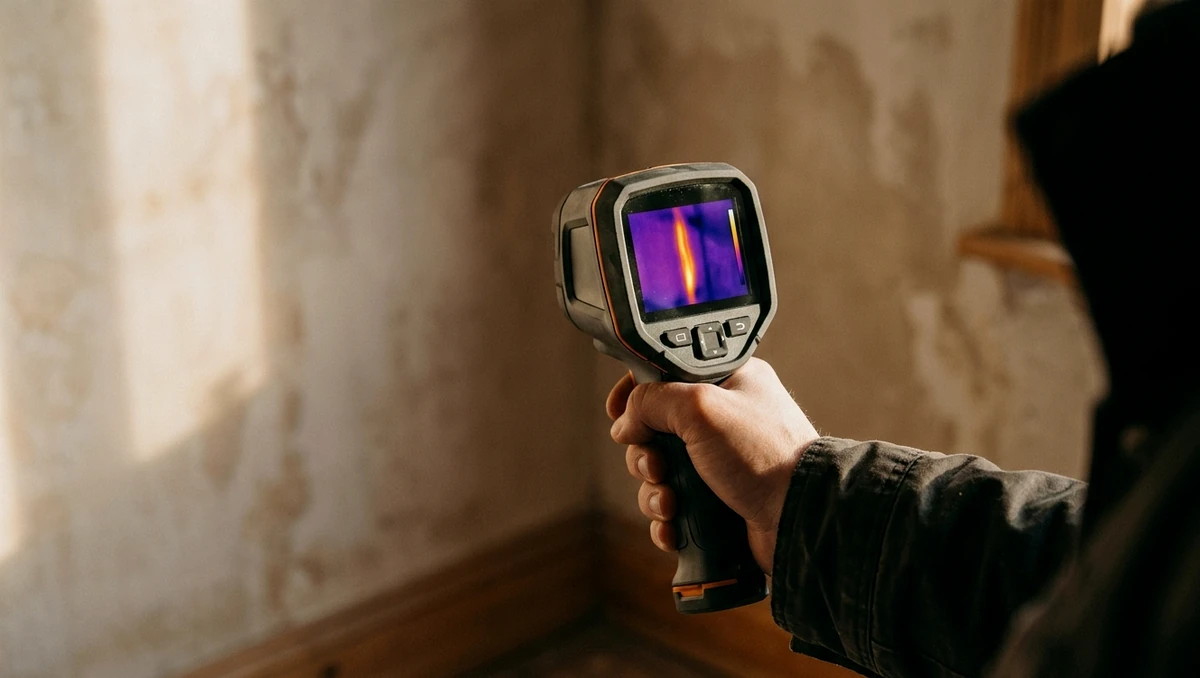
Leak detection is the process of finding a hidden water leak without tearing open walls at random, using meter tests, pressure isolation, acoustic listening and thermal imaging. A typical Hartford-area detection visit runs about $245 to $585, with repair priced separately once we find it. We answer 24/7 and can usually schedule within a day or two.
The first test is simple. With every faucet, toilet, ice maker and irrigation zone off, we watch the meter. Most meters have a small low-flow indicator, often a triangle or star, that turns with even a slow drip. If it moves, water is leaving the system somewhere after the meter. If it is still, the stain you are seeing may be a drain leak, roof leak or condensation instead.
Next we split the house into sections. Closing the valves to the water heater, individual bathrooms and outside lines one at a time tells us which branch is losing water. A pressure gauge on a hose bib or boiler drain helps here: we close the main, watch whether the static pressure falls, and time how quickly it drops to judge how large the leak is.
Once we know the branch, we narrow the spot. Acoustic listening gear picks up the hiss of water escaping a pressurized pipe through drywall, plaster or concrete. Thermal imaging works well on hot water lines, because the leak warms the surface around it and shows up as a bright patch. Moisture meters confirm how far the water has spread inside a wall or under flooring.
A wet spot does not always sit under the leak. Water runs along joists, pipe insulation and the top of plaster lath before it drips, so a stain can appear several feet from the source. We follow the water path with the meter and camera before cutting, so the access opening lands where the repair needs to happen.
A surprising share of high water bills come from a toilet that runs silently. A worn flapper or a fill valve set too high lets water trickle into the overflow tube all day. We check with dye in the tank. Drain leaks are different: they only leak when a fixture is used, so we run water in each fixture above a stain and watch for drips.
Cast-iron drains and old lead bends under tubs and showers are common sources of ceiling stains that appear only after someone showers. Condensation from cold water pipes in a humid basement can also look like a leak in summer. Sorting out which kind of water you have saves you from opening a wall to repair a pipe that was never broken.
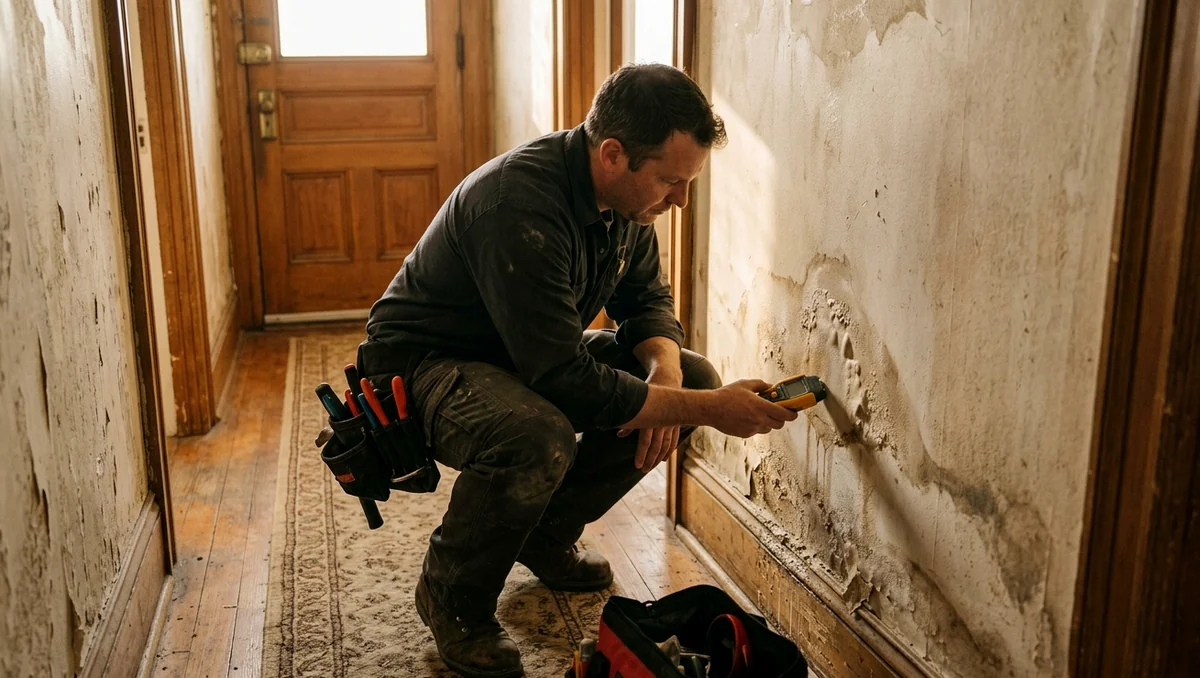
Hartford homes built before 1940 often have plaster and lath walls, multiple layers of flooring and pipes that were rerouted several times over the decades, which makes guessing at a leak location costly. In two- and three-family buildings, a leak in one unit can show up in the apartment below. MDC bills on metered use, so a hidden leak shows up on the bill before it shows up on a ceiling. Homes on wells east of the river notice it as a pump that cycles too often.
The number of branches to isolate, wall and floor types, and whether the leak is under a slab change the cost. Typical Hartford-area range, confirmed on site before work starts. Compare all prices.
Process
We confirm a supply leak exists by watching the meter and a pressure gauge with all fixtures off.
Valves to each section of the house are closed in turn to narrow down which run is losing water.
Acoustic, thermal and moisture tools locate the leak so we open the smallest possible area.
We show you the leak, quote the repair, fix it once you approve and leave the access neat for patching.
FAQ
With meter testing, valve isolation and acoustic or thermal tools, we usually narrow a supply leak to a small area before opening anything. Plaster walls and pipes buried in old masonry can make listening harder, and some leaks take a second visit or a small inspection opening. We explain our confidence level before we cut.
Yes. If the meter moves with the house valve closed, the leak is likely on the service line between the meter and where it enters the house, or outside. We use pressure and acoustic tests along the line. For leaks on the street side of the curb stop, the water utility handles its own pipe.
To repair a hidden pipe, some access is usually needed, but good detection keeps that opening small and in the right place. We aim for one square cut sized for an easy patch, rather than several exploratory holes. Sometimes the repair can be made from an adjacent closet, the basement or the ceiling below instead.
Related work
A pipe has split and water is running into the walls, ceiling or basement. Every minute adds to the damage, so the first job is stopping the flow and the...
Learn moreThe pipe that carries water from the street into your basement has sprung a leak, lost pressure or started pushing water up through the lawn. It is buried, it...
Learn moreBefore you buy an older house, or after you have lived in one for years, it helps to know what is behind the walls. A plumbing inspection tells you what is...
Learn moreA plumber answers, day or night, and gives you a price before any work starts.