Sump Pump Installation
If water seeps across the basement floor after every hard rain or snowmelt, a sump pump gives that water a place to collect and a way out. Installed right, it...
Learn moreBasement, well & water
A basement bathroom that sits below the main sewer pipe cannot drain by gravity. A sealed basin and ejector pump lift the waste up to the house drain, and when that pump stops, everything downstairs stops with it.
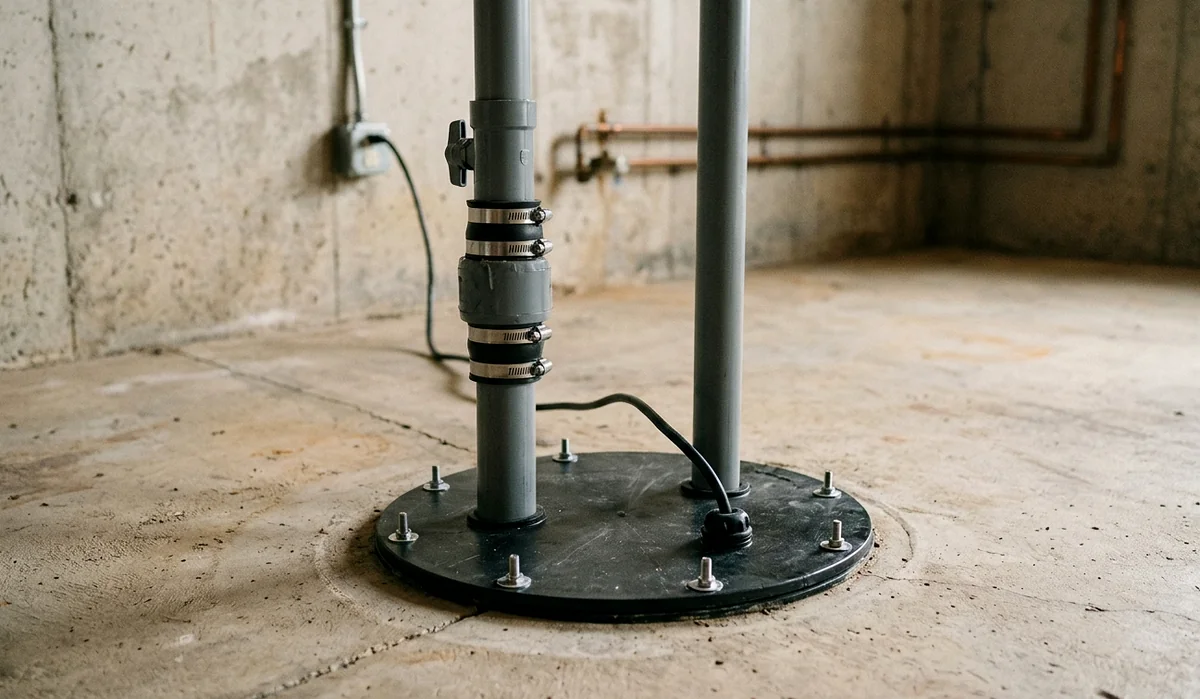
Sewage ejector pump service covers repairing, replacing and newly installing the sealed basin and pump that lift waste from basement toilets, showers, sinks and laundry up to a sewer pipe that leaves the house above the floor. Typical Hartford-area costs run about $245 to $4,860. We answer 24/7, carry common pump parts on the van and quote the price before work starts.
In many older Hartford houses the main building drain leaves through the foundation wall a few feet above the basement floor, or runs along the joists overhead. A toilet, shower or laundry sink set on the slab sits below that pipe, so its waste has nothing to run downhill to. An ejector system fixes that. The fixtures drain by gravity into a sealed basin set into the floor, and when the level rises, a float turns on a pump that pushes the waste up a discharge pipe and into the house drain.
An ejector pump is not a sump pump. A sump pump moves clear groundwater, while an ejector is built to pass solids, commonly up to about 2 inches across, through a 2-inch discharge line. The basin has a gasketed lid bolted down to hold in sewer gas, and it connects to the plumbing vent so air can move as the basin fills and empties. Grinder pumps, which chop solids first, are used where the discharge runs a long way or uses smaller pipe.
Most ejector calls come down to a few parts. Wipes, paper towels and grease wrap around the float or the impeller, so the pump either never starts or hums and trips its breaker. A worn check valve lets the discharge line drain back into the basin after every cycle, and you hear the pump thump on and off far more than it should. A cracked lid seal or a blocked vent lets sewer odor into the basement. We pull the pump, clear and test it, and replace the parts that are worn.
When the motor has burned out or the seals leak, replacing the pump is the better repair. We size the new pump for the height it has to lift and the fixtures it serves, and we add a full-port shut-off above the check valve so the next service does not mean draining the whole discharge line onto the floor. The high-water alarm should run on a different circuit from the pump, so it still sounds if the pump breaker trips.
A new ejector system starts with cutting the slab and digging a pit for the basin, usually close to where the bathroom fixtures will sit. The toilet, shower and sink drains are run under the floor into the basin inlet. The discharge pipe rises with a check valve and shut-off, then ties into the building drain through a fitting that enters from the top or side. A vent runs from the basin lid to the existing vent stack or out through the roof, and the floor is patched with new concrete.
Plumbing work of this size usually needs a permit and inspection from the town, and we plan the job around that schedule. The pump needs its own outlet, which may mean an electrician, and we coordinate the timing. Once the basin is in service, keep wipes, even ones sold as flushable, along with grease and paper towels, out of the basement fixtures. During a power outage, the basement fixtures stop working, so hold off on using them until the power is back.

Hartford has many pre-1940 two- and three-family houses where the building drain leaves through the foundation wall above the basement floor, so a basement bathroom or laundry needs a pump to reach it. Owners finishing basements in West Hartford, Wethersfield and Newington run into the same layout. In parts of Hartford with older combined sewers, a sealed basin with a working check valve is less exposed to street backups than an open floor drain, though it does not replace a backwater valve on the main line.
Float, check valve and alarm repairs cost least; a new pump costs more, and a new basin system with slab work, venting and fixture drains costs the most. Typical Hartford-area range, confirmed on site before work starts. Compare all prices.
Process
Call (860) 926-8723 and tell us whether the alarm is sounding and what drains into the basin.
We open the basin, check the float, pump, check valve and vent, and quote the price before work starts.
We clear, rebuild or replace the pump, or set a new basin system for a planned bathroom.
We fill the basin, watch the pump cycle and confirm the alarm works before we leave.
FAQ
It depends on how often it runs and what goes down the drains. A pump serving a lightly used half bath lasts much longer than one handling a busy laundry, and wipes and grease shorten the life of any pump. Signs it is wearing out include humming, tripping the breaker and running longer to empty the basin. A yearly check of the float, check valve and alarm catches most problems early.
No. The alarm means the basin is filling and the pump is not keeping up, so any more water can push sewage back out of the lowest fixture. Stop using every fixture that drains into the basin, including the washing machine if it is tied in, and check that the pump breaker has not tripped. Then call (860) 926-8723. We answer 24/7.
For a small half bath with a toilet and sink, a macerating unit that sits behind the toilet can work and avoids cutting the slab. It has limits: it handles fewer fixtures, it is louder, and it is less tolerant of anything other than toilet paper. For a full bathroom with a shower, or a laundry, a basin ejector system is usually the more durable choice. We explain both before you decide.
Related work
If water seeps across the basement floor after every hard rain or snowmelt, a sump pump gives that water a place to collect and a way out. Installed right, it...
Learn moreYou are gutting a kitchen or bathroom, and the plumbing behind the walls has to fit the new layout. This is the stage where good decisions save money and...
Learn moreEvery time a big storm hits, water comes up through the basement floor drain even though your own pipes are clear. The public sewer is surging back into the...
Learn moreA plumber answers, day or night, and gives you a price before any work starts.