Drain Cleaning
The sink holds water, the shower drains in slow motion, or the basement floor drain bubbled up when the washer ran. Somewhere in the pipe there is a clog, and...
Learn moreDrains & sewer
A cable punched a hole in the clog, but the drain keeps closing back up every few months. The pipe walls are coated with grease, scale or roots, and the full diameter needs to be scoured clean.
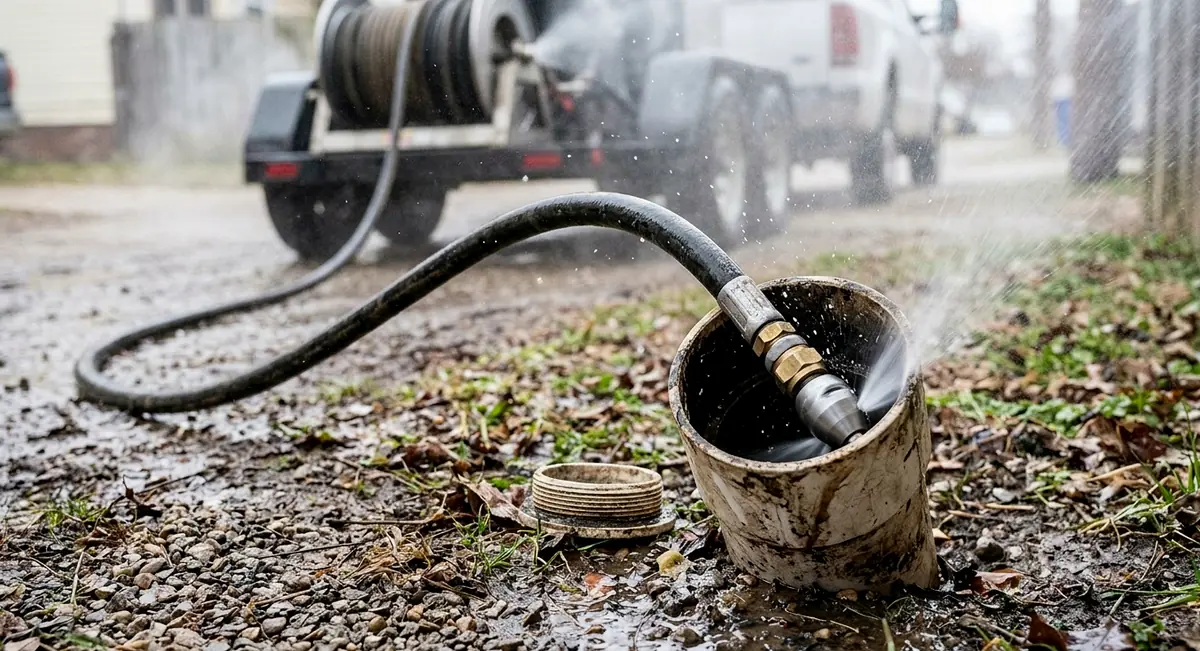
Hydro jetting cleans a drain or sewer line by pushing high-pressure water through a specialized nozzle that scours the full pipe wall and flushes debris downstream. Typical Hartford-area jetting runs about $385 to $945 depending on line length and access. We usually camera the line first, answer 24/7, and schedule within a day or two.
A cable machine bores through a blockage, leaving a channel the size of the cutter. Hydro jetting uses nozzles with rearward jets that pull the hose up the line while scrubbing the full pipe wall. A forward jet breaks the clog, and the rearward jets wash the debris back toward the main and out to the sewer.
Nozzle choice matters. A standard penetrating nozzle works on grease and sludge. A rotating nozzle spins jets around the wall for heavy scale. Root cutting nozzles and chain flails handle roots and hardened deposits. We match pressure and flow to the pipe material and size, because small kitchen lines and large building sewers need very different settings.
Jetting is powerful, and badly deteriorated pipe can come apart under that force. Before jetting an old main line, we run a camera to check for broken pipe, offset joints or a pipe that has lost its bottom from corrosion. If the line is near collapse, we tell you and recommend a repair instead of cleaning that would make it worse.
Orangeburg pipe, an old fiber pipe used in some mid-century homes, and very thin cast iron are two materials where we are especially careful, since both can tear or crumble. For those lines, a gentler cleaning or a lower pressure setting, or skipping straight to replacement, is usually the right call. A good cleaning should never create a repair bill.
After jetting, we often run the camera again so you can see the result and so we can spot problems that were hidden under grease or scale. That second look also gives a clean baseline if you plan to line or replace the pipe later. Lining contractors and plumbers both need a clean pipe to evaluate.
For kitchen lines that clog with grease, wiping pans before washing, keeping fats out of the disposal and running hot water after dishes slows the next buildup. Commercial kitchens need a properly sized and serviced grease interceptor. Homes with recurring roots may benefit from scheduled jetting until the joints where roots enter can be repaired or lined.
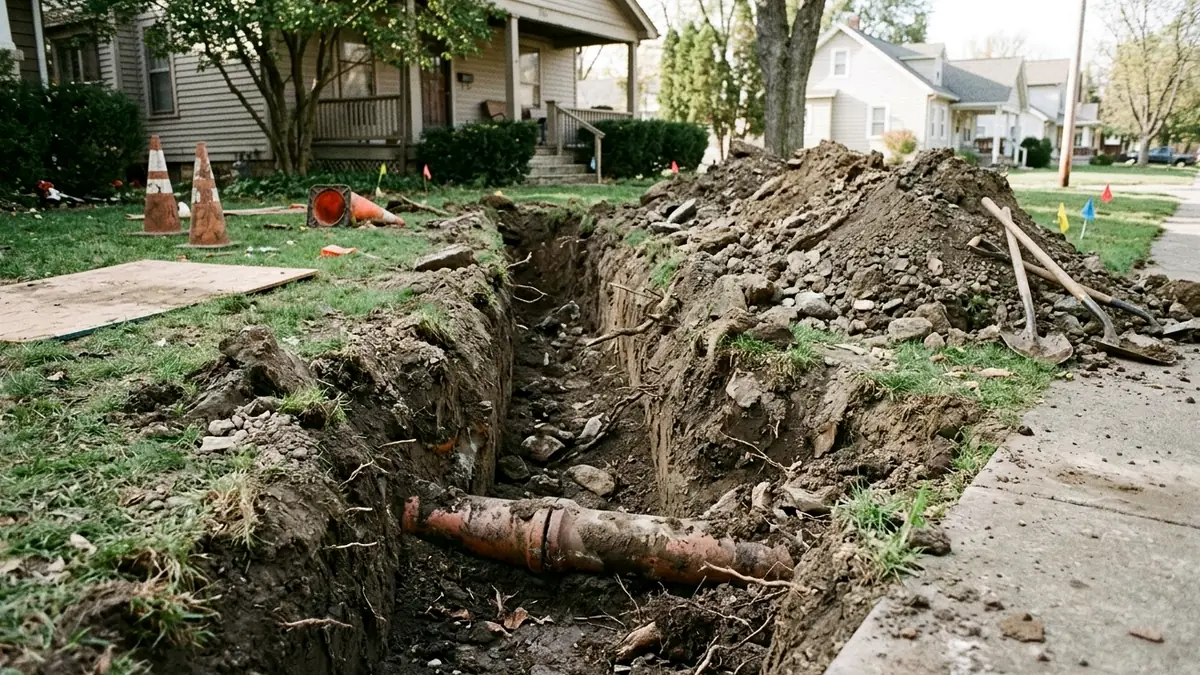
Hartford's older buildings often have long horizontal cast-iron runs under the basement floor that collect scale and grease, especially in two- and three-family houses where several kitchens share one line. Small restaurants and storefronts with apartments above are also common jetting calls. Where older combined sewers are in place, a clean house line drains better during storms. We jet lines in Hartford, New Britain, East Hartford, Manchester and nearby towns.
Line length, nozzle type, access through cleanouts or roof vents, and root load move the price most. Typical Hartford-area range, confirmed on site before work starts. Compare all prices.
Process
We run an inspection camera to see the clog, the pipe condition and whether jetting is safe for that pipe.
We pick the nozzle, pressure and flow for the pipe size and access through a cleanout or roof vent.
We work the nozzle up and back through the line until the walls are clean and water flows freely.
We camera the cleaned line, show you the before and after, and leave the work area wiped and dry.
FAQ
For most cast-iron and clay lines in fair condition, yes. We check the line with a camera first, because badly broken or very thin pipe can fail under high pressure. If the pipe is too weak to jet, we tell you and offer gentler cleaning or a repair plan instead of risking a collapse.
That depends on what was clogging it. A grease-coated kitchen line can stay clear for years with good habits. A line with roots entering through joints will see regrowth, often within one to two years, because jetting cuts roots but does not seal the joint. A camera shows which case you are in.
It should not. We feed the hose through a cleanout or other access point, wrap the opening, and lay drop cloths. Water and debris go down the line to the sewer, not back into the house. When jetting from inside, we set up to keep the area dry and clean it when we finish.
Related work
The sink holds water, the shower drains in slow motion, or the basement floor drain bubbled up when the washer ran. Somewhere in the pipe there is a clog, and...
Learn moreThe main keeps clogging and nobody can tell you why, or you are about to buy an older house and want to know what is under the floor. A camera answers that...
Learn moreWhen a restroom backs up during business hours or the water heater dies before the lunch rush, every hour costs money. Small businesses need plumbing repairs...
Learn moreA plumber answers, day or night, and gives you a price before any work starts.