Commercial Plumbing
When a restroom backs up during business hours or the water heater dies before the lunch rush, every hour costs money. Small businesses need plumbing repairs...
Learn moreBoilers & specialty
Fats, oils and grease go down a kitchen drain warm and liquid, then cool and harden in the pipe. A grease trap catches them before they reach the sewer, but only if it is the right size and gets cleaned before it fills.
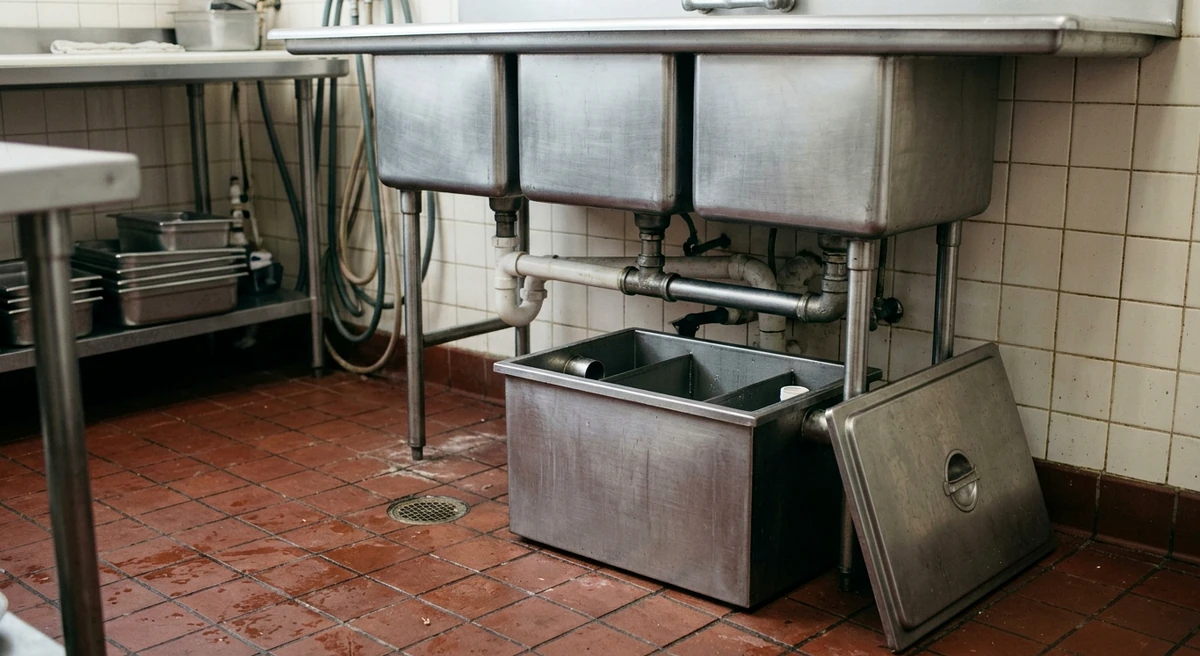
Grease trap service covers cleaning, repairing and installing the grease traps and interceptors between a commercial kitchen's sinks and the sewer, plus jetting the drain lines they feed. Typical Hartford-area costs run about $185 to $2,765. We answer 24/7, schedule work around your service hours and quote the price before work starts.
Wastewater from the sinks enters the trap through a flow control fitting that slows it down. Inside, the water cools, grease floats to the top, food solids sink to the bottom, and baffles hold both back while the clearer middle layer flows out to the sewer. Without the flow control fitting, or with a missing vent, water rushes straight through and carries grease out with it. A trap that is too small for the kitchen does the same thing even when it is clean.
Small kitchens such as cafes, delis and bakeries often use a hydromechanical trap under or beside the three-compartment sink. Busier restaurants may have a larger gravity interceptor in the floor or buried outside, which holds far more and is emptied with a vacuum truck. Both work the same way, and both stop working once the grease and solids take up too much of the space inside.
How often a trap needs cleaning depends on its size and how much grease the kitchen produces. A small under-sink trap in a busy kitchen may need it every week or two, while a lightly used one can go longer. A guideline many sewer authorities use is to clean the trap before grease and solids fill about a quarter of its depth. Check the current requirements of your sewer authority and local health department, since they set the rules for food service grease.
Cleaning means opening the lid, removing the floating grease and settled solids, scraping the baffles and walls, and checking the gasket, flow control and outlet. The waste goes into sealed containers for proper disposal, never into another drain. We note the date and condition each time so you have a record. Most sewer authorities discourage flushing a trap with hot water or additives, because that just moves the grease into the pipe downstream.
Older steel traps rust through, baffles break loose, lids warp and flow control fittings go missing during kitchen renovations. We repair what can be repaired and replace traps that are corroded, cracked or too small for the current menu. A new interceptor is sized to the fixtures it serves, and in many codes a garbage disposal should not drain into a grease trap at all, so we look at what is tied in before choosing a size.
Even a well kept trap lets some grease past, and over time it coats the drain line to the main sewer. Hydro jetting scours that buildup off the pipe walls instead of just punching a hole through it, which cable machines tend to do. We schedule trap cleaning and line jetting before opening or after closing so the kitchen keeps running, and we can set up a recurring visit that fits your volume.
Small restaurants, bakeries and takeout counters on Main Street in Hartford and in the town centers of West Hartford, Manchester and Wethersfield often operate in older brick buildings with cast-iron drains and apartments upstairs, so a grease clog in a shared line can back up into tenants' fixtures too. MDC provides sewer service in Hartford and its member towns, and parts of the city have older combined sewers, so grease that gets past a trap adds to blockages in lines that already work hard in heavy rain.
Routine cleaning of a small trap costs least; line jetting is in the middle, and a new interceptor with flow control and piping changes costs the most. Typical Hartford-area range, confirmed on site before work starts. Compare all prices.
Process
Call (860) 926-8723 and tell us about the trap, the sinks it serves and your service hours.
We open the trap, check its size and condition and quote the price before work starts.
We clean the trap, repair baffles and fittings, or install a properly sized interceptor.
We jet the line if needed, run water through and leave a dated record of the visit.
FAQ
It depends on the trap's size and how much grease your kitchen makes. A small under-sink unit in a busy fry kitchen may need cleaning every week or two, while a cafe with little cooking can go longer. A common guideline is to clean it before grease and solids fill about a quarter of its depth. Your sewer authority and health department set the actual requirements, so check with them as well.
Yes. Opening a grease trap is messy and smells, so most owners want it done before opening or after closing. We answer 24/7 at (860) 926-8723 and schedule cleaning and line jetting around your service, and an overflowing trap during a rush gets handled as an emergency.
Usually because grease that slipped past the trap over time has coated the line between the trap and the main sewer, or because the sink drains upstream of the trap are clogged. A missing flow control fitting or a trap that is too small also lets grease through. We check both sides of the trap and jet the lines if the buildup is in the pipe.
Related work
When a restroom backs up during business hours or the water heater dies before the lunch rush, every hour costs money. Small businesses need plumbing repairs...
Learn moreA cable punched a hole in the clog, but the drain keeps closing back up every few months. The pipe walls are coated with grease, scale or roots, and the full...
Learn moreThe sink holds water, the shower drains in slow motion, or the basement floor drain bubbled up when the washer ran. Somewhere in the pipe there is a clog, and...
Learn moreA plumber answers, day or night, and gives you a price before any work starts.