Sagging and root-filled laterals
Postwar sewer lines settle and let roots in, leading to repeat backups at the basement floor drain.
Town
East Hartford sits right across the Connecticut River from our downtown office, a short trip over the Founders Bridge. Great River Park lines the riverbank, Main Street and Burnside Avenue carry the town's older commercial strips and Rentschler Field stands on the south side near the aerospace plant that shaped much of the town's history. The Hockanum River winds through the north end toward the Connecticut, and neighborhoods spread out east toward the Manchester line.
A lot of East Hartford's homes went up quickly in the 1940s and 1950s to house factory workers, and their original plumbing is now well past its expected life. Our calls here are often sewer laterals that have sagged or filled with roots, water heaters reaching the end of their run and basements that take on water after a heavy rain. Because we are just over the bridge, East Hartford calls are close for us. We answer (860) 926-8723 24/7.
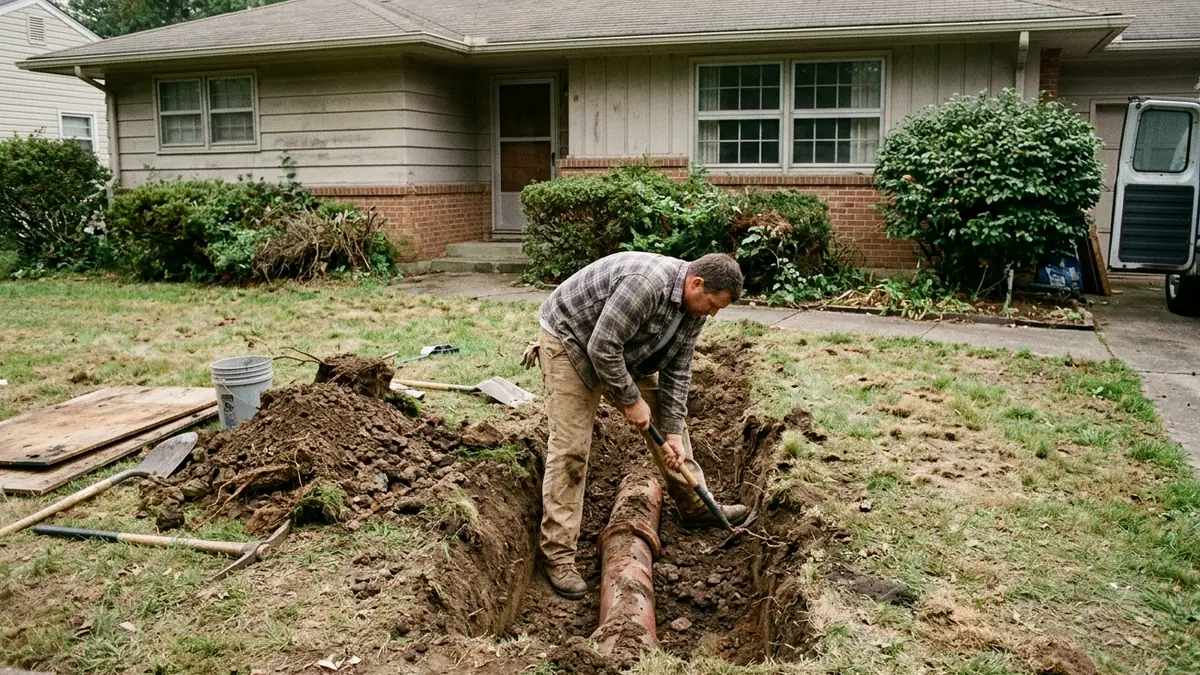
Much of East Hartford is postwar Capes, ranches and small colonials built in the 1940s and 1950s, including the Mayberry Village area, with older two-family homes near Main Street and Burnside Avenue and some apartment complexes. Many houses have cast-iron or clay sewer laterals, copper supply lines and gas or oil-fired boilers. Basements are typical and some need sump pumps. East Hartford is an MDC member town, so water and sewer come from the MDC, with the same soft reservoir water Hartford gets.
Postwar sewer lines settle and let roots in, leading to repeat backups at the basement floor drain.
Original-era replacements are now reaching their own end, and corroded tanks leak at the base.
Low-lying lots near the rivers can see ground water rise, so a working sump pump is important.
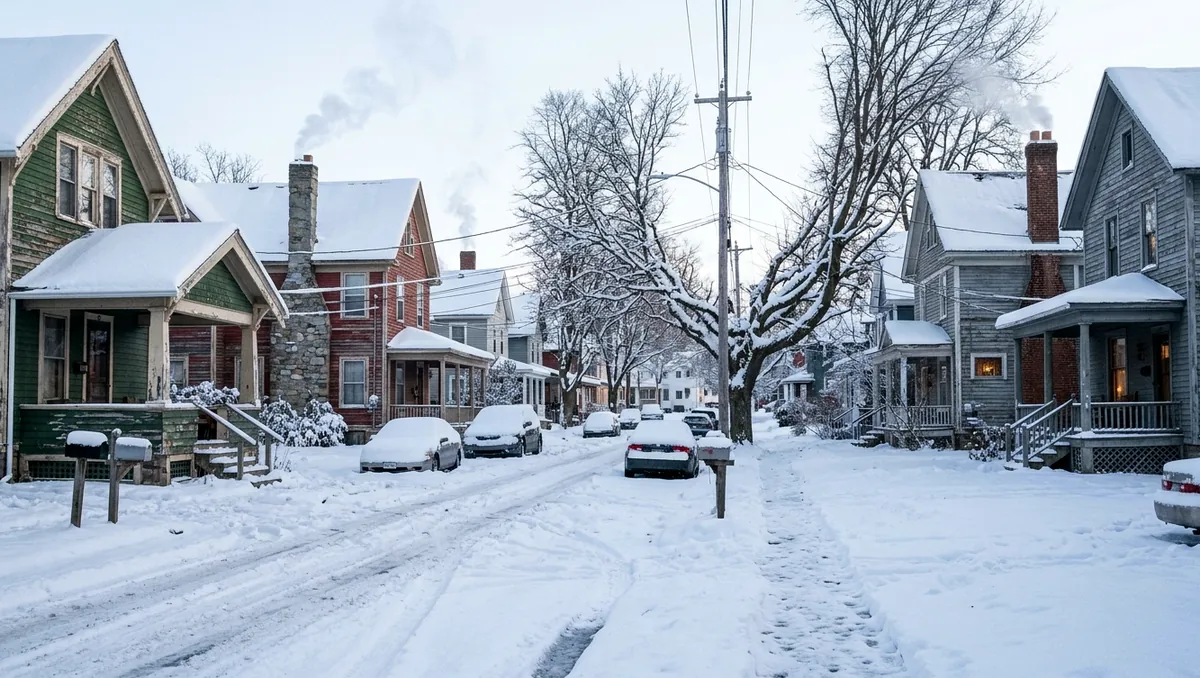
Old hose bibs freeze and split in winter, then leak inside the wall when they are used in spring.
Most requested here
The camera found a break, a root mass or a section of pipe that has collapsed. Cleaning will not fix it anymore, and the line needs a real repair before the next backup.
Learn moreThe tank is leaking from the bottom, or it is old enough that every repair is money down the drain. A replacement done right means the right size, safe venting...
Learn moreIf water seeps across the basement floor after every hard rain or snowmelt, a sump pump gives that water a place to collect and a way out. Installed right, it...
Learn moreAn outdoor faucet that drips, sprays from the handle or floods the basement the first time you hook up a hose in spring usually split during the winter. It is...
Learn moreFAQ
First we run a camera to find the low spot, its depth and the pipe material. A short sag can be dug out and replaced with new pipe laid at the correct pitch. When the whole line is failing and the conditions suit it, trenchless replacement can save the lawn and driveway. We call 811 before digging and quote the price first.
Yes. A frost-free sillcock keeps its valve inside the heated wall, so it is far less likely to split in January and February. We replace the old hose bib, seal the wall opening and add an inside shut-off if there is none. It is a quick job, and we quote the price before we start.
Call any hour. A plumber answers and gives you a price on site before work starts.