Lead Service Line Replacement
If the pipe bringing water into your house is lead, every glass you pour has passed through it. Replacing that line is the most direct way to take lead out of the path.
Learn moreEmergencies & leaks
The pipe that carries water from the street into your basement has sprung a leak, lost pressure or started pushing water up through the lawn. It is buried, it is yours to maintain from the curb in, and it needs a careful fix.
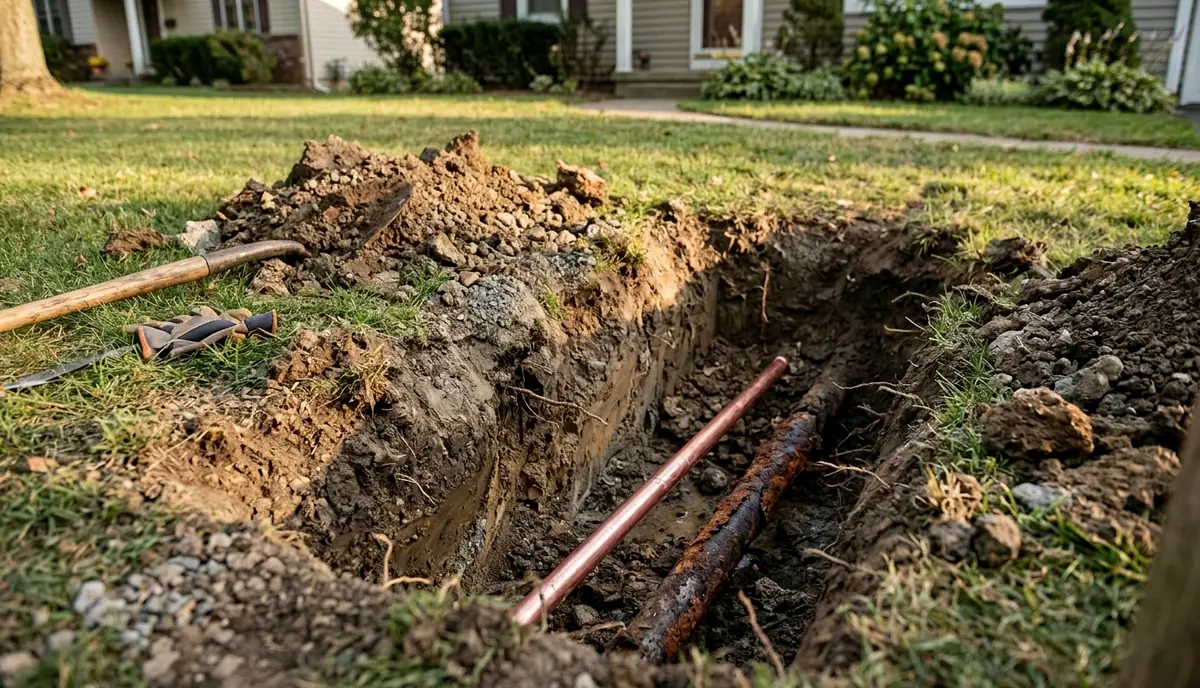
Water service line repair fixes the buried pipe between the curb stop and your house meter, either by replacing a damaged section or the full run. Typical Hartford-area repairs run about $985 to $4,865, depending on depth, length and digging. We answer 24/7, can usually assess a suspected service leak within a day, and quote before digging.
In older Hartford-area neighborhoods, the buried water service is often galvanized steel, older copper, or in some pre-war homes, lead. Newer services are usually type K copper or high-density polyethylene. Each fails differently: galvanized rusts from the inside until it leaks at a joint, copper can pit in aggressive soil, and lead lines are a health concern even when they are not leaking.
The line usually runs from a curb stop near the sidewalk, down to below frost depth, and through the foundation wall into the basement. Where it passes through the wall, older installations often have no sleeve, so settling foundations can crack the pipe right at the wall. That is one of the most common leak spots we find on these calls.
If the line is in decent shape and the damage is a single break, such as a joint that let go or a pipe cracked by a tree root, we dig to that spot, cut out the bad section and splice in new pipe with compression or approved couplings. That keeps the cost down and the lawn mostly intact.
When the line is galvanized or lead, or has already been patched more than once, replacing the full run usually makes more sense than another splice. A new copper or polyethylene service can often be pulled through with trenchless methods, so we dig a pit at each end instead of a long trench. We call 811 before any excavation so gas, electric and other buried utilities are marked.
In Hartford and the MDC member towns, the utility generally handles the main in the street and its connection, while the property owner is responsible for the service pipe on private property. The exact split point, usually at or near the curb stop, can vary, so we confirm with the utility before work starts and coordinate any shut-off at the curb.
If your house is on a private well east of the river, the same kind of buried line runs from the well to the house instead. Those lines are usually polyethylene and fail at fittings or where they were nicked during landscaping. We repair those the same way, with the added step of checking the well pump and pressure tank once water is restored.
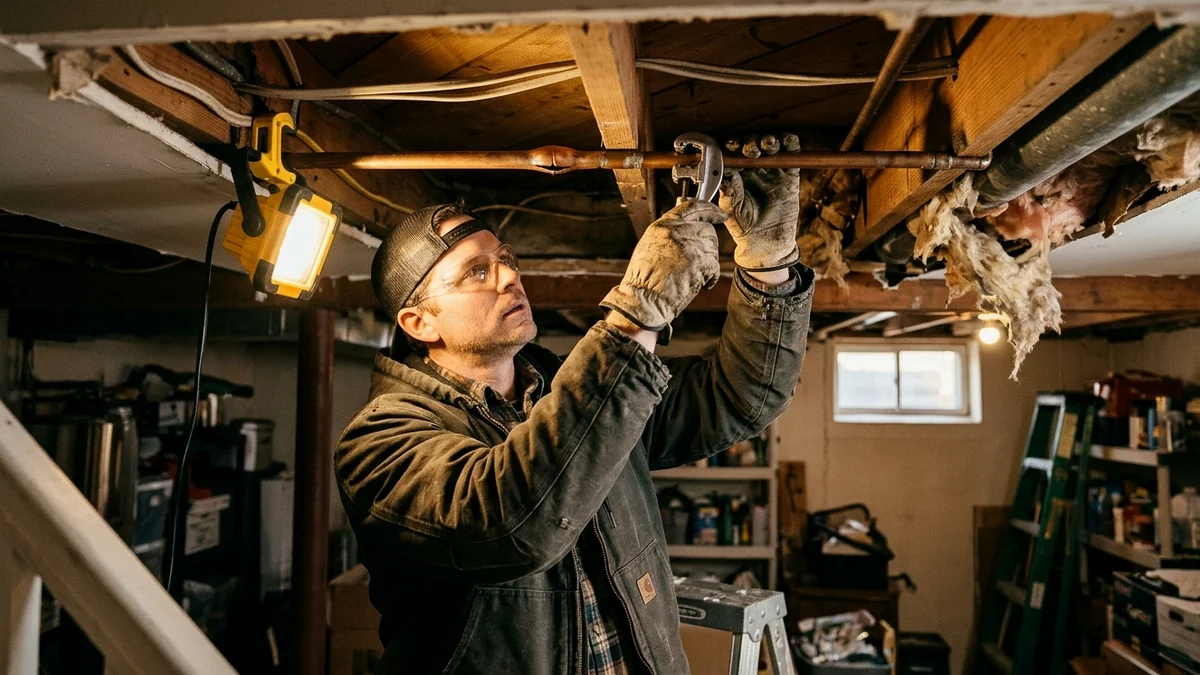
Many Hartford streets have homes from the 1900s to 1930s whose water services were never replaced, so galvanized and some lead lines are still in the ground. Deep frost in a hard winter can also stress old pipe where it enters the foundation. We work with the MDC on curb shut-offs in Hartford, West Hartford, Wethersfield and the other member towns, and with the local water utility elsewhere. In Vernon and the towns east of the river, many of these calls are well lines instead.
Depth, length of the run, hardscape over the line and whether trenchless pulling is possible move the price most. Typical Hartford-area range, confirmed on site before work starts. Compare all prices.
Process
We test the meter, check pressure and walk the line to confirm the leak is on your side of the curb.
We call 811 so utilities are marked, then choose a spot repair, a full replacement or a trenchless pull.
We excavate at the leak or at each end, replace the damaged pipe and seal the foundation penetration.
We flush the new line, check for leaks under pressure, backfill in layers and rake the soil back level.
FAQ
A single-section repair is often done in one day once utilities are marked, which can take a few business days unless it is an emergency. A full replacement usually takes one to two days. Your water is off while we work on the line itself, and we restore it as soon as the new pipe is tested.
Usually not. Spot repairs need one hole at the leak. Full replacements can often be done trenchless, with a pit near the curb and another at the foundation, and the new pipe pulled between them. Sidewalks, driveways and mature trees over the line affect where we dig, and we discuss that with you before starting.
In most cases the owner is responsible for the pipe on private property, from about the curb stop to the house, while the utility owns the main and its connection. Rules vary by utility, so we confirm the split point with MDC or your local water provider before any digging begins.
Related work
If the pipe bringing water into your house is lead, every glass you pour has passed through it. Replacing that line is the most direct way to take lead out of the path.
Learn moreYour water bill jumped, a stain keeps spreading on the ceiling, or you hear water running when nothing is on. The leak is real, but it is hiding, and guessing...
Learn moreA shower that trickles, a faucet that sputters or pipes that bang when a valve closes all point to a pressure problem. The fix depends on finding where the...
Learn moreA plumber answers, day or night, and gives you a price before any work starts.