Gas Line Installation
Adding a gas range, dryer, generator or grill means running a new line that is sized right, supported properly and tested before gas ever reaches the...
Learn morePipes & gas
If you smell a strong rotten-egg odor, leave the house now, without flipping switches, and call your gas utility from outside. Once they make it safe, we find and repair the leak in your piping.
Gas line repair finds and fixes leaks in the piping, valves and connectors inside your home after the gas utility has made the area safe. Typical Hartford-area repairs run about $185 to $1,460 depending on what failed. We answer 24/7 and send the next available plumber for gas calls. If the smell is strong, leave first, call the utility from outside, then call us.
Natural gas has no smell on its own, so utilities add an odorant that smells like rotten eggs. If the smell is strong, or you hear hissing, get everyone out of the house. Do not turn lights on or off, use a phone inside, start a car in an attached garage or light anything. Leave the door open behind you if it is easy and safe.
From outside and away from the building, call your gas utility's emergency line or 911. The utility will check the house and shut off gas if needed. Once they have made it safe and given the all clear, call us at (860) 926-8723 to repair the leak on your side of the meter. A faint smell near one appliance is still worth calling about the same way.
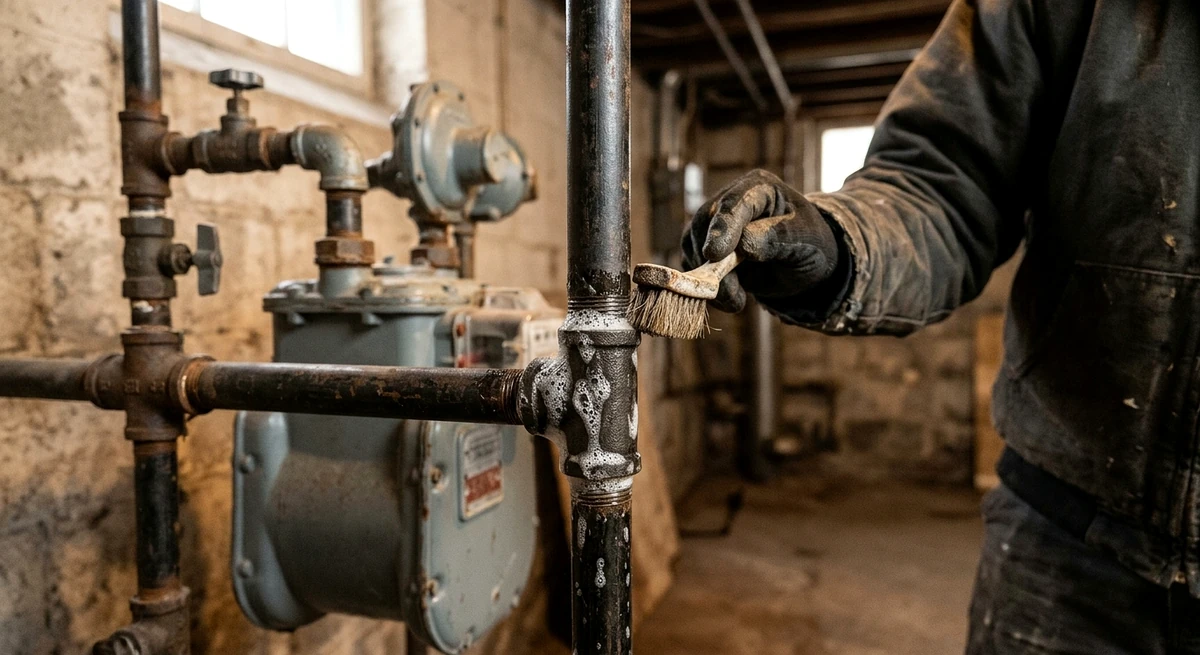
We start with an electronic combustible gas detector, which reacts to small amounts of gas in the air, and work along the piping from the meter to every appliance. Suspect joints get brushed with leak detection liquid, which bubbles at the leak point. We then isolate sections and use a test gauge to see whether the system holds pressure, which tells us whether hidden piping is involved.
The most common culprits are threaded joints that have loosened over decades, old flexible appliance connectors, worn appliance shut-off valves and corroded pipe where it passes through a damp basement wall or sits outdoors. Sometimes the leak is inside an appliance control, which needs that appliance repaired or replaced. We show you exactly where the gas escaped and why.
Most repairs mean taking apart the leaking joint, cleaning the threads, resealing with the right pipe compound or gas-rated tape, and reassembling. Corroded sections get cut out and replaced, and old uncoated brass connectors are swapped for new coated ones. Plug valves that weep at the stem are replaced with modern quarter-turn gas ball valves.
After the repair we pressure test the system again and recheck every joint we touched. Then we relight pilots or restart appliances and check that burners light cleanly. If the utility tagged a meter off, they may need to come back to restore service after our repair, and we coordinate with them so you are not left waiting longer than necessary.
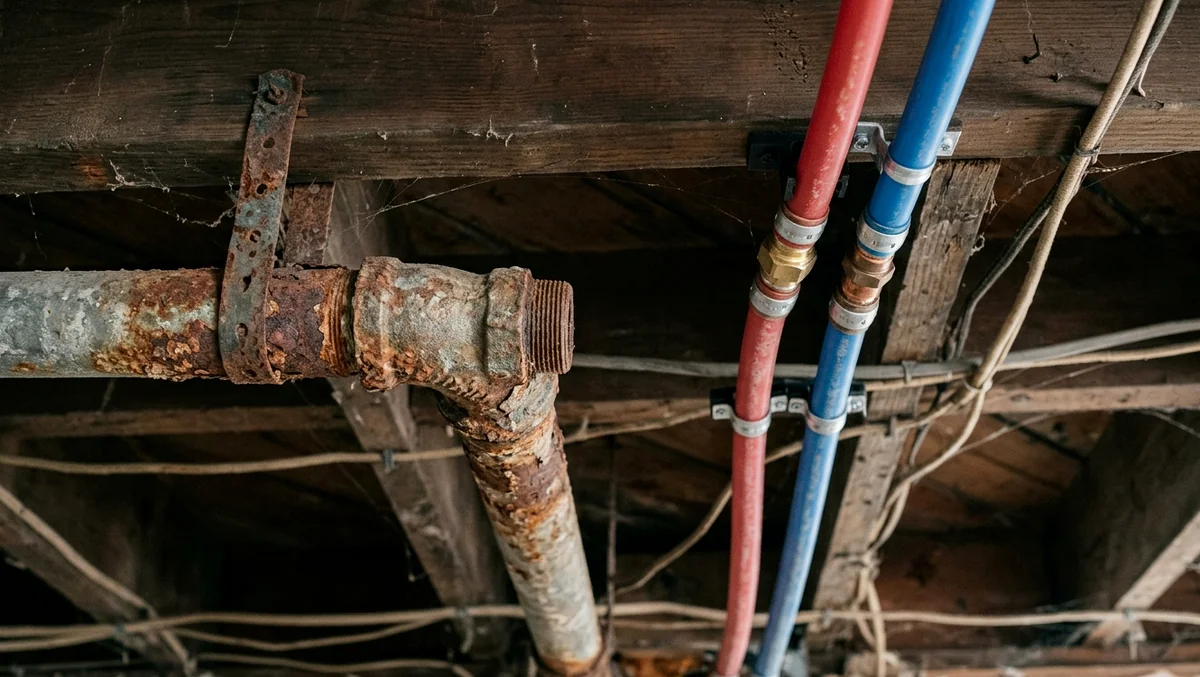
Hartford basements tend to be damp, and gas pipe running along fieldstone walls or through old foundation openings can rust over decades. Many older homes also still have original plug valves and early appliance connectors. When a boiler or water heater runs hard through a cold January, any weakness near those appliances matters more, because the heat cannot simply be left off. Some multi-family buildings have several meters, so we confirm which one feeds the leaking line.
Whether the leak is a single fitting or a corroded run, and whether piping is exposed or hidden in walls, drives the cost. Typical Hartford-area range, confirmed on site before work starts. Compare all prices.
Process
If the smell is strong, leave, call your gas utility from outside, then call us at (860) 926-8723.
We trace the piping with a gas detector and leak detection liquid, and pressure test hidden sections.
We reseal or replace the failed joint, valve, connector or pipe, and quote the price before work starts.
We pressure test again, relight appliances, check burners and clean up the work area.
FAQ
If the smell is strong or you hear hissing, leave the house and call your gas utility or 911 from outside first. They respond to make the area safe. Once they have checked it and shut off the gas if needed, call us to repair the leaking pipe, valve or connector. For a faint smell near one appliance, call the utility as well; they would rather check.
A single leaking fitting or appliance connector is often found and fixed within a couple of hours, including the pressure test. Corroded pipe sections, hidden leaks inside walls or several weak joints take longer. If the utility locked off your meter, they may need to return to restore gas after our work, which can add time we do not control.
Often we can close the valve feeding just the affected branch, so the furnace or water heater stays on while we repair a stove line. If the leak is at the main trunk or the utility has shut the meter, the whole house will be off until the repair passes testing. We tell you upfront what will be off and for how long.
Related work
Adding a gas range, dryer, generator or grill means running a new line that is sized right, supported properly and tested before gas ever reaches the...
Learn moreWhen the boiler quits on a January night, the radiators go cold fast and the pipes are next. We repair steam and hot-water boilers, from the burner to the last radiator.
Learn moreWater is coming through the ceiling, the basement drain is backing up, or the boiler room is flooding, and it is 2 a.m. You need a real plumber on the phone...
Learn moreA plumber answers, day or night, and gives you a price before any work starts.