Well Pump Repair
When the taps go dry on a house with a private well, the cause is usually the pump, the pressure switch or the controls. We track it down and get water flowing again.
Learn moreBasement, well & water
A pressure tank that has lost its air cushion makes your well pump start every time you open a faucet. That wears the pump out, and replacing the tank is far cheaper than replacing the pump.
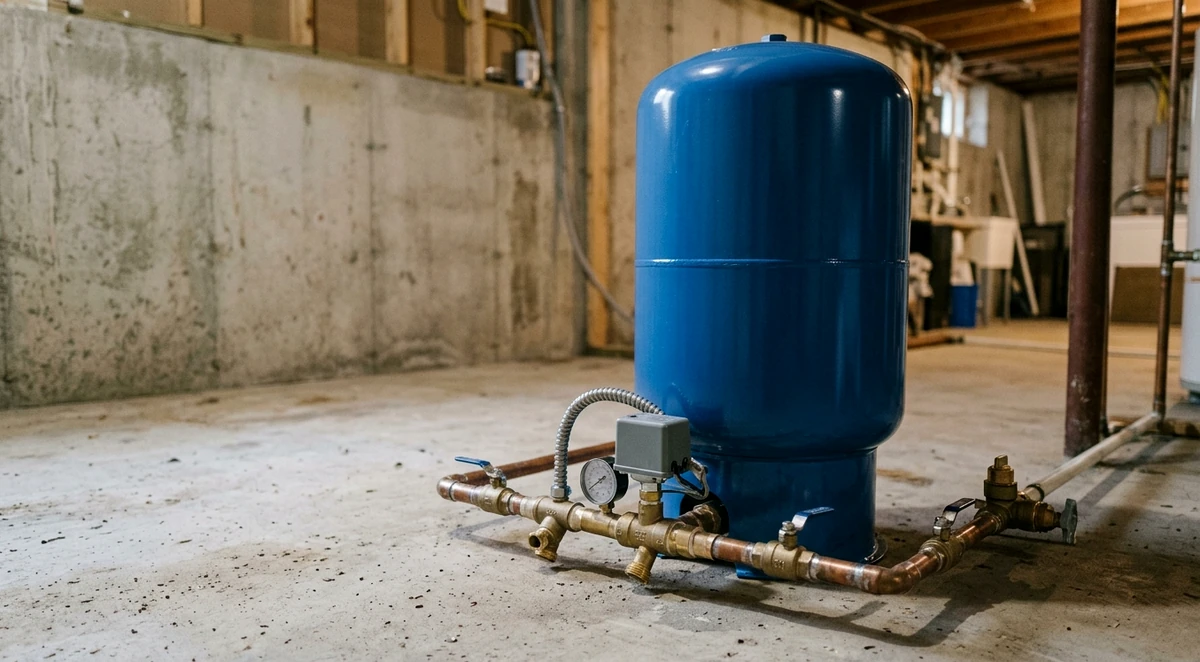
Well pressure tank replacement swaps a waterlogged, leaking or undersized bladder or diaphragm tank for a new one, set to the right air charge for your pressure switch. Typical costs in the Hartford area run about $785 to $1,960. We answer 24/7, can often replace a tank the same visit, and quote the full price before work starts.
A pressure tank stores water under pressure so the pump does not have to run every time you open a tap. Inside, a rubber bladder or diaphragm separates the water from a pocket of compressed air. As the pump fills the tank, the air compresses. When you use water, the air pushes it out until pressure drops to the switch's cut-in point and the pump starts again.
That stored volume, called drawdown, gives the pump longer, less frequent run cycles, which is easier on the motor. When the bladder fails or the air leaks out, the tank fills with water, drawdown shrinks to almost nothing, and the pump starts and stops constantly. That short cycling is the main reason tanks matter so much.
Tank size should match the pump's flow rate, not just fit the space. A pump that delivers more gallons per minute needs more drawdown so it can run for at least a minute or two each cycle. Many homes do well with a tank in the 20- to 44-gallon range, but older houses often have tanks that were undersized from the start.
We look at the pump size, the switch settings and the household's water use, then recommend a tank that gives a healthy run time. A slightly larger tank costs a little more but can extend pump life. Floor space and ceiling height in the basement also matter, and we can use vertical or horizontal tanks where room is tight.
We shut off the pump, drain the system and disconnect the old tank. The new tank goes on a tank tee with a pressure switch, gauge, drain valve and relief valve, and we replace corroded fittings while the system is open. Before filling, we set the tank's air charge to about 2 psi below the switch's cut-in pressure with a tire gauge and pump.
Once the tank is connected, we turn the pump back on and watch it fill to cut-out pressure, then draw water to see the cut-in point and time the cycle. We check for leaks and confirm the switch is working smoothly. You get a quick lesson on reading the gauge so you can spot early signs of trouble.
Homes on private wells in Vernon, Ellington, Tolland, Coventry and Bolton depend on a working pressure tank to protect the pump. Older galvanized steel tanks without bladders are still found in some houses and need regular recharging. Tanks in damp basements rust from the bottom up, and a tank that has been short cycling for months can lead to a pump replacement if nobody catches it.
Tank size, the condition of the tank tee and fittings and whether the pressure switch also needs replacement move the price. Typical Hartford-area range, confirmed on site before work starts. Compare all prices.
Process
We check air charge, drawdown, gauge readings and the pump's cycle time.
We pick a tank sized to your pump and quote the full price before work starts.
We drain the system, install the new tank and tee, and set the air charge.
We run the pump through a full cycle, check for leaks and clean up the area.
FAQ
Watch the pump. If it starts almost every time you open a faucet, or the gauge swings quickly, the tank may be waterlogged. Press the air valve on top: water coming out means the bladder has failed. A tank that sounds full of water or shows rust or leaks at the bottom also needs replacing.
Older tanks without bladders can sometimes be drained and recharged with air. Modern bladder tanks that have filled with water usually have a torn bladder, which is not repairable, so the tank needs replacing. We check the tank type and condition before recommending well pressure tank replacement.
Most tank swaps take two to three hours, including draining the system, installing the new tank and fittings, setting the air charge and testing the pump cycle. If the pressure switch or tank tee also needs replacing, it usually fits into the same visit without a second trip.
Related work
When the taps go dry on a house with a private well, the cause is usually the pump, the pressure switch or the controls. We track it down and get water flowing again.
Learn moreOrange stains in the tub, a rotten-egg smell in the shower or white crust on every faucet tell you something is in your well water. Treatment starts with...
Learn moreA shower that trickles, a faucet that sputters or pipes that bang when a valve closes all point to a pressure problem. The fix depends on finding where the...
Learn moreA plumber answers, day or night, and gives you a price before any work starts.