Well Water Treatment
Orange stains in the tub, a rotten-egg smell in the shower or white crust on every faucet tell you something is in your well water. Treatment starts with...
Learn moreBasement, well & water
If you like your water but not its taste, smell or grit, a whole-house filter treats it right where it enters the home. Every faucet, shower and appliance gets the same filtered water.
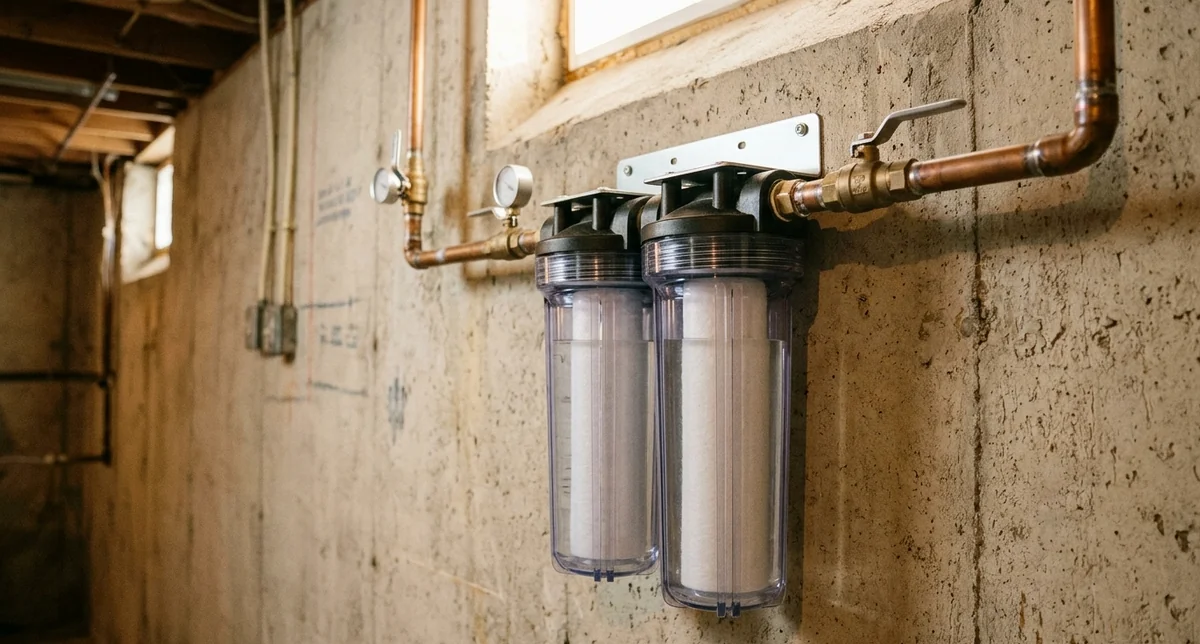
Whole-house water filtration installs a filter system on the main line after the meter, usually sediment and carbon stages, to reduce chlorine taste, odor and particles at every tap. Typical Hartford-area costs run about $585 to $3,240 depending on the system. We answer 24/7, can usually install within a few days and quote the full price before work starts.
City water from the MDC is treated and disinfected, and it is soft, so scale is usually not the issue. What homeowners notice is chlorine or chloramine taste and smell, plus occasional sediment after main breaks or street work. Activated carbon filters reduce chlorine taste and odor, and sediment filters catch sand, rust flakes and grit before they reach fixtures.
Carbon filters are rated by flow and capacity, so a whole-house unit needs to keep up with several fixtures running at once. A large carbon tank that backwashes handles a home's flow better than a small cartridge, which can restrict pressure. We size the system to your house so filtration does not cost you shower pressure.
Cartridge housings are the simplest option: a sediment housing followed by a carbon housing, with cartridges changed every few months depending on water use. They cost less to install and take up little wall space. The tradeoff is ongoing cartridge replacement and some pressure drop if the cartridges are undersized or overdue for a change.
Tank-style carbon systems hold a large bed of media and can last much longer between media changes. Backwashing models flush the bed periodically, which needs a drain and electricity nearby. They take more floor space but handle higher flow. We explain the costs over time so you can compare a lower upfront price against ongoing maintenance.
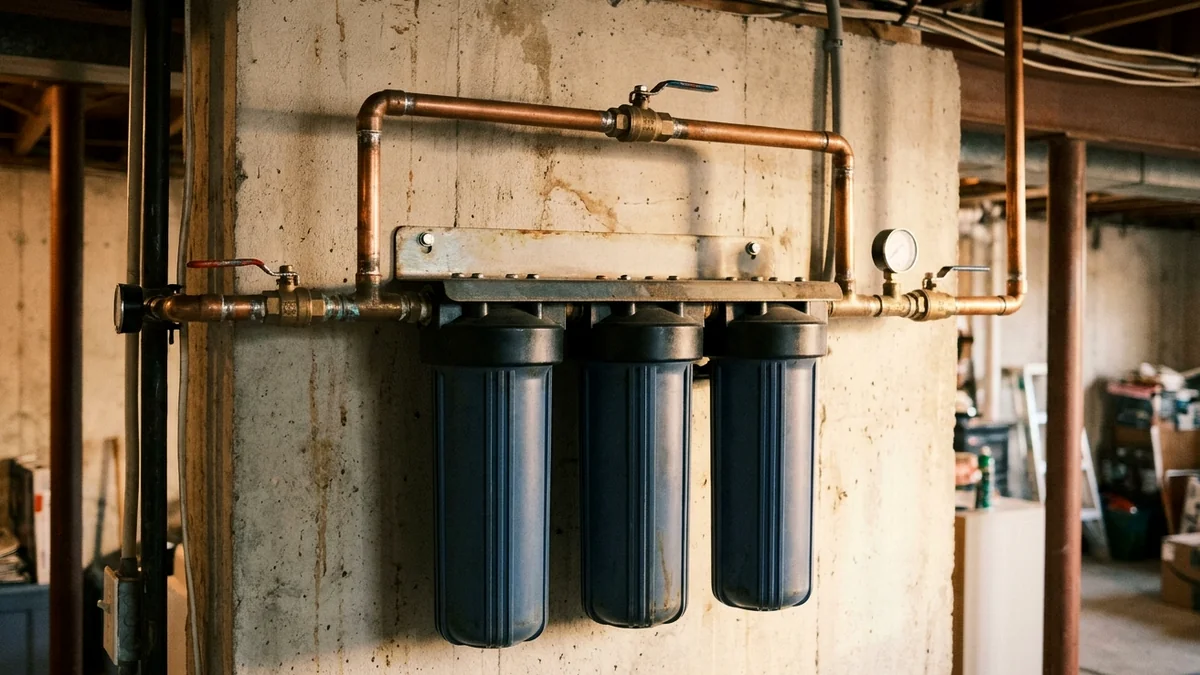
The filter goes on the main line after the meter and shut-off, before the water heater and the house branches, so every fixture gets filtered water. We install a bypass so you can change filters without shutting off the whole house. We also add shut-off valves on both sides and leave enough room around the housings to remove them easily.
Some homes use the metal water pipe as part of the electrical grounding path, and a filter housing can interrupt it. We add a bonding jumper across the filter. Where homeowners also want drinking water treated to a higher level, a separate under-sink reverse osmosis system for the kitchen is a common pairing with a whole-house filter.
Hartford and the MDC member towns get water from reservoirs in the northwest hills, including Barkhamsted and Nepaug, and the water is soft and treated. Homeowners in West Hartford, Wethersfield and Newington who choose filtration usually want to cut chlorine taste or catch sediment that shows up after street work. Homes on private wells east of the river often need well water treatment first, with a carbon filter as a final stage.
Cartridge versus tank systems, flow capacity and the space and plumbing at your main line move the price. Typical Hartford-area range, confirmed on site before work starts. Compare all prices.
Process
We ask what bothers you about your water and look at the main line and space.
We recommend a filter type and size and quote the full price before work starts.
We install the system with a bypass, shut-offs and a bonding jumper.
We flush the new filter, check for leaks, explain filter changes and clean up.
FAQ
MDC water is treated to meet drinking water standards and is soft, so filtration is a preference, not a requirement. Many homeowners choose a whole-house filter to reduce chlorine taste and smell or to catch sediment that appears after street work. We explain what a filter can and cannot do so you decide based on your needs.
A properly sized system should not noticeably lower pressure. Undersized cartridges or filters that are overdue for a change can restrict flow. We size the filter to your home's flow needs and add a bypass so you can maintain it easily. If pressure drops later, it usually means a cartridge needs changing.
It depends on water use and the cartridge type. Sediment cartridges may need changing every few months, and carbon cartridges often every few months to a year. Tank-style carbon systems last much longer between media changes. We give you a schedule based on the system we install.
Related work
Orange stains in the tub, a rotten-egg smell in the shower or white crust on every faucet tell you something is in your well water. Treatment starts with...
Learn moreA shower that trickles, a faucet that sputters or pipes that bang when a valve closes all point to a pressure problem. The fix depends on finding where the...
Learn moreIf the pipe bringing water into your house is lead, every glass you pour has passed through it. Replacing that line is the most direct way to take lead out of the path.
Learn moreA plumber answers, day or night, and gives you a price before any work starts.