Battery Backup Sump Pumps
The storms that fill your sump pit are the same ones that knock out power, and a plug-in pump does nothing in a blackout. A battery backup keeps water moving...
Learn moreBasement, well & water
If water seeps across the basement floor after every hard rain or snowmelt, a sump pump gives that water a place to collect and a way out. Installed right, it runs when needed and stays quiet otherwise.
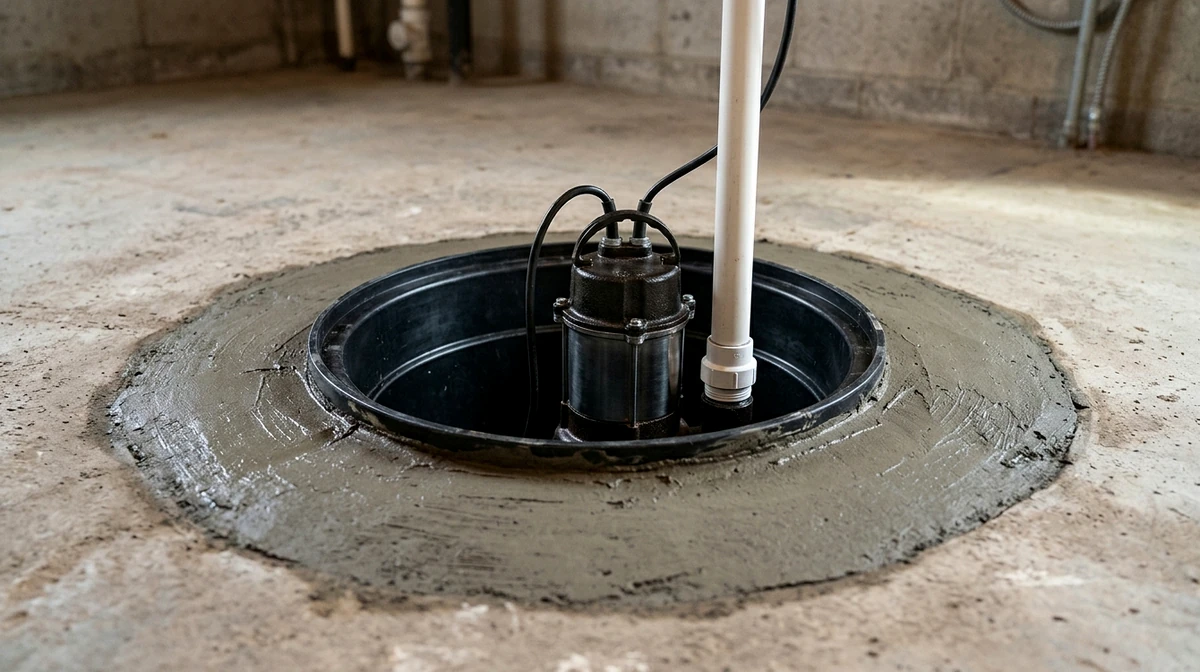
Sump pump installation sets a pit at the low point of the basement, adds a submersible or pedestal pump with a check valve, and runs discharge pipe outside and away from the foundation. Typical Hartford-area costs run about $485 to $2,960 depending on whether a pit already exists. We answer 24/7 and quote the full price before work starts.
Submersible pumps sit inside the pit, run quieter and handle larger volumes. Pedestal pumps sit above the water on a column, are easier to service and fit narrow pits. Most homes do well with a one-third or one-half horsepower pump with a cast-iron or stainless housing, which handles heat and lasts longer than a plastic body.
We pick the pump based on how much water comes in, how high it has to lift and how far it travels to the outlet. A vertical float switch is more reliable than a tethered float in tight pits because it cannot catch on the wall. If your basement takes on a lot of water, we discuss a higher-capacity pump or a second pump.
If there is no pit, we cut and break out a section of the slab at the lowest point where water collects, dig down, and set a perforated basin with a sealed lid. The perforations let groundwater in from below while the lid keeps out debris and moisture. Gravel around the basin helps water reach it from the surrounding soil.
In basements with an interior drain tile or perimeter channel, we connect the tile to the pit so water flows to it. We patch the concrete around the basin and leave the lid sealed with a gasket for the discharge pipe and cord. A sealed lid also keeps radon and basement humidity from coming up through the pit.
The discharge pipe needs a check valve right above the pump so water in the pipe does not fall back into the pit each cycle. We run the line in PVC up and out through the rim joist or wall, then outside to a spot that slopes away from the foundation, often 10 feet or more where the yard allows.
Do not tie a sump pump into a sanitary sewer or a floor drain connected to it; in many places that is not allowed and it overloads the system during storms. Outside, we pitch the line so it drains and suggest a freeze-resistant outlet or a grated relief fitting so a frozen line in winter does not stop the pump from emptying the pit.
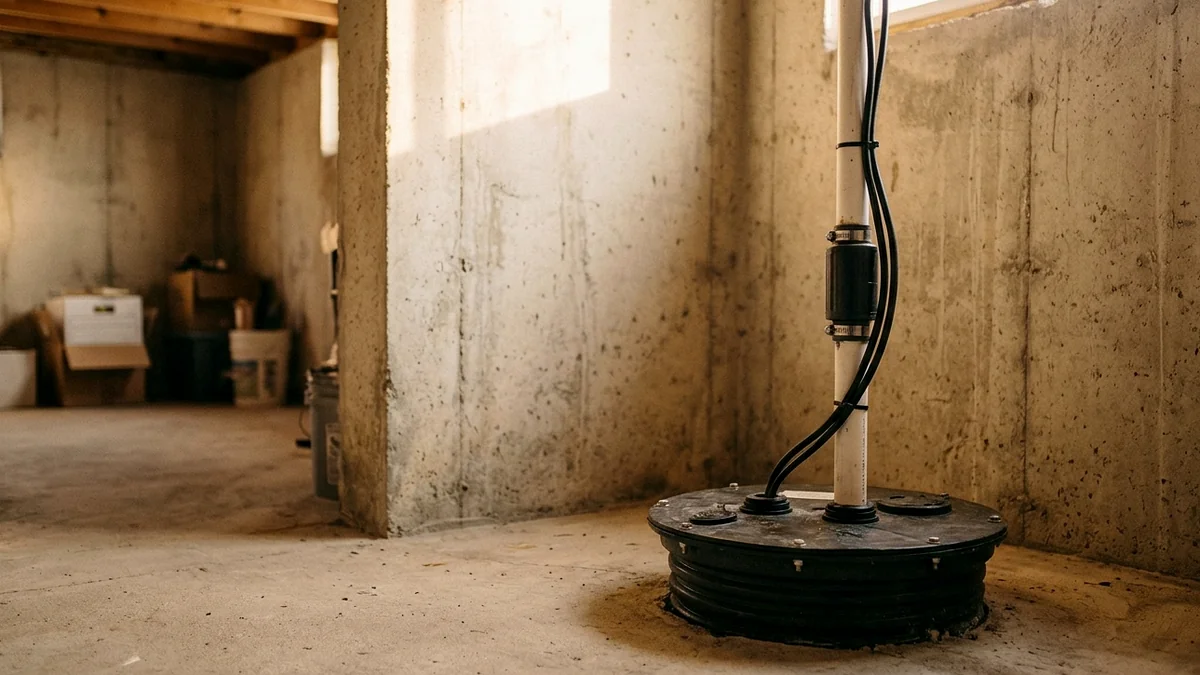
Hartford-area basements take on water during spring snowmelt and heavy fall storms, and older houses with fieldstone or block foundations seep more than modern poured walls. In parts of Hartford with older combined sewers, heavy rain can also push water back toward basements through floor drains, which a sump pump does not stop; that calls for a backwater valve. Homes in Vernon, Ellington and Coventry with high groundwater often need a pump that runs regularly in spring.
An existing pit keeps cost low; breaking out a new pit, connecting drain tile or a long discharge route raises it. Typical Hartford-area range, confirmed on site before work starts. Compare all prices.
Process
We look at where water enters and pools, and check for drain tile and an existing pit.
We pick the pump, pit and discharge route and quote the full price before work starts.
We set the basin, pump, check valve and discharge, and route the line outside.
We fill the pit to cycle the pump, check the discharge and clean up concrete dust.
FAQ
At the lowest point where water collects, often in a corner or along the wall where seepage shows up first. If the basement has interior drain tile, the pit goes where the tile can drain to it. We look at stains, efflorescence and the floor slope to find the right spot.
Usually not. Sump water is groundwater and is generally meant to go outside, away from the foundation, not into the sanitary sewer. In areas with combined sewers, sending groundwater into the sewer also adds load during storms. We route discharge outside and slope it away from the house.
A new pump in an existing pit usually takes two to three hours. A new pit with concrete cutting, digging, basin setting and a discharge line typically takes most of a day. Connecting interior drain tile or running a long outdoor discharge can add time, which we cover when we quote.
Related work
The storms that fill your sump pit are the same ones that knock out power, and a plug-in pump does nothing in a blackout. A battery backup keeps water moving...
Learn moreA sump pump usually fails when you need it most, during a downpour or snowmelt, with the pit filling and the basement next. Most failures come down to a few...
Learn moreEvery time a big storm hits, water comes up through the basement floor drain even though your own pipes are clear. The public sewer is surging back into the...
Learn moreA plumber answers, day or night, and gives you a price before any work starts.