Water Heater Replacement
The tank is leaking from the bottom, or it is old enough that every repair is money down the drain. A replacement done right means the right size, safe venting...
Learn morePipes & gas
When water heats up it expands, and if it has nowhere to go, pressure spikes every time your heater runs. A dripping relief valve or a hissing toilet is often the first clue.
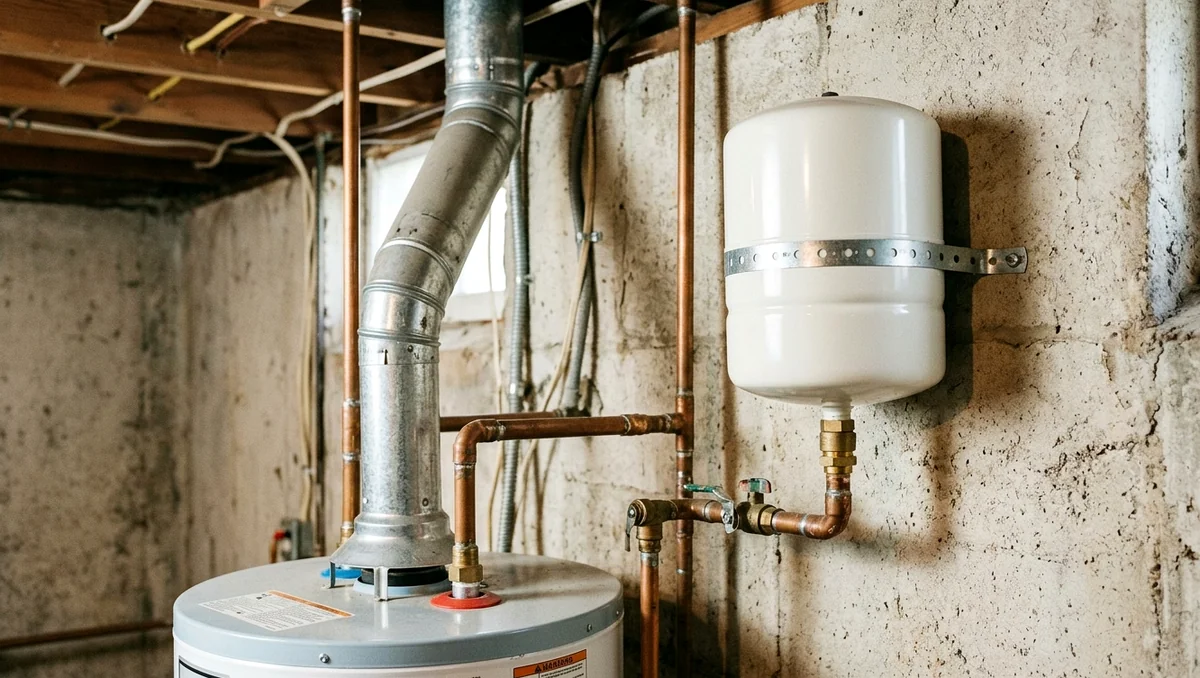
Expansion tank installation adds a small pre-charged tank on the cold line near your water heater to absorb the extra volume as water heats, keeping pressure steady. Typical Hartford-area costs run about $285 to $585. We answer 24/7, can usually install promptly, and quote the full price before work starts. We set the air charge to match your house pressure.
Water expands a few percent as it heats from cold to around 120 degrees. In an open system, that small extra volume pushes back into the street main. Once a check valve, backflow preventer or pressure reducing valve is installed at the main, the house becomes a closed system, and the extra water has nowhere to go except into rising pressure.
Pressure can climb well above normal during every heating cycle, then drop when someone opens a tap. That repeated stress wears out fixture valves, washer hoses and water heater tanks. The relief valve on the heater may drip to vent it, which is the valve doing its job, but it was never meant to manage thermal expansion every day.
Thermal expansion tanks have a rubber bladder with air on one side and water on the other. Size depends on the water heater capacity and the house pressure; a typical 40- or 50-gallon heater at normal pressure uses a two-gallon tank, while larger heaters or higher pressure need more. We check the manufacturer's sizing chart rather than guessing.
Before installing, we measure your house pressure and set the tank's air charge to match it with a tire gauge and pump. A tank shipped at 40 psi on a house running 65 psi will fill with water and do little. Getting the precharge right is the difference between a tank that works for years and one that fails in months.
We install the tank on the cold supply line feeding the water heater, between the heater and any main check valve or PRV, using a tee and a support bracket or strap. A full tank weighs a lot, and hanging it from a soldered joint alone strains the pipe, so we brace it to the wall or a joist.
Tanks wear out, usually when the bladder fails and the tank waterlogs. Tap the top: a hollow sound is air, a dull thud is water. If you press the air valve and water comes out, the bladder is gone. We replace failed tanks and check the heater relief valve while we are there, since one that has dripped for months may also need replacing.
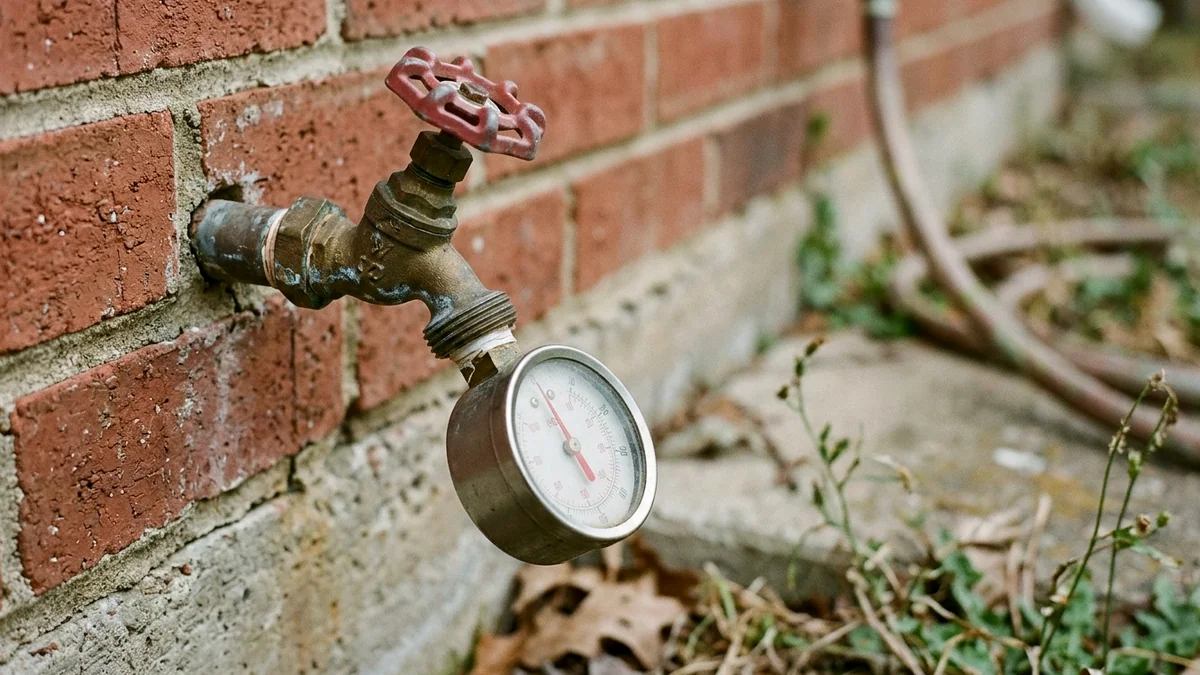
Many Hartford-area homes now have backflow devices or pressure reducing valves at the main, often added during a meter change or a plumbing upgrade, which turns the house into a closed system. Boiler systems with an indirect water heater still need domestic expansion control on the potable side, and older two- and three-family houses sometimes have several water heaters, each needing its own tank. Homes on wells in Vernon and Tolland usually have a pressure tank already, which changes how expansion behaves.
Tank size, access around the water heater and whether a failing relief valve also needs replacing move the price. Typical Hartford-area range, confirmed on site before work starts. Compare all prices.
Process
We measure house pressure and look at the heater, the main valve and the relief valve.
We pick the right tank size for your heater and pressure and quote it before work starts.
We match the air charge to your pressure, then mount and brace the tank on the cold line.
We run a heating cycle, watch the pressure and relief valve, and clean up.
FAQ
If your home has a check valve, backflow preventer or pressure reducing valve at the main, it is a closed system, and an expansion tank is needed to absorb thermal expansion. Many water heater replacements now include one for that reason. We check your main and pressure during the job and explain whether your house needs one.
Many last several years, but the bladder eventually fails, especially if the air charge was never set to match house pressure. When the tank waterlogs, it stops absorbing expansion and the relief valve may start dripping again. Tapping the tank or pressing the air valve tells you whether it is still working.
Often, yes, if thermal expansion is causing the drip. If the relief valve has been dripping for a long time, it may be worn and should be replaced as well. A drip can also mean the water is too hot or house pressure is too high, so we check those during the visit.
Related work
The tank is leaking from the bottom, or it is old enough that every repair is money down the drain. A replacement done right means the right size, safe venting...
Learn moreA shower that trickles, a faucet that sputters or pipes that bang when a valve closes all point to a pressure problem. The fix depends on finding where the...
Learn moreNo hot water, a shower that goes cold in two minutes, or a tank making popping noises. Most of the time a water heater can be repaired, and the trick is...
Learn moreA plumber answers, day or night, and gives you a price before any work starts.