Sump Pump Installation
If water seeps across the basement floor after every hard rain or snowmelt, a sump pump gives that water a place to collect and a way out. Installed right, it...
Learn moreBasement, well & water
The storms that fill your sump pit are the same ones that knock out power, and a plug-in pump does nothing in a blackout. A battery backup keeps water moving until the lights come back.
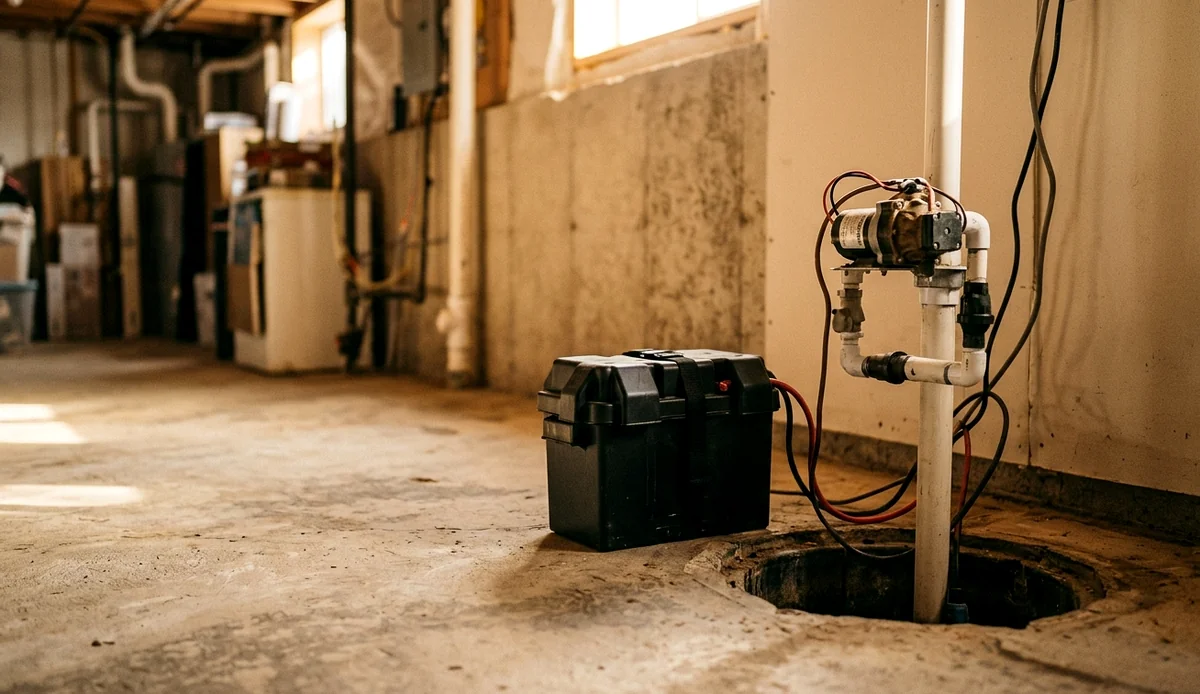
Battery backup sump pump installation adds a second DC pump in the pit, powered by a deep-cycle battery and charger, that takes over if the main pump fails or loses power. Typical Hartford-area costs run about $685 to $1,985. We answer 24/7, schedule installs promptly and quote the full price before work starts.
A backup system adds a second pump, usually mounted above the primary pump in the same pit, with its own float set slightly higher. If the main pump fails or loses power, the water rises to the backup float and the DC pump kicks on, running from a deep-cycle battery. A charger keeps the battery topped up while power is on.
Most systems have an alarm that sounds when the backup runs, when the battery is low or when the water reaches a high level. Some send alerts to your phone. The backup discharges into the same pipe as the primary pump through its own check valve, or into a separate discharge line when the pit layout calls for it.
Backup pumps move less water than a primary AC pump, so we size the backup to what your pit actually takes in during a storm. A basement that fills the pit every few minutes needs a stronger backup than one that cycles once an hour. Battery size sets runtime; a larger battery runs longer before it goes flat.
Sealed AGM batteries need little maintenance and handle basement conditions well. Flooded batteries cost less but need water topped up and must be kept vented. Runtime depends on how often the pump cycles, so a battery that lasts days in light seepage may last hours in a heavy storm. We explain realistic runtimes for your basement.
Some homes on city water can use a water-powered backup, which uses the pressure in your supply line to pull water from the pit with no battery. It runs as long as city pressure holds. It does use water to work, and it needs a backflow preventer. It is not an option for homes on private wells, since the well pump stops when power fails.
Combination units pair a new primary pump and a battery backup on one assembly with a shared controller, which simplifies installation in tight pits. A standby generator is another way to keep a primary pump running, but many homes do not have one. We go through the options so you pick what fits your house and budget.
Summer thunderstorms, nor'easters and winter ice storms in the Hartford area can knock out power for hours or days, often while groundwater is high. Finished basements in West Hartford, Glastonbury and Manchester carry a lot of value below grade. Homes on private wells in Vernon, Tolland and Coventry cannot use water-powered backups, so a battery system or a generator is the practical choice there.
Backup pump capacity, battery type and size, alarms and whether a new primary pump is installed together move the price. Typical Hartford-area range, confirmed on site before work starts. Compare all prices.
Process
We check the pit size, the primary pump, the discharge line and how often water comes in.
We recommend a backup and battery and quote the full price before work starts.
We mount the backup pump, add a check valve, set the floats and connect the charger and alarm.
We unplug the main pump to test the backup, check the alarm and clean up.
FAQ
It depends on the battery size and how often the pump cycles. In light seepage, a good battery might last a day or more; in a heavy storm with the pit filling fast, it may last several hours. We size the battery to your basement and explain what to expect. A second battery adds runtime.
Test it a few times a year, especially before spring and fall storms. Unplug the primary pump and pour water into the pit to make sure the backup starts and the alarm sounds. Check the battery charge indicator. Many batteries need replacing every few years, so watch for warnings from the charger.
If you are on city water with enough pressure, a water-powered backup can work and does not need a battery. It does use water and needs a backflow preventer. Homes on private wells cannot use them, because the well pump stops when the power goes out.
Related work
If water seeps across the basement floor after every hard rain or snowmelt, a sump pump gives that water a place to collect and a way out. Installed right, it...
Learn moreA sump pump usually fails when you need it most, during a downpour or snowmelt, with the pit filling and the basement next. Most failures come down to a few...
Learn moreEvery time a big storm hits, water comes up through the basement floor drain even though your own pipes are clear. The public sewer is surging back into the...
Learn moreA plumber answers, day or night, and gives you a price before any work starts.