Sewer Line Repair
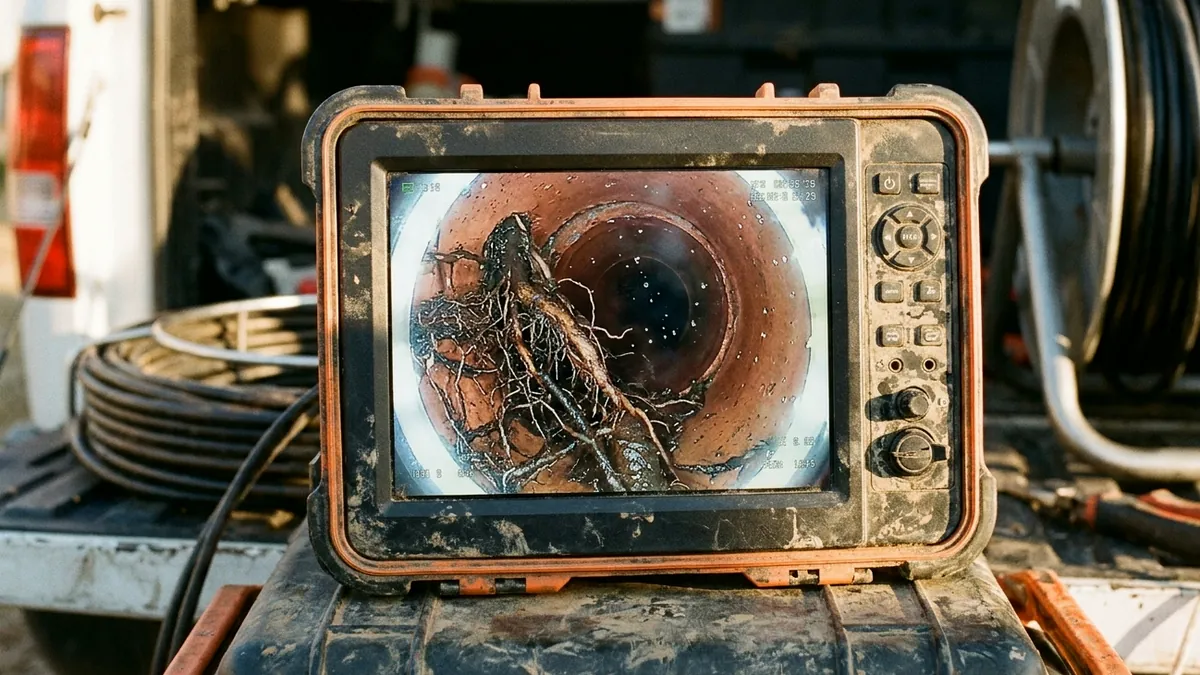
The camera found a break, a root mass or a section of pipe that has collapsed. Cleaning will not fix it anymore, and the line needs a real repair before the next backup.
Learn moreDrains & sewer
Your sewer lateral needs to be replaced, but it runs under the driveway, a mature tree or a front walk you do not want torn out. Trenchless methods can replace the pipe with far less digging.
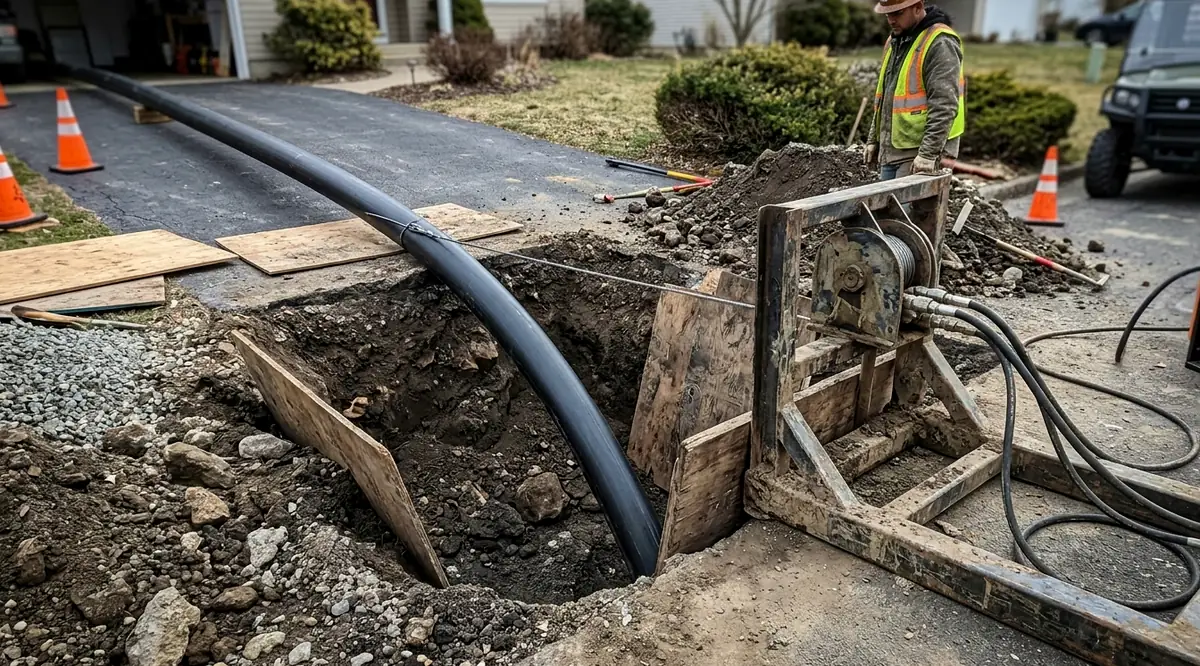
Trenchless sewer replacement installs a new sewer pipe by bursting the old pipe and pulling new HDPE through it, or by lining the old pipe with a cured-in-place liner. A typical Hartford-area job runs about $5,865 to $14,965. We answer 24/7, camera the line first to confirm it qualifies, and schedule after utilities are marked.
With pipe bursting, we dig a launch pit near the house and a receiving pit near the street connection. A cone-shaped bursting head is pulled through the old pipe by a hydraulic winch, fracturing the clay or cast iron outward into the soil while dragging a new jointless HDPE pipe in behind it. The new pipe is the same size or larger than the old one.
Bursting works well on clay, cast iron and Orangeburg laterals, and it handles pipe that is cracked or partly collapsed. It is less suited to lines with sharp bends, lines very close to other utilities, or pipe that sits right beside a foundation. The new HDPE is fused into one continuous length, so there are no joints for roots to enter.
Lining builds a new pipe inside the old one. After the line is cleaned and jetted, a resin-saturated felt liner is pulled or inverted into the pipe and inflated against the walls, then cured with hot water, steam or UV light. When it hardens, the result is a smooth, jointless pipe inside the original, with a slightly smaller diameter.
Lining needs a pipe that still holds its shape. It is a strong option for cast iron under slabs and for lines under foundations, where bursting would be risky. Connections from other drains along the line are reopened with a robotic cutter. The old pipe must be clean enough for the liner to bond, so preparation is half the job.
Trenchless replacement is not always cheaper or better. A short shallow run in open lawn can be faster and less expensive to trench. A pipe with a deep belly will keep its sag after lining. A fully collapsed section may need an open repair before anything can be pulled through. We tell you which method actually suits your line.
We also confirm where the lateral connects to the public sewer and what the utility requires at that connection. Some jobs need a permit and inspection, and the town or utility may need to approve work near the street. We build those steps into the schedule so the job does not stall halfway while the yard sits open.
Many Hartford-area homes have sewer laterals that run under shared driveways, old stone walls, front stoops and mature street trees, which makes a long trench costly and disruptive. Older two- and three-family houses often have cast iron under the basement floor that is a good candidate for lining. In West Hartford, Wethersfield and similar towns, landscaped front yards make trenchless work especially popular. We plan each job around the specific lateral and connection point.
Pipe length, depth, method (bursting or lining), access for pits and connection requirements change the price most. Typical Hartford-area range, confirmed on site before work starts. Compare all prices.
Process
We jet the line and record it to confirm the pipe is a good fit for bursting or lining.
We call 811, mark the launch and receiving pits, and plan around trees, walks and driveways.
We burst and pull new HDPE or install and cure a liner, then reconnect the house drain.
We camera the finished line, backfill and compact the pits, and leave the yard as close to before as we can.
FAQ
Most residential bursting or lining jobs take one to two days on site once the line is cleaned and utilities are marked. Lining needs time for the resin to cure before the line can be used. Your drains will be out of use during that window, and we plan the work so you know when to expect water back.
Usually, yes. Clay is one of the best candidates for pipe bursting, because it fractures cleanly as the bursting head passes. Very sharp bends, a deep belly or a collapsed section may need an open-cut repair first. A camera inspection tells us whether your clay line qualifies.
Per foot of pipe, trenchless can cost more, but you skip most of the excavation and restoration of driveways, walks and landscaping. On a short shallow run in open lawn, a trench may be cheaper. On a line under hardscape or trees, trenchless often costs less in total. We price both where both are possible.
Related work
The camera found a break, a root mass or a section of pipe that has collapsed. Cleaning will not fix it anymore, and the line needs a real repair before the next backup.
Learn moreThe main keeps clogging and nobody can tell you why, or you are about to buy an older house and want to know what is under the floor. A camera answers that...
Learn moreOld cast-iron drain lines can split along the bottom, rust through at the hubs or start weeping sewer gas into the basement. We replace the bad sections before...
Learn moreA plumber answers, day or night, and gives you a price before any work starts.