Galvanized Pipe Replacement
Galvanized steel pipe rusts from the inside out, and by the time you see brown water or a trickle at the shower, the bore is mostly scale. Replacing it is the...
Learn morePipes & gas
When every fix uncovers another pinhole or rusty joint, patching stops making sense. Repiping swaps the tired supply lines in your house for new ones in a planned, orderly job.
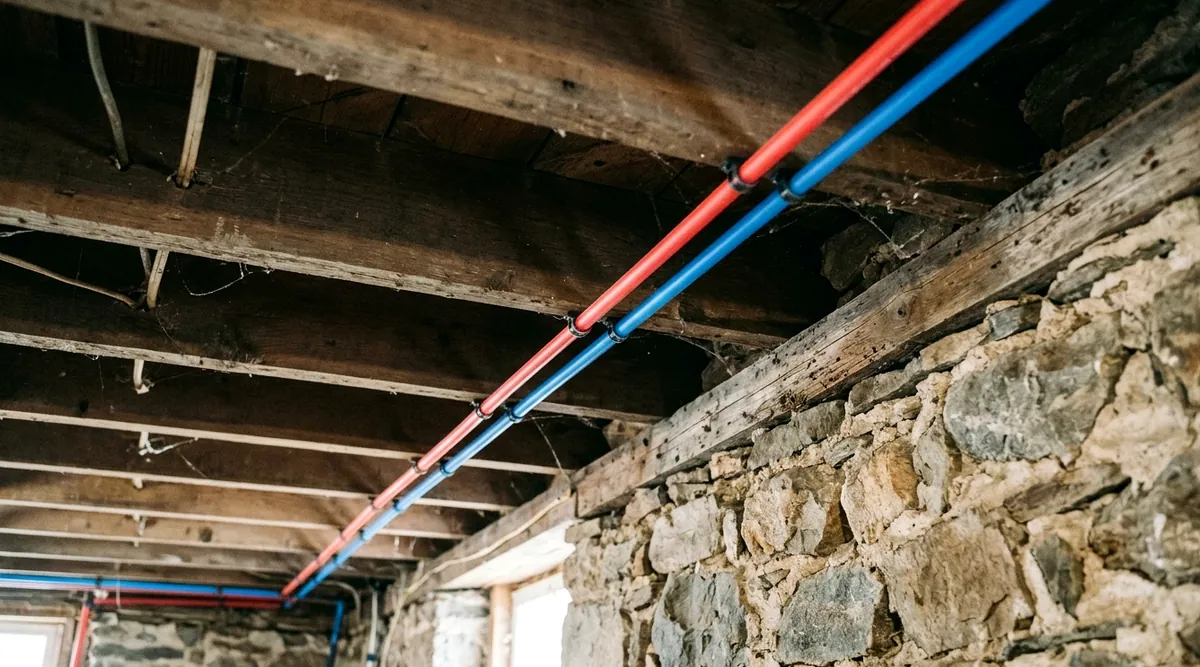
Whole-house repiping replaces the hot and cold supply lines from the main shut-off to every fixture, usually with PEX or Type L copper. Typical Hartford-area jobs run about $4,875 to $14,960 depending on size and access. We answer 24/7, come out to walk the house and quote the full price before work starts, then schedule the job around your household.
Most repipes we do in older Hartford houses use PEX-A tubing with expansion fittings. It bends around framing, so we fish it through walls with fewer openings, and it handles a freeze better than rigid pipe. We run a home-run manifold or a trunk-and-branch layout depending on how many bathrooms you have and where the fixtures sit relative to the basement.
Type L copper still makes sense in exposed basement runs, mechanical rooms and anywhere a homeowner simply prefers metal. It costs more in material and labor, and every joint is soldered or press-fitted. Many jobs end up mixed: copper near the water heater and boiler where heat and sunlight are concerns, PEX inside the walls where flexibility saves plaster. We lay out both options with prices so you can choose.
A lot of Hartford homes have original plaster on wood lath, and it cracks if you cut it carelessly. We map the route first: closets, kitchen base cabinets, the back of a stacked bathroom and the basement ceiling usually give us paths without opening finished walls. Where we do have to cut, we score the plaster, keep openings small and square, and note each one on a sheet for you.
We protect floors and stair runners with drop cloths and runners, and we vacuum each day. The access openings are left clean and ready for your plaster or drywall contractor to close. In a two- or three-family house, we coordinate with tenants so each unit loses water only during set hours, and we restore service at the end of every work day.
A complete repipe starts at the main shut-off, which we usually replace with a full-port ball valve while we are there. From there we install new mains to the water heater, a new cold feed, and hot and cold branches to every sink, tub, toilet, washer box and outdoor faucet. Each fixture gets a new quarter-turn stop valve so you can isolate it later without shutting down the house.
Before anything is closed up, we pressure test the new system and check every joint while it holds. We also tie in properly to the water heater and boiler fill, add hammer arresters where long runs feed quick-closing valves, and strap pipes so they do not knock. Old pipe is cut out and hauled away, or abandoned in place where removal would mean tearing out good walls.
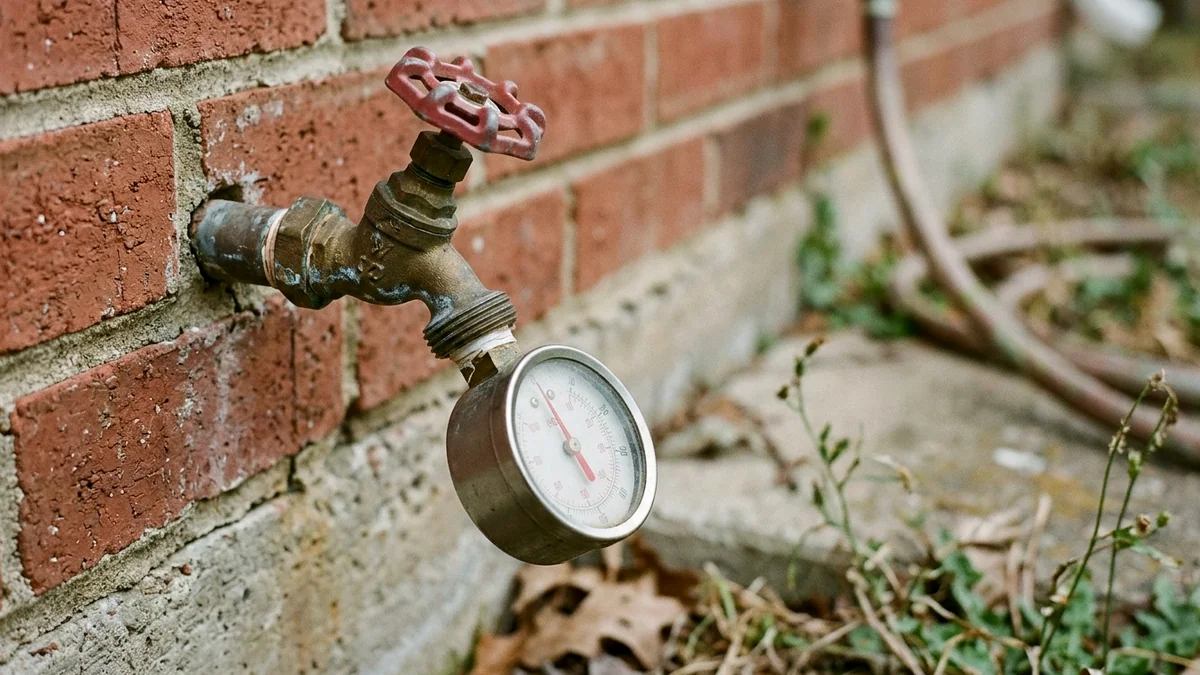
Hartford has a deep stock of pre-1940 two- and three-family houses, and many still carry a mix of galvanized steel, early copper and patched-in plastic from decades of small repairs. MDC water is soft, which tends to be easier on new pipe, but it does not undo rust that already lines old steel. In a triple-decker we often repipe one unit at a time so the building never goes fully dry, and we plan around January cold so no line sits empty and exposed.
The number of bathrooms, the pipe material you pick and how many finished walls we have to open move the price most. Typical Hartford-area range, confirmed on site before work starts. Compare all prices.
Process
You call (860) 926-8723 and we come out to trace the existing pipes, count fixtures and look at access.
We sketch the new routes, explain PEX versus copper, and quote the full price before any work starts.
We run the new lines floor by floor, keep water on overnight, and pressure test every section before closing anything.
We haul away old pipe, vacuum the work areas, label the new shut-offs and show you where each one is.
FAQ
Most one- to two-bath houses take two to four working days. The first day is usually basement mains and the water heater tie-in, and the following days are branches to each floor. We restore water every evening, so you are not without a shower overnight. Larger homes, plaster walls and tight access can stretch the schedule, and we tell you the expected length when we quote.
No. Water is off only during working hours, and we reconnect each evening once the day's section passes a pressure test. Expect some noise, a few small wall openings and drop cloths along the routes we use. Families with small children or people working from home sometimes plan errands for the main shut-down windows, which we schedule with you ahead of time.
If the low pressure comes from rusted galvanized pipe, it usually does, because new pipe has a full open bore instead of a passage choked with scale. If the cause is a failing pressure reducing valve, a partly closed main valve or a problem in the street service, repiping alone will not cure it. We test static and flowing pressure first so you know what the repipe will change.
Related work
Galvanized steel pipe rusts from the inside out, and by the time you see brown water or a trickle at the shower, the bore is mostly scale. Replacing it is the...
Learn moreA shower that trickles, a faucet that sputters or pipes that bang when a valve closes all point to a pressure problem. The fix depends on finding where the...
Learn moreWhen a pipe breaks, the main shut-off is the one valve that has to work. In a lot of older houses it is a crusty gate valve that has not turned in years, or it...
Learn moreA plumber answers, day or night, and gives you a price before any work starts.