Sump Pump Installation
If water seeps across the basement floor after every hard rain or snowmelt, a sump pump gives that water a place to collect and a way out. Installed right, it...
Learn moreBasement, well & water
A sump pump usually fails when you need it most, during a downpour or snowmelt, with the pit filling and the basement next. Most failures come down to a few causes we can fix quickly.
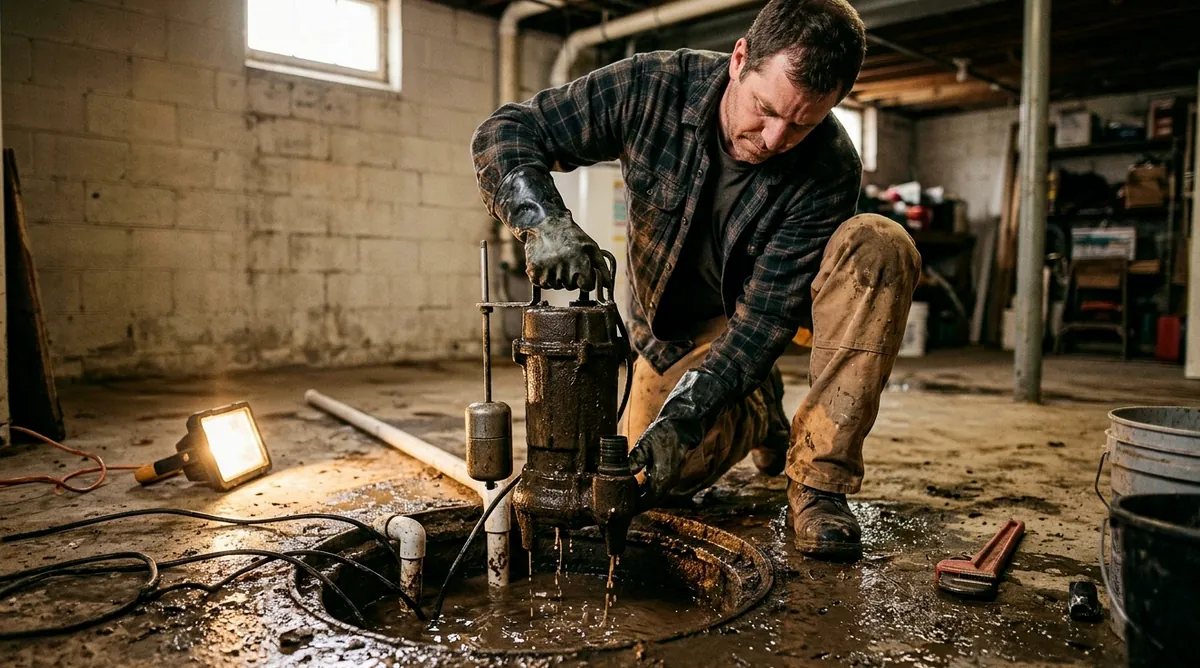
Sump pump repair diagnoses why your pump will not start, will not shut off or cannot keep up, then fixes or replaces the float switch, check valve, pump or discharge. Typical Hartford-area repairs run about $165 to $785. We answer 24/7 and come out fast when the pit is rising, quoting the price before work starts.
The most common cause is a stuck float. Tethered floats can catch on the pit wall or the cord, and vertical floats can jam with debris. Next is power: a tripped GFCI outlet, a breaker or a loose plug. We test the outlet and the float before condemning the pump, because a stuck switch is a quick fix.
If power and the float are fine, the motor may be burned out from age or from running dry. Pumps that have worked hard for several springs often wear out, and a pump that hums without moving water may have a jammed or broken impeller. We check whether the pump pulls power and moves water before replacing it.
A pump that turns on and off every few seconds usually has a failed check valve, which lets water in the discharge pipe fall back into the pit. Or the float is set so the on and off levels are too close. Short cycling wears out the motor quickly, so we replace the check valve and set the float properly.
A pump that runs constantly may have a stuck switch, a frozen or clogged discharge line outside, or simply more water coming in than it can move. We check the outdoor outlet first in winter, because a frozen discharge forces water back into the pit. If the pump is undersized for the water volume, we discuss a larger pump.
Clunking at shut-off is often a check valve slamming closed; a quiet check valve or better support on the pipe helps. Grinding or rattling means the impeller has picked up gravel or debris. We pull the pump, clean the intake screen and the pit, and set the pump on a few bricks or a stand if the basin collects silt.
A sewer or musty smell from the pit usually means the pit has no sealed lid or that water sits stagnant between cycles. An old clay crock pit with no basin can let silt and soil wash in. We can install a sealed lid, replace a crumbling pit liner or convert it to a modern basin.
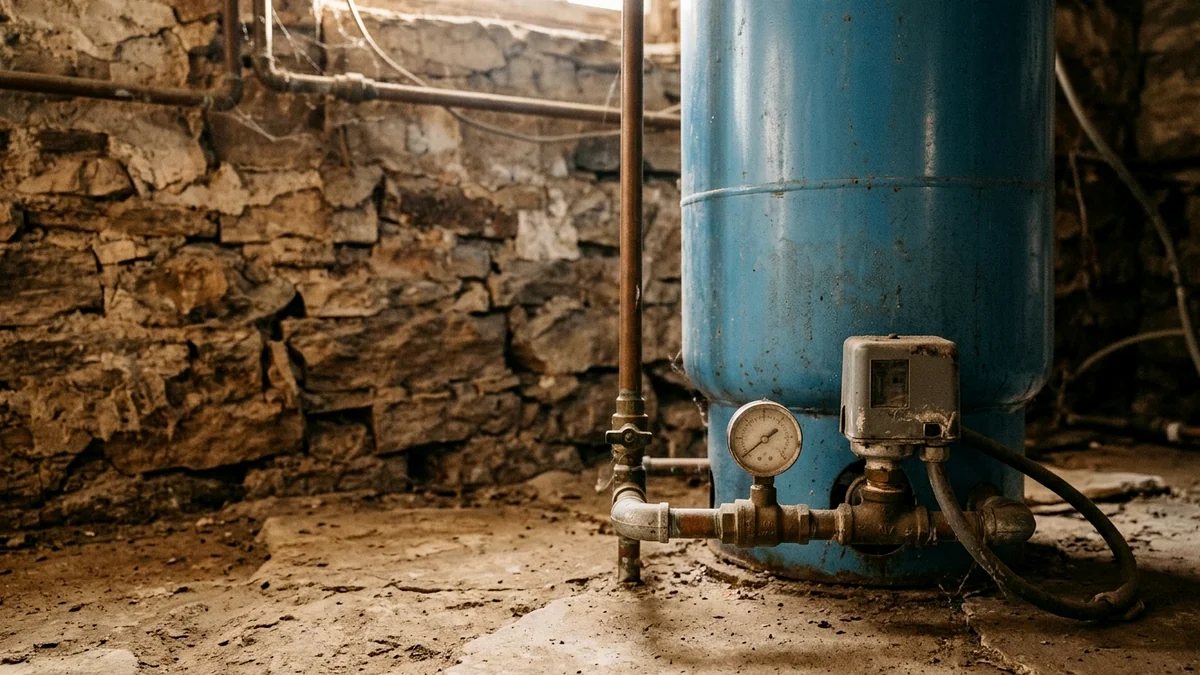
Spring snowmelt and heavy fall rain in the Hartford area test every sump pump, and pumps that sat idle all summer sometimes fail on the first big storm. Many older houses still have old clay crock pits with tethered floats that catch. In winter, a discharge line that runs across the yard can freeze solid, so we check the outside outlet first. Homes east of the river with high groundwater may run pumps for weeks each spring.
A float or check valve fix costs less; a new pump, a new basin or clearing a frozen discharge line costs more. Typical Hartford-area range, confirmed on site before work starts. Compare all prices.
Process
Call (860) 926-8723 and we can walk you through checking the outlet and float while we head over.
We test power, the float, the check valve, the pump and the discharge line.
We fix the failed part or swap the pump, quoting the price before work starts.
We run the pump through several cycles, check the discharge and clean up the pit area.
FAQ
Check that the pump is plugged in, the outlet has power and the GFCI is not tripped. Lift the float gently to see if the pump starts. If it does not run, call us and keep valuables off the floor. A wet vac or a borrowed utility pump can buy time. Do not reach into the pit while the pump is plugged in.
A pump that hums but does not move water, trips the breaker or has worked hard for many springs is often worth replacing. A stuck float, bad check valve or clogged intake is a repair. We test the motor, switch and valve before recommending replacement, so you are not buying a pump you do not need.
Groundwater keeps flowing into the pit for days after rain or snowmelt, especially in spring, so the pump may cycle long after the storm ends. A pump that runs nonstop may have a stuck switch or a frozen discharge line. We check whether water is truly coming in or the pump is the problem.
Related work
If water seeps across the basement floor after every hard rain or snowmelt, a sump pump gives that water a place to collect and a way out. Installed right, it...
Learn moreThe storms that fill your sump pit are the same ones that knock out power, and a plug-in pump does nothing in a blackout. A battery backup keeps water moving...
Learn moreWater is coming through the ceiling, the basement drain is backing up, or the boiler room is flooding, and it is 2 a.m. You need a real plumber on the phone...
Learn moreA plumber answers, day or night, and gives you a price before any work starts.