Drain Cleaning
The sink holds water, the shower drains in slow motion, or the basement floor drain bubbled up when the washer ran. Somewhere in the pipe there is a clog, and...
Learn moreKitchen & bath
The disposal hums but will not spin, it drips onto the cabinet floor, or it went silent mid-cleanup. Some of these take ten minutes to fix, and some mean the unit is done.
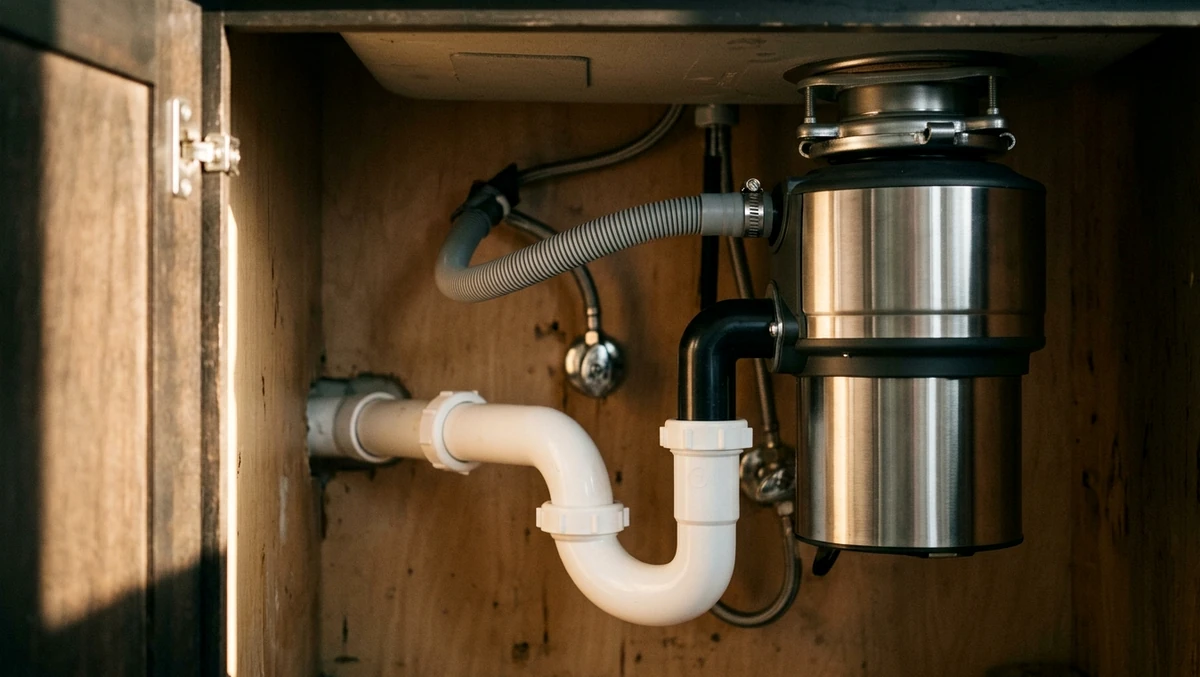
Garbage disposal service covers clearing jams, resetting tripped units, fixing leaks at the mounting or drain connections, and replacing failed disposals with properly sized new ones. Typical Hartford-area disposal repairs run about $145 to $295, and replacements about $365 to $685 installed. We answer 24/7, and most disposal calls are wrapped up on the first trip.
A disposal that hums but does not turn is almost always jammed by a bone, fruit pit, bottle cap or a stray spoon. With power off at the switch and the breaker, a quarter-inch hex wrench in the socket at the bottom of the unit lets you work the flywheel back and forth until it spins. Never reach into the grinding chamber with your hand. Use tongs to pull out whatever caused the jam.
A unit that does nothing at all may have tripped its thermal overload, and pressing the small red reset button on the bottom often brings it back. If not, we test the wall switch, the outlet or hardwired junction, and the breaker. A disposal that trips again and again usually has a motor that is drawing too much current from worn bearings, and that is a sign the unit is near the end.
Where the water comes out tells you a lot. A leak at the top usually means the sink flange putty or mounting gasket has failed, which is a reseal. A leak at the side usually comes from the dishwasher inlet clamp or the discharge tube gasket. A leak from the bottom of the housing means the internal seals have let go, and since those are not serviceable on most units, replacement is the answer.
We also look at the trap and drain line. A disposal feeding a long horizontal run or a drain with poor slope will clog no matter how good the unit is. Where the dishwasher drains through the disposal, a new unit needs its knockout plug removed, and the dishwasher hose needs a high loop or air gap so sink water cannot siphon back into the dishwasher tub.
Disposals are sold by horsepower. A third or half horsepower unit handles light scraps, while three-quarter and one horsepower models grind harder food, jam less often and usually run quieter because of better insulation. Continuous-feed models are the most common. We look at how much you cook and how much room is under the sink, since larger units are taller and can crowd a trap or a pull-out trash bin.
Installation includes a new mounting ring and sink flange, the electrical connection by cord or hardwire, and new discharge and dishwasher fittings. Homes on septic east of the river should ask their septic professional before adding a disposal, because ground food adds solids to the tank. We test with a full sink of water and a short grind, check every joint for drips, and carry the old unit out.
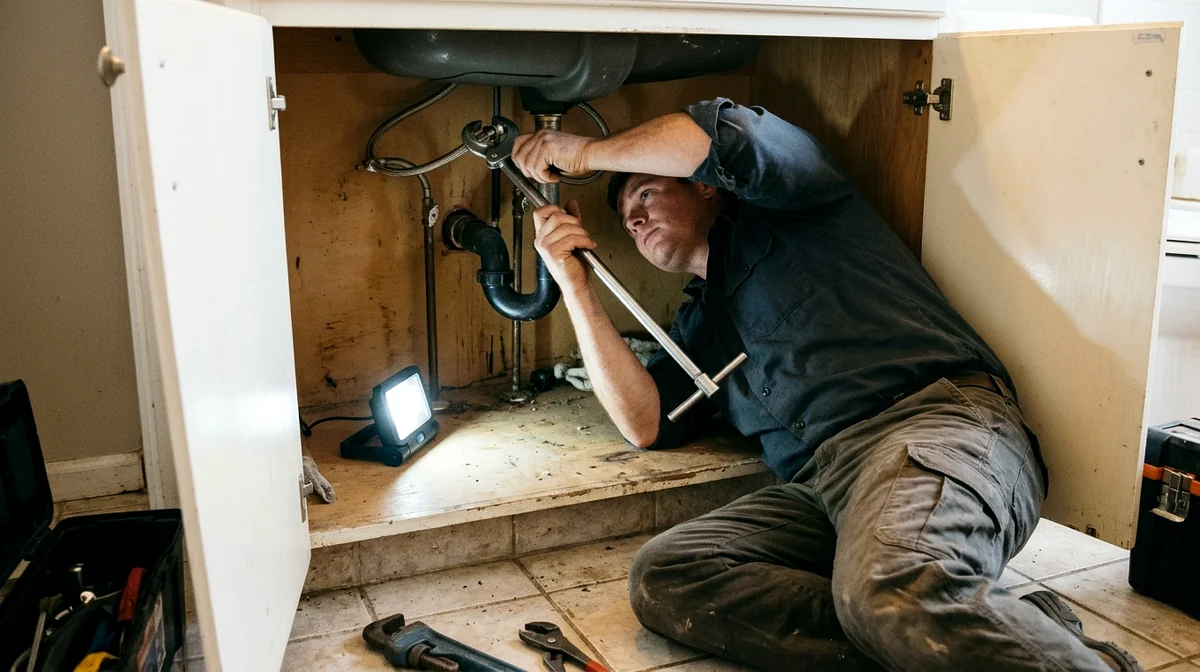
Many Hartford-area kitchens in older homes had disposals added decades after the house was built, tied into old drain lines with long horizontal runs that clog easily. In two- and three-family houses, kitchen drains often share a stack with the units above, so a disposal clog can back up into a neighbor's sink. Homes on septic in Vernon, Ellington, Tolland and Coventry need extra thought. We repair and install disposals in Hartford, Manchester, Glastonbury and other nearby towns.
Repair or replacement, motor size, electrical connection type and drain changes change the price most. Typical Hartford-area range, confirmed on site before work starts. Compare all prices.
Process
We check the switch, breaker and reset, and work the flywheel to see whether the motor turns freely.
We look at the flange, discharge, dishwasher inlet and housing to see exactly where water is escaping.
We clear the jam, reseal the connection, or install a new disposal sized to your kitchen with new mounting parts.
We run water and the disposal, check every joint for drips and wipe out the cabinet.
FAQ
If the problem is a jam, a tripped reset, or a leak at the sink flange or drain connections, repair is usually worth it and costs far less. If the housing leaks from the bottom, the motor is burned out, or the unit is old, loud and rusty inside, replacement is the better spend. We tell you which case you are in before any work starts.
It can be done, but a disposal sends more solids into the septic tank, which usually means pumping more often. Talk to your septic professional first about tank size and pumping schedule. Some homeowners choose a disposal made for septic use. If you decide to go ahead, we install it and route the drain properly.
Most installations take one to two hours, including removing the old unit, mounting the new one, connecting the drain and dishwasher, and testing. If the drain needs rework, the outlet must be added, or the old mounting ring is seized to the sink, it can take longer. We tell you what to expect when we see the setup.
Related work
The sink holds water, the shower drains in slow motion, or the basement floor drain bubbled up when the washer ran. Somewhere in the pipe there is a clog, and...
Learn moreA new countertop, a cracked basin, or a laundry room that needs a utility sink. Swapping a sink looks simple until the drain height, trap arm and old stops get involved.
Learn moreThe new dishwasher or washer has arrived, but the old hookup leaks, the drain is in the wrong spot, or there is no shut-off at all. Bad appliance connections...
Learn moreA plumber answers, day or night, and gives you a price before any work starts.