What to do in the first ten minutes after a pipe bursts
The first ten minutes after a pipe bursts decide how much water ends up on the floor, so here is what to do, in order.
Read the guidePlumbing Basics
Short, practical guides written for the houses we actually work in: triple-deckers, capes, colonials, and homes on wells east of the river.
Edited by Lorna Dwyer, Plumbing Basics Editor
15 guides
The first ten minutes after a pipe bursts decide how much water ends up on the floor, so here is what to do, in order.
Read the guideOlder two- and three-family houses have cold corners where pipes freeze first, and a few steps in the fall keep the water running through January and February.
Read the guideIn parts of Hartford, rain and sewage share old pipes, so a downpour can push water up a basement drain, and a backwater valve is built to stop it.
Read the guideMost pre-1940 Hartford-area houses still have some original galvanized supply pipe or cast-iron drains, and both give clear signs before they fail outright.
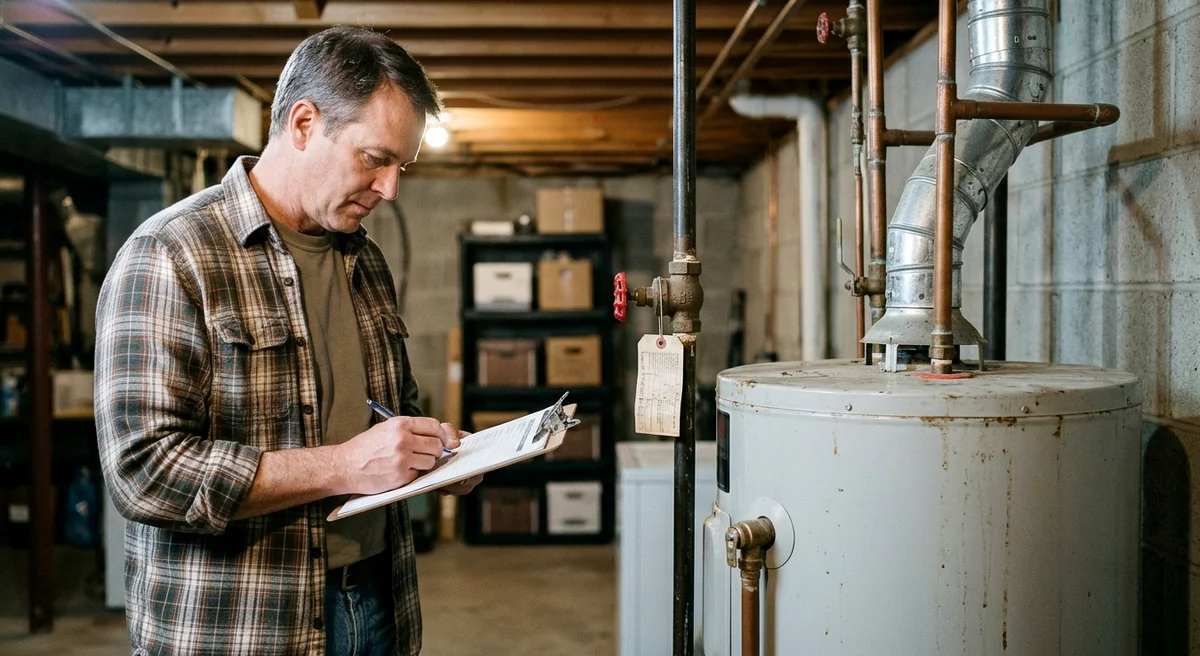
Read the guideFour kinds of water heater make sense in Connecticut homes, and the right one depends on your fuel, your basement, your boiler and how much hot water you use.
Read the guideMany homes in Vernon, Ellington, Tolland and nearby towns run on a private well, and knowing how the pump and pressure tank work makes problems easier to spot.
Read the guideThe main shut-off is the most important valve in the house, and the time to find it and make sure it works is before you ever need it.
Read the guideMany older homes still have a lead pipe bringing water in from the street, and a few minutes with a key and a magnet will usually tell you.
Read the guideSnowmelt and spring rain raise groundwater fast in March and April, so a twenty-minute check in late winter tells you whether the sump pump is ready.
Read the guideLow water pressure can come from a five-minute aerator fix or from aging pipe and a hidden leak, and a few checks narrow it down quickly.
Read the guideA brown ring on the ceiling below a bathroom almost always has a plumbing cause, and a few simple tests usually narrow it to one fixture.
Read the guideOwning a two- or three-family building means plumbing problems in one unit can reach the next, so a simple seasonal checklist saves money and tenant headaches.
Read the guideWhen the main drain leaves your house above the basement floor, a toilet down there needs help going uphill, and that is the job of an ejector pump.
Read the guideThe water you run down the drain while you wait is just hot water that cooled in the pipe, and there are a few ways to keep it from cooling.
Read the guideA cleanout is a small capped opening in your sewer line, and in an older house it can decide whether a clog takes an hour or a whole day.
Read the guideCall any hour and a plumber will talk it through with you.