Shower Valve Repair
The showerhead drips all day, the water turns scalding when someone flushes, or the handle spins without changing anything. The trouble is in the valve behind the tile.
Learn moreKitchen & bath
Water that is hot enough to store safely is not always safe at the tap. A thermostatic mixing valve blends hot and cold so the water at the faucet stays at a set temperature, protecting children, older relatives and tenants from scalds.
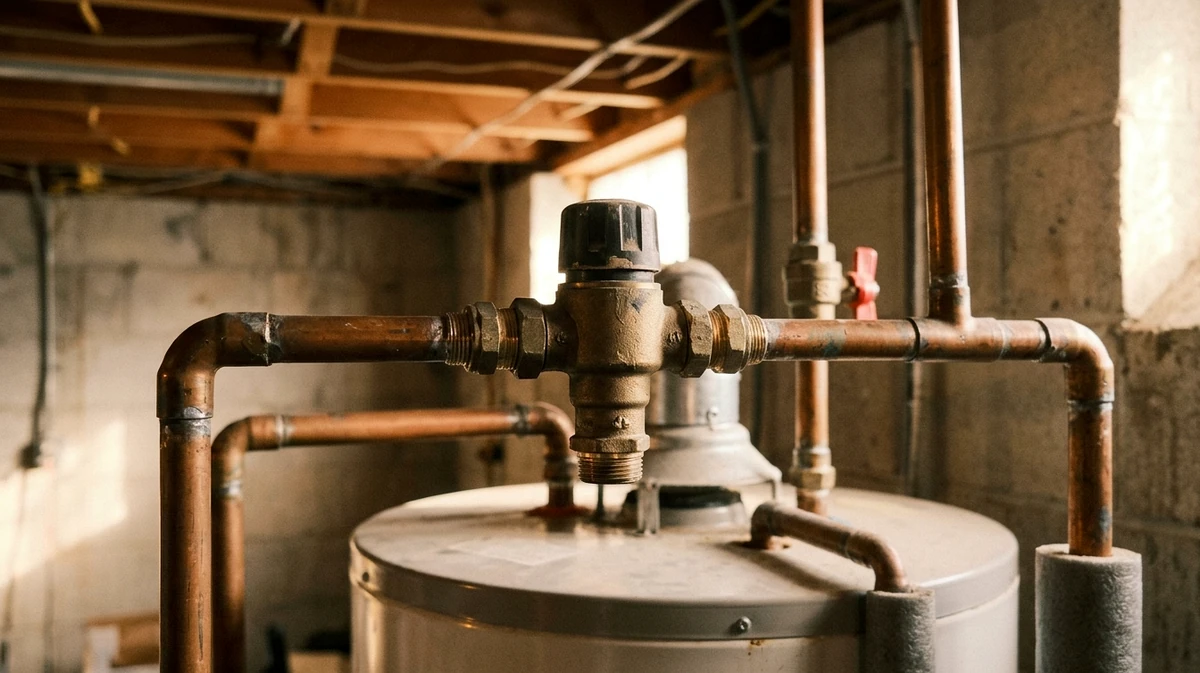
Anti-scald mixing valve installation adds a thermostatic or pressure-balancing valve that limits outlet temperature, either at the water heater for the whole house or at a single sink, tub or shower. Typical Hartford-area costs run about $215 to $945. We answer 24/7, set and test the outlet temperature with a thermometer and quote the price before work starts.
Many water heaters are set near 140 degrees to limit bacteria growth in the tank and to stretch the hot water supply, and indirect tanks heated by a boiler can run hotter. Water at those temperatures can scald skin very quickly, and young children and older adults are hurt fastest. A mixing valve lets the tank stay hot while the water reaching the taps is blended down, commonly to around 120 degrees, so you keep both the capacity and the safety.
There are three common places for this protection. A master thermostatic valve at the water heater outlet controls the temperature for the whole house. Point-of-use thermostatic valves, built to standards such as ASSE 1070, sit under a single sink or at a tub and can be set lower for that fixture. Individual shower valves built to standards such as ASSE 1016 hold temperature steady when pressure changes and include a limit stop.
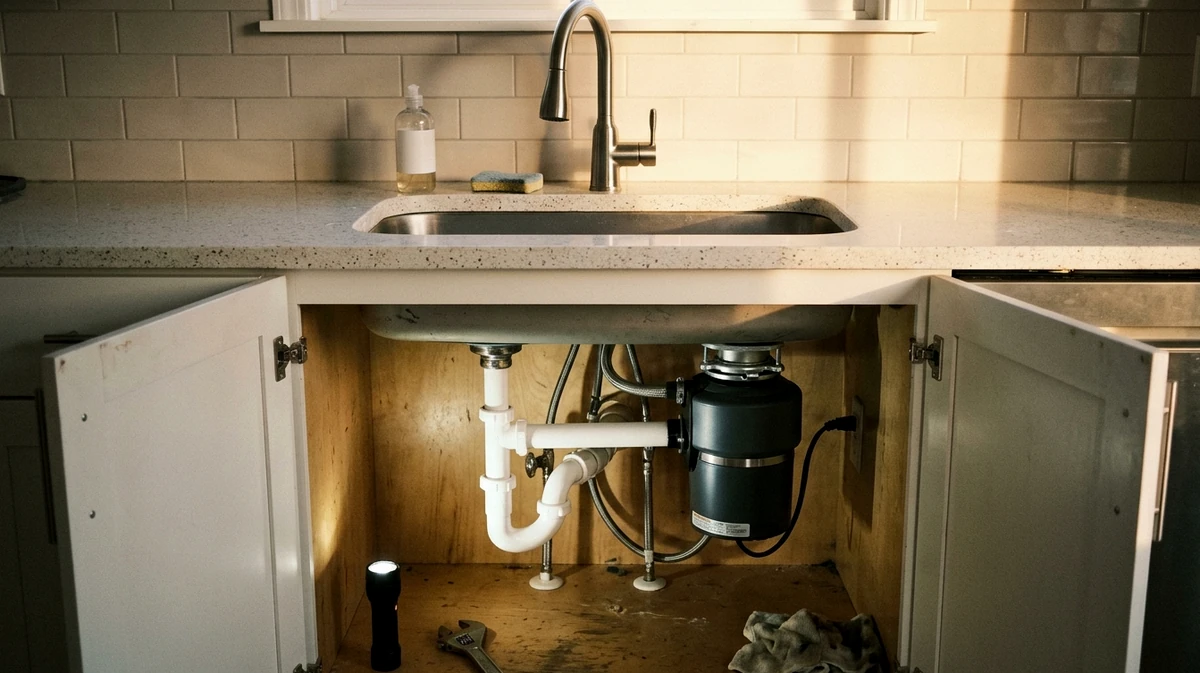
A point-of-use valve installs under the sink or behind an access panel near the tub, between the supply stops and the faucet. It takes hot and cold in, blends them, and sends a single tempered line to the fixture. Thermostatic models react to changes in incoming temperature and pressure, and most shut down the hot flow if the cold supply fails. That makes them a good fit for a child's bathroom, a rental unit, or a sink used by someone who cannot react quickly to hot water.
These valves need to stay reachable, because the setting is adjusted at the valve and its internal parts need occasional cleaning. MDC water in Hartford and its member towns is soft, which is easy on valve parts. Private well water in towns such as Vernon, Ellington and Tolland can carry more minerals, so valves there may need attention sooner. We set each valve with a thermometer at the faucet, not by guessing at the dial.
Most single-handle shower valves made in recent decades have an adjustable limit stop that caps how far the handle can turn toward hot. Many are left at the factory setting, or set wrong after a cartridge change, so the shower still gets dangerously hot in winter when the incoming water is colder. We adjust the stop to your water heater setting. Old two-handle showers have no protection at all, and replacing them with a pressure-balance valve is the lasting fix.
A whole-house thermostatic valve at the water heater is sized for the flow of the home and installed with isolation valves and unions so it can be serviced. It needs check valves on the inlets to stop hot and cold from crossing over, and homes with a recirculation loop need the return piped to the valve the way the manufacturer specifies. Done right, every tap gets steady, safe water and the tank can stay at its stored temperature.
Many Hartford two- and three-family houses still have original two-handle tub and shower valves with no scald protection, and owners sometimes turn up the tank to keep a busy unit supplied, which makes the bathroom taps dangerously hot. A mixing valve at the heater lets that tank stay hot while every tap in the unit gets a safe, steady temperature. Homes with boiler-fed indirect tanks, common with the steam and hot-water boilers in older Hartford housing, gain the most from one.
A limit stop adjustment or cartridge costs least; a point-of-use valve is in the middle, and a whole-house valve with new piping at the heater costs the most. Typical Hartford-area range, confirmed on site before work starts. Compare all prices.
Process
Call (860) 926-8723 and tell us which taps run too hot and what water heater you have.
We measure the temperature at the taps and heater and quote the price before work starts.
We fit a point-of-use or whole-house mixing valve, or reset the shower limit stop.
We adjust the outlet temperature, check it with a thermometer and show you the setting.
FAQ
For most household taps, around 120 degrees is a common setting that feels hot without scalding quickly. A bathroom used by small children or an older relative can be set a little lower with a point-of-use valve. We set the valve with a thermometer at the faucet, because the dial markings on many valves are only approximate.
Yes, and it is one of the best places for one. Indirect tanks can store water well above what is safe at the tap, which gives you plenty of hot water for baths and showers. A thermostatic valve at the tank outlet blends that water down for the house, so you keep the capacity without the scald risk. We pipe it with checks and isolation valves so it can be serviced later.
It usually does the opposite. Because the valve blends cold into very hot stored water, each gallon from the tank goes further, so you can fill a tub or take back-to-back showers before running out. The water at the tap is a little cooler than the tank, but it stays steady instead of swinging between too hot and lukewarm.
Related work
The showerhead drips all day, the water turns scalding when someone flushes, or the handle spins without changing anything. The trouble is in the valve behind the tile.
Learn moreThe tank is leaking from the bottom, or it is old enough that every repair is money down the drain. A replacement done right means the right size, safe venting...
Learn moreYour house already has a hot-water boiler, but domestic hot water comes from a tankless coil that runs lukewarm or a separate heater burning fuel on its own....
Learn moreA plumber answers, day or night, and gives you a price before any work starts.