Tankless Water Heater Installation
You want hot water that does not run out halfway through the second shower, and you want the basement floor space back. A tankless heater can do both, if the...
Learn moreWater heaters
If you run the shower for a minute or more before it turns warm, the water you are waiting through is the cooled water sitting in the hot line. A recirculation pump keeps hot water close to the fixture so it arrives in seconds.
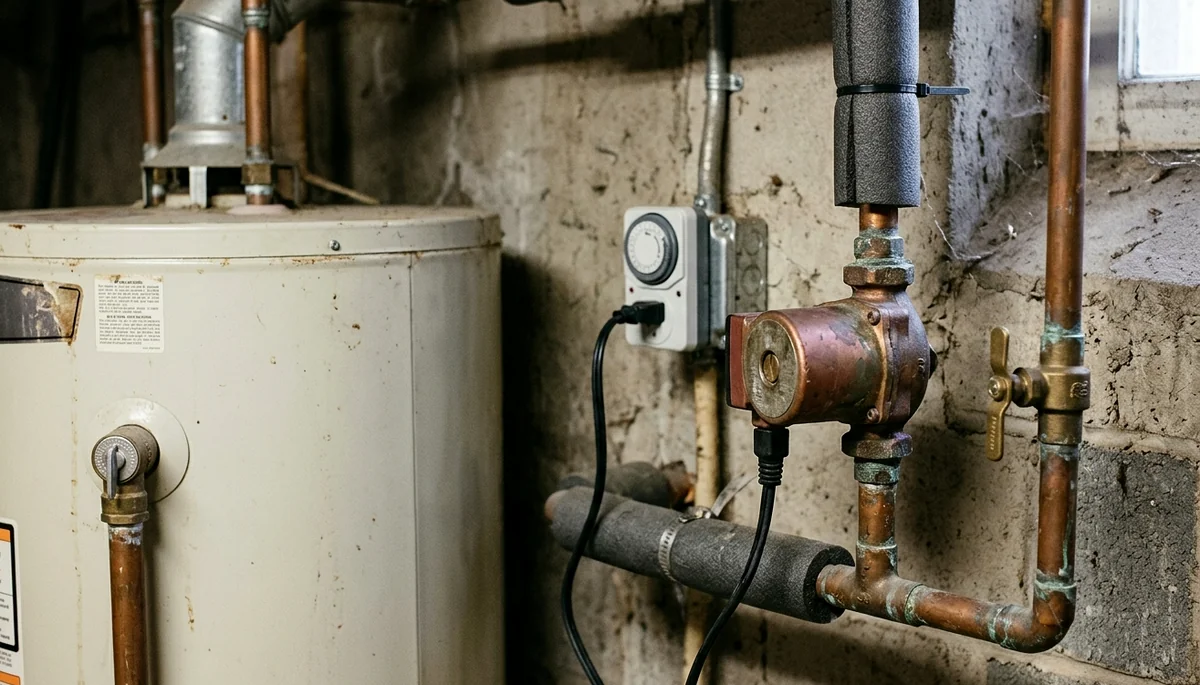
Hot water recirculation pump installation adds a small pump, plus either a dedicated return line or an under-sink crossover valve, so hot water reaches distant faucets and showers quickly instead of after a long wait. Typical Hartford-area costs run about $435 to $4,385. We answer 24/7, look at your piping before recommending a system and quote the price before work starts.
The most effective setup uses a third pipe. A return line runs from the hot supply at the farthest fixture back to the water heater, and a small pump at the heater keeps water moving around that loop. Hot water is always near every fixture on the loop, and the cold taps stay cold. The pump body must be bronze or stainless steel, since it handles drinking water, and a check valve keeps water from flowing the wrong way through the loop when the pump is off.
A return line is easiest to add during new construction, a remodel with open walls, or in houses where the hot runs are reachable from an unfinished basement. Some older houses already have a return pipe from an old gravity loop that was capped off, and we can often put it back into service. Insulating the hot supply and return piping cuts the heat lost from the loop and lets the pump run less.
When running a new pipe is not practical, a crossover system uses the cold line as the return. A pump mounts at the water heater or under the farthest sink, and a thermostatic crossover valve under that sink connects the hot and cold supply stops. The pump pushes cooled water out of the hot line, through the valve and back to the heater through the cold pipe. When warm water reaches the valve, it closes.
The trade-off is that the cold tap at that sink, and sometimes others along the way, runs lukewarm for a few seconds before it turns cold. A pump mounted under the sink also needs an outlet in the vanity. Crossover systems work best when one main hot line serves most fixtures. Fixtures on a separate branch still wait, though usually less than before.
A pump that runs around the clock keeps hot water ready but also keeps heating the loop all night. Timers run the pump during morning and evening hours, temperature sensors stop it once the loop is warm, and on-demand controls run it only after you press a button or a motion sensor sees someone in the room. On-demand and timed controls use far less energy than continuous operation, and we set them up around how your household actually uses hot water.
Tankless heaters need extra planning, because many have a minimum flow rate to fire and frequent short cycles add wear. Some models have a recirculation pump built in, and others need a specific setup the manufacturer spells out. In older houses with worn galvanized pipe, constant circulation can loosen rust and scale, so we look at the pipe first. In copper loops, a pump running too fast can erode fittings, so we choose a pump and speed suited to the loop.
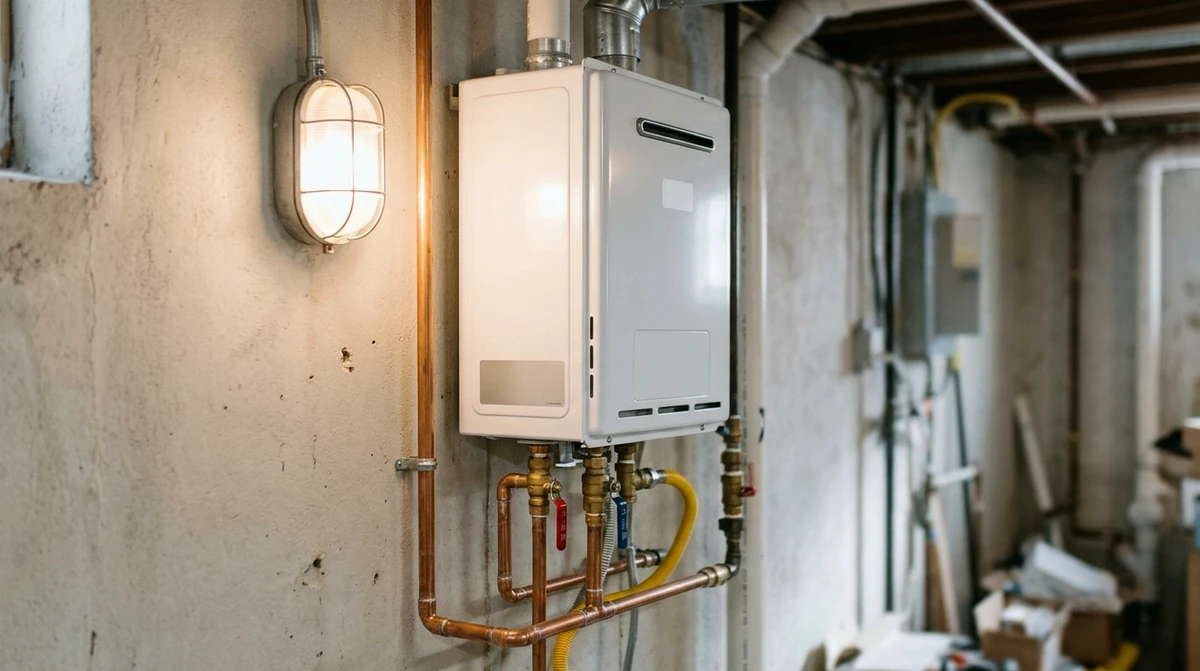
Many Hartford two- and three-family houses have a water heater for each unit in the basement, with hot risers climbing to the second and third floors, so the top-floor kitchen and bath often wait the longest. Larger colonials in West Hartford, Glastonbury and Simsbury have the same problem when the primary bath sits at the opposite end of the house from the heater. Where the basement is unfinished, adding a short return line is often simpler than owners expect.
Under-sink crossover systems cost least; adding a pump to an existing return is in the middle, and a new dedicated return line through finished walls costs the most. Typical Hartford-area range, confirmed on site before work starts. Compare all prices.
Process
Call (860) 926-8723 and tell us which fixtures wait longest and what water heater you have.
We follow the hot lines, check for an old return and quote the price before work starts.
We set the pump, check valve and controls, plus a crossover valve or return line.
We time the wait at the far fixture before and after, then set the timer or sensor.
FAQ
Only with a crossover system. Because the cold pipe carries the returning water, the cold tap at the sink with the crossover valve, and sometimes nearby fixtures, can run lukewarm for a few seconds. A dedicated return line avoids this completely. If a few seconds of warm water from the cold side would bother you, we will tell you whether a return line is practical in your house.
Often, yes, but it has to be set up the way the heater's manufacturer specifies. Some tankless models include a pump and a recirculation mode, and some need a small buffer tank or a dedicated return to avoid short cycling. Continuous circulation is a poor fit for most tankless units, so we usually pair them with on-demand controls. We check your model before recommending anything.
The pump motor itself draws little power. The larger cost is heat lost from the pipes as warm water moves through the loop, and that depends on how long the pump runs and how well the pipes are insulated. On-demand controls, timers and pipe insulation keep that loss low, and you save the water that used to go down the drain while you waited.
Related work
You want hot water that does not run out halfway through the second shower, and you want the basement floor space back. A tankless heater can do both, if the...
Learn moreThe tank is leaking from the bottom, or it is old enough that every repair is money down the drain. A replacement done right means the right size, safe venting...
Learn moreWhen every fix uncovers another pinhole or rusty joint, patching stops making sense. Repiping swaps the tired supply lines in your house for new ones in a...
Learn moreA plumber answers, day or night, and gives you a price before any work starts.