Gas Leak & Gas Line Repair
If you smell a strong rotten-egg odor, leave the house now, without flipping switches, and call your gas utility from outside. Once they make it safe, we find...
Learn morePipes & gas
Adding a gas range, dryer, generator or grill means running a new line that is sized right, supported properly and tested before gas ever reaches the appliance. That is not a weekend project.
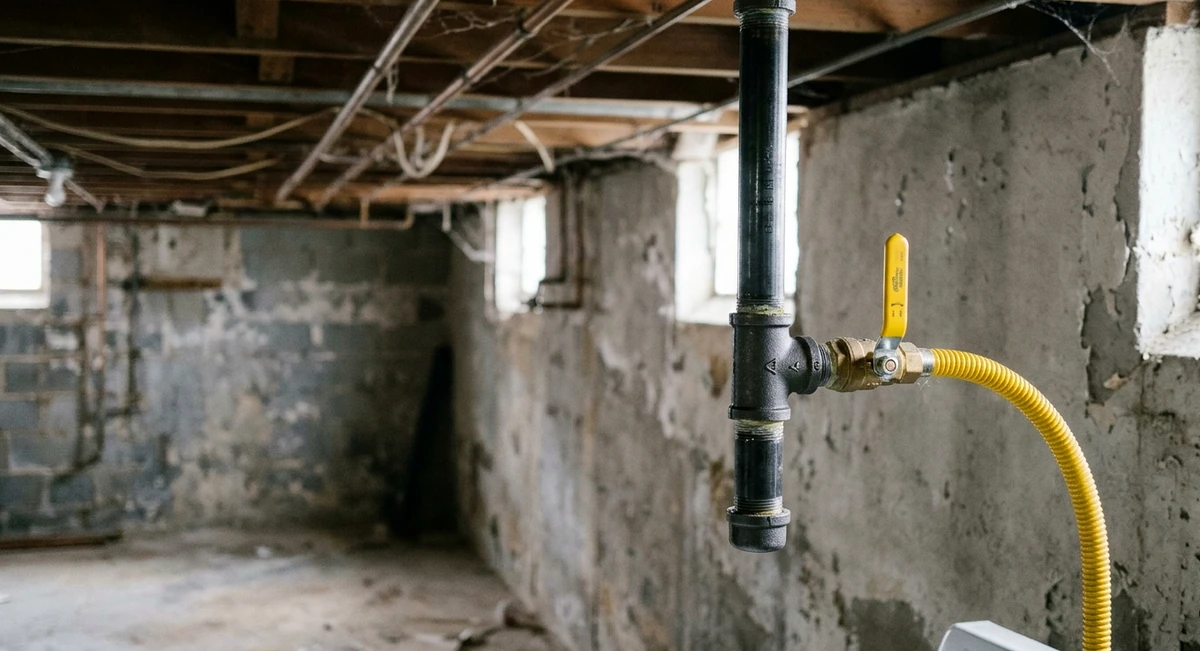
Gas line installation runs new black iron or CSST piping from your existing gas supply to a new appliance, with a shut-off valve and sediment trap at the connection. Typical Hartford-area costs run about $365 to $2,860 depending on length and the appliance. We answer 24/7, schedule installs promptly, and quote the full price before work starts. If you ever smell gas strongly, leave first and call your gas utility.
Every gas appliance has a rated input in BTUs per hour, printed on its data plate. A gas line has to carry the total demand of everything it serves, over its full length, without the pressure dropping too far at the far end. We add up the appliances, measure the longest run from the meter, and size each section from the sizing tables used in the fuel gas code.
Undersized pipe is a common problem when a family adds a large range or a tankless water heater to an old system. Burners lift, flames go yellow, or the appliance throws an error under load. Sometimes the fix is a larger trunk line from the meter; sometimes your gas utility needs to increase the meter or regulator capacity, which we help you request.
Black iron pipe with threaded joints is the traditional choice and is still what we use for most exposed basement runs. It is rugged and easy to support. Corrugated stainless steel tubing, the yellow-jacketed flexible kind, runs through walls and joists with fewer joints, which makes it handy in finished homes. CSST also needs a bonding wire tied to the electrical grounding system to protect against lightning damage.
At each appliance we install a shut-off valve within reach, a sediment trap (drip leg) to catch debris, and an approved flexible appliance connector of the right length. Flexible connectors are meant only for that final short connection and should never pass through walls, floors or cabinets. We also replace old uncoated brass connectors when we find them, since they can crack at the flare.
Before any gas enters a new line, we cap the ends and pressure test the piping with air, watching a gauge for any drop over the test period. Every joint gets checked with leak detection liquid. Only after the line holds do we purge air, light the appliance and check the flame, the ignition and the venting where the appliance requires it.
Outdoor runs to grills and generators need proper depth or protection where buried, and Call Before You Dig at 811 comes first. A permit and inspection are part of many gas jobs, and we handle the paperwork the town requires. If you ever smell gas strongly, leave the house without touching switches, call your gas utility from outside, then call us.
Many Hartford and West Hartford homes were built for oil heat and electric cooking, and owners now add gas ranges, dryers or generators as natural gas mains serve their streets. In older two- and three-family houses, each unit may have its own meter, so we trace which meter feeds which apartment before adding load. Generators are popular after winter storms knock out power, and they need a correctly sized line all the way from the meter.
The length of the run, the pipe type, the appliance demand and whether the line goes outdoors or through finished walls move the price. Typical Hartford-area range, confirmed on site before work starts. Compare all prices.
Process
We read the appliance ratings, measure the route from the meter and check what the existing line can handle.
We explain pipe type, route and permit needs and quote the full price before work starts.
We run and support the pipe, add a shut-off and drip leg, then pressure test the line.
We purge, light the appliance, check the flame and leave the area clean with the valve labeled.
FAQ
A straightforward line from a nearby basement trunk up to a kitchen range usually takes a few hours, including the pressure test. Longer runs, finished ceilings or an undersized trunk that needs upgrading can stretch it to a full day. If the town requires an inspection before the gas is turned on, that is scheduled separately, and we tell you what to expect.
Sometimes, but standby generators draw a lot of gas, and the existing pipe often was not sized for that much demand. We add up every appliance in the house, measure the distance from the meter and check the pipe size. If the line is too small, we run a dedicated line to the generator. Your gas utility may also need to upgrade the meter.
Yes, when it is installed and grounded correctly. CSST has to be tied to the home's electrical grounding system with a bonding wire to protect it from lightning-related damage, and it must be supported and protected where it passes through framing. We use it where flexibility saves opening walls and black iron where pipe is exposed. Either way, the line is pressure tested before use.
Related work
If you smell a strong rotten-egg odor, leave the house now, without flipping switches, and call your gas utility from outside. Once they make it safe, we find...
Learn moreWhen an old boiler is cracked, rusted through or costing a fortune in repairs, a new one sized right for the house can heat better and burn less fuel. Sizing...
Learn moreYou want hot water that does not run out halfway through the second shower, and you want the basement floor space back. A tankless heater can do both, if the...
Learn moreA plumber answers, day or night, and gives you a price before any work starts.