Shut off the water first
When a pipe bursts, every minute the water stays on adds gallons to the floor, so the main shut-off comes before towels, buckets or phone calls. In most Hartford-area houses the main valve sits in the basement on the wall facing the street, right where the service pipe comes through the foundation, next to the water meter. Turn a round wheel handle clockwise until it stops. Turn a lever handle a quarter turn so it sits across the pipe.
If the valve will not move, do not hang your weight on it or hit it with a hammer, because an old gate valve can snap at the stem and make things worse. Look for a second valve on the other side of the meter, or a smaller valve on the branch feeding the broken section. Homes on a private well can stop the flow by switching off the well pump breaker, which is usually labeled in the panel.
- Basement wall facing the street, near the meter
- Wheel handle: turn clockwise until it stops
- Lever handle: a quarter turn across the pipe
- Well homes: switch off the pump breaker
Make the area safe from electricity
Water and electricity together are the real danger. If water is spraying near outlets, a light fixture, a dryer or the electrical panel, do not walk through standing water to reach anything. If you can reach the panel from a dry floor, switch off the circuits for the wet area. If the panel itself is wet, or the water is between you and it, stay out and call your electric utility from outside.
A bulging ceiling is a sign that water is pooling above the drywall or plaster. Keep people out from under it. If the bulge is well away from any light fixture, a bucket underneath and a small screwdriver hole at the lowest point lets the water drain in a controlled way instead of bringing the ceiling down. Stay clear of any ceiling with a fixture or fan in the wet zone, and leave that circuit off.
Drain the lines and protect the water heater
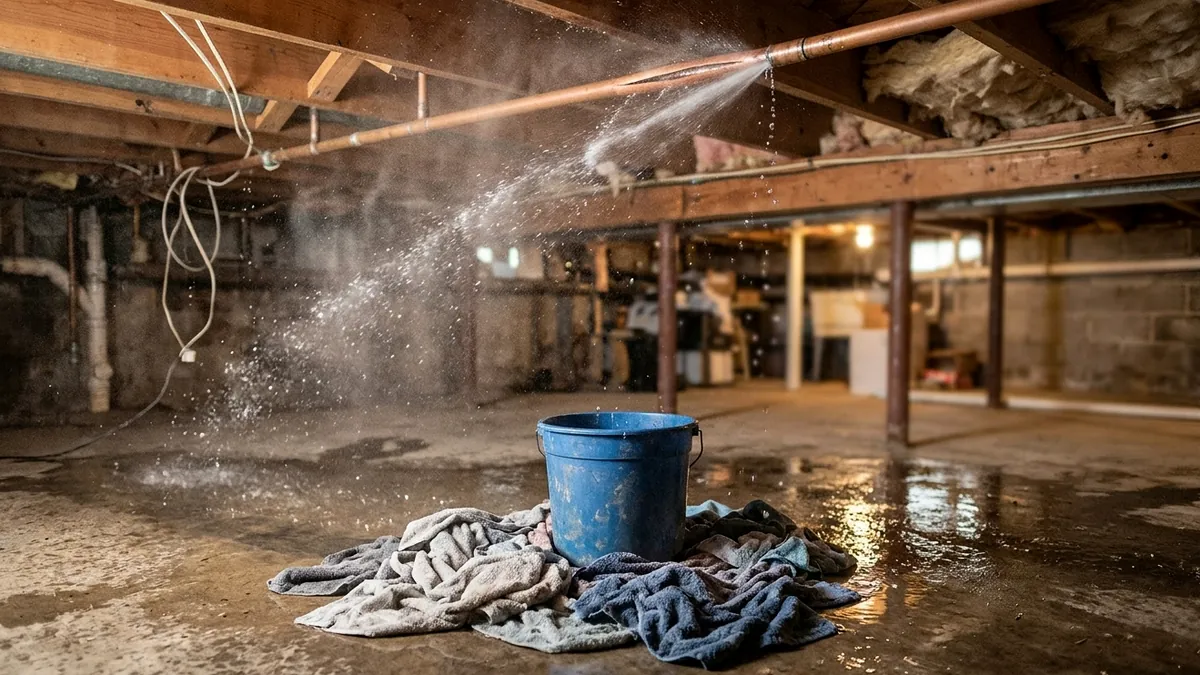
With the main closed, the pipes still hold water under some pressure. Open a faucet on the lowest floor, such as a basement laundry sink, and then one on the top floor. That lets air in at the top and lets the remaining water leave through a sink instead of through the break. In a two- or three-family house, open faucets in each unit, since the risers above the break can keep feeding it for a while.
A tank water heater is fine sitting full for a few hours with the main off. If the repair will take longer, or if the whole system is being drained because pipes froze, set a gas heater to the pilot or vacation setting and switch off the breaker for an electric one. An electric tank heated with no water in it burns out its elements quickly, so do this before anyone drains the tank.
Limit the water damage
Once the flow has stopped, move what you can off the wet floor: boxes, rugs, electronics and anything made of paper or fabric. Wet-dry vacuums, mops and old towels get standing water up faster than waiting for it to soak in. Open windows if the weather allows, and run fans and a dehumidifier once the electrical side is confirmed safe. Drywall, carpet pad and insulation that stay wet for more than a day or two can start growing mold.
Before you clean up too much, take photos and a short video of the break, the wet areas and any damaged belongings. Keep the broken section of pipe if the plumber cuts it out. These records help with any claim later and with working out why the pipe failed. Write down what you noticed when it happened, such as a bang, a hiss or a sudden drop in pressure.
- Photos and video before cleanup
- Keep the failed piece of pipe
- Note the time and what you heard
- Save receipts for fans and cleanup supplies
Call a plumber and know what the repair involves
Call (860) 926-8723 once the water is off and the area is safe. We answer 24/7, and it helps to tell us what kind of pipe broke (copper, galvanized steel or plastic), where it is, and whether the main valve closed fully. A burst in winter often means other sections froze too, so the plumber will check nearby runs along outside walls and in crawl spaces before the water goes back on.
An exposed copper or PEX break in a basement is usually a short repair with a new section and fittings. Breaks inside finished walls or ceilings take longer because the pipe has to be reached first. Typical Hartford-area costs for burst pipe repair run about $235 to $615 for an accessible section and $640 to $1,480 when walls or ceilings have to be opened. The final price is quoted on site before work starts.
Turning the water back on
After the repair, the water should come back slowly. Close the faucets you opened, then open the main valve a little at a time so air and pressure build gently instead of slamming the new joint. Leave one faucet on each floor cracked open to bleed out air, then close them once the water runs steady. Watch the repaired section and the wet area for ten minutes or so to be sure nothing is still dripping.
If the break came from freezing, ask what will protect that spot next winter. Common fixes are insulating the run, sealing drafts at the rim joist, moving the pipe to an inside wall, or adding a shut-off so an exterior line can be drained in the fall. It also makes sense to replace a main shut-off that would not close during the emergency.
Key takeaways
- Close the main shut-off before anything else
- Keep away from water near outlets, fixtures and the panel
- Open low and high faucets to drain the lines
- Photograph the damage before cleanup