Read the stain first
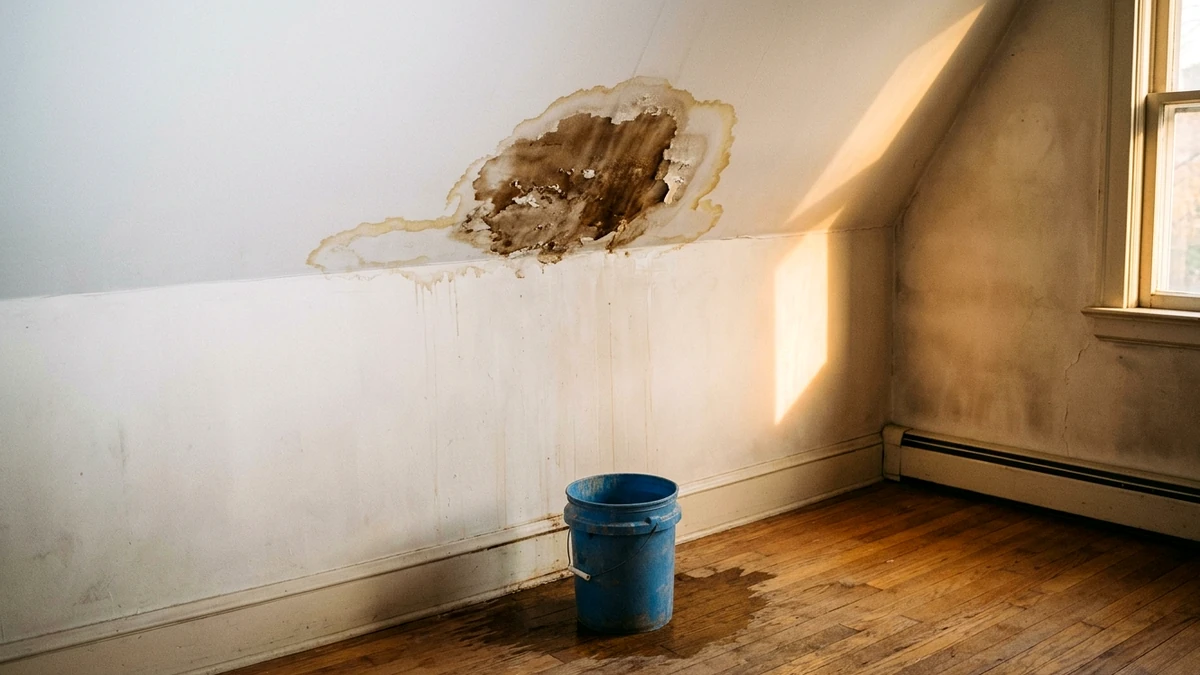
Before testing anything, look closely at the stain and where it sits. Stand under it and picture the bathroom above: where the toilet, tub, shower and sink are. A stain right under the toilet points to the wax ring or the supply connection. One under the tub end often traces to the drain, overflow or the faucet and showerhead wall. A stain near an outside wall, or one that grows after storms, may be a roof or window leak instead.
Note whether the stain is dry, damp or actively dripping, and whether it grows only after someone showers or flushes, or all the time. A stain that stays wet around the clock suggests a supply pipe under constant pressure. One that darkens only after use points to a drain or a fixture seal. Mark the outline lightly in pencil so you can see whether it spreads over the next few days.
- Under the toilet: wax ring or supply line
- Under the tub: drain, overflow or valve
- Wet all the time: pressurized supply pipe
- Wet only after use: drain or seal
- Near an outside wall: possibly roof or window
Safety before you poke at it
If the ceiling sags, feels soft, or has water pooling behind the paint, keep people out from under it. A wet plaster or drywall ceiling can come down without warning. If the stain is near a light fixture or ceiling fan, switch that circuit off at the panel and leave it off until the area is dry and checked. Water running through a fixture box is a shock and fire risk.
If water is actively dripping, turn off the supply to the bathroom above, or the main shut-off, until you know the source. Put a bucket and a tarp under the wet spot. If the bulge is away from any fixture, a small screwdriver hole at the low point lets trapped water drain into the bucket rather than spreading across the ceiling or bringing a section down.
Test the toilet
The toilet is the most common source, and it is easy to test. Look at the floor around the base. Water seeping out, a soft or spongy floor, or a toilet that rocks when you sit on it all point to a failed wax ring. Every time the toilet flushes, some water can escape under it and soak into the subfloor. Check the supply line and the shut-off under the tank too, wiping them with a dry tissue to find slow drips.
Next, put a few drops of food coloring in the tank and wait about fifteen minutes without flushing. Color showing up in the bowl means a leaking flapper, which wastes water but does not wet the ceiling. Color on the floor or around the bolts means a leak between the tank and bowl. Condensation sweating off a cold tank in humid weather can also drip enough to stain a ceiling below.
Test the tub and shower
To separate the drain from the supply, fill the tub a few inches, check the ceiling, then drain it. If the stain gets wet only when the tub drains, the drain or overflow gasket is the likely source. Then run the shower with the curtain or door closed, aiming the spray at the wall. A leak that appears only during a shower points to the showerhead arm, the valve, or water getting through the walls.
Look hard at the caulk and grout, especially where the tub meets the tile and at the inside corners. Gaps there let water run down behind the tub onto the floor framing. Water splashing past a curtain or a worn door sweep is another cause that has nothing to do with the pipes. Re-caulking and fixing the splash path is often the whole repair for a stain that grows only after showers.
- Fill and drain the tub to test the drain
- Run the shower at the wall to test the valve
- Check caulk and grout lines
- Look for splash-out past the curtain or door
When the source is inside the wall or floor
If the fixtures test dry, the leak may be in a supply pipe, a drain line or a vent running through the floor between the bathroom and the ceiling below. In older Hartford-area two- and three-family houses, a common culprit is a cast-iron or lead drain joint, or a galvanized supply pipe that has started to pinhole. Leaks from a unit above often show up in the apartment below, so check the bathroom upstairs too.
A plumber can often find the source with a moisture meter, a thermal camera and a small access opening in the ceiling below, which is easier and cheaper to patch than tile above. Typical Hartford-area costs for leak detection run about $245 to $520, and the repair is quoted separately once the source is found. The final price is quoted on site before work starts.
Fix it before you paint
Painting over a stain before the leak is fixed only hides it until it comes back. Once the source is repaired, let the ceiling dry fully, which may take several days with a fan. Check for soft spots or mold growth. Small stains on sound drywall or plaster can be sealed with a stain-blocking primer and painted, while soft or crumbling sections should be cut out and patched.
If the stain grows again after the repair, comes back in a new spot, or you simply cannot find a source after running these tests, call (860) 926-8723. We answer 24/7. Tell us where the stain sits relative to the fixtures above, when it gets wet, and what you tested, and we can usually narrow down the cause quickly when we arrive.
Key takeaways
- Map the stain to the fixture directly above it
- Keep away from a sagging ceiling and switch off nearby fixtures
- Test the toilet, tub drain and shower one at a time
- Repair the leak before priming and painting