Map the building's plumbing
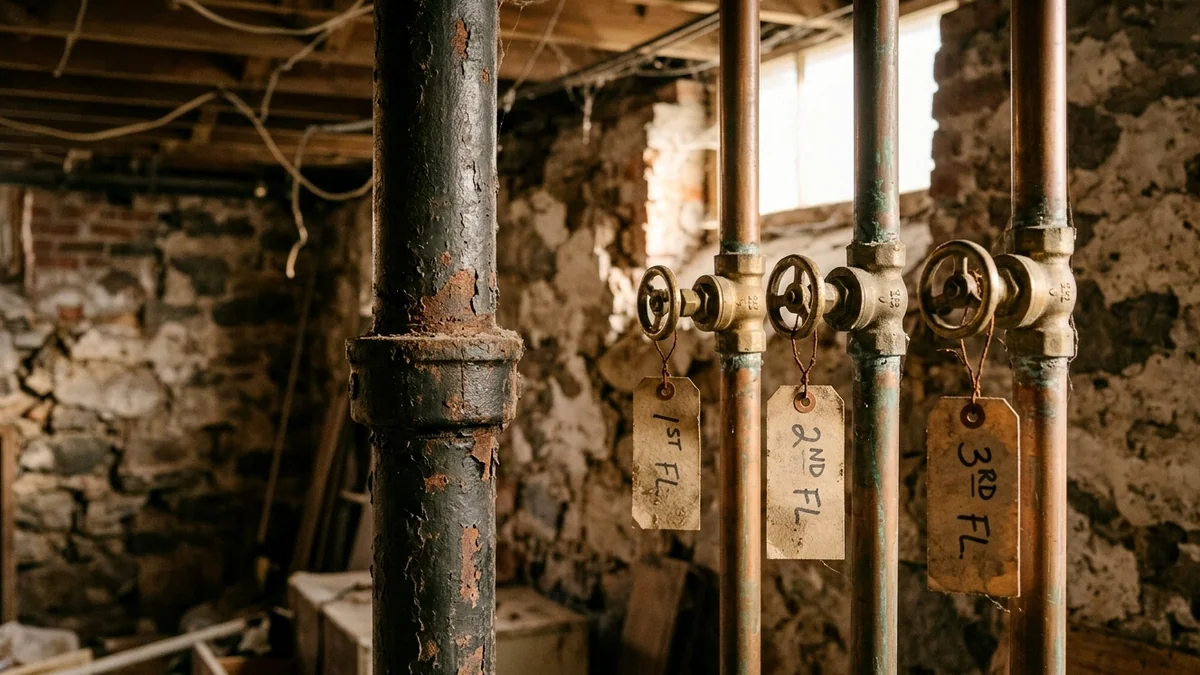
Start with a map, even a rough one. Walk the basement and note where the water service enters, where the main shut-off and meter are, and which valves control each apartment, each riser and the outdoor faucets. Tag each valve with a label. In many older Hartford-area buildings, risers branch off a single main, and knowing which valve isolates which unit lets you shut down one apartment instead of the whole building.
Do the same for drains. Find the main cleanout, usually near the front basement wall where the building drain leaves for the street, and note where each cast-iron stack comes down. Write down the water heater and boiler locations, their ages from the labels, and the fuel. Keep a copy of this map with the building records and another taped near the main valve, so anyone responding at night can find what they need.
- Main shut-off and meter location
- Valves for each unit and riser, tagged
- Main drain cleanout location
- Water heater and boiler ages and fuel
Fall: get ready for winter
In the fall, shut and drain every outdoor faucet, disconnect hoses, and seal drafts at the basement rim joist where pipes run along the outside wall. Check that the heat in every unit, including common stairwells with plumbing, holds at least 55 degrees. Have the boiler serviced before the heating season, and check that low-water cutoffs and relief valves on steam or hot-water systems are working as designed.
Exercise the main shut-off and the unit valves by closing and reopening them, so they will turn when you need them. Test the sump pump if the building has one. Give tenants a short note on winter habits: keep the heat on even when away, open sink cabinet doors on exterior walls on very cold nights, and call right away if a faucet stops running.
Winter: watch the cold weeks
January and February are when most frozen and burst pipes happen in Hartford-area buildings. Pay close attention to vacant units, which can freeze quickly if the heat is turned down too far between tenants. Walk the basement after the coldest nights and look for frost on pipes along the rim joist, wet spots on the floor, or a basement that feels colder than usual because a window or door was left open.
Make sure every tenant knows where the shut-off for their unit is, or who to call if water appears. A burst pipe in a top-floor kitchen can run down through two apartments before anyone reaches the basement valve. Keep our number, (860) 926-8723, posted near the main valve and in each unit. We answer 24/7, through the coldest weeks of the year.
Spring and summer: drains, sewer and water heaters
Spring is the time to check the sump pump before the thaw, open and clean any backwater valve, and look for basement dampness after the snow melts. If the building has a history of slow drains or backups, a sewer camera inspection of the main line shows roots, sags or broken sections before they become an emergency. Fixing a known problem on your schedule is cheaper than an after-hours call.
Check each water heater for rust at the base, leaks at the fittings, and a relief valve discharge pipe that runs down toward the floor. Look at the age. Tank heaters near the end of their life are best replaced on a planned day rather than after they flood a basement. Turn on the outdoor faucets again once the frost risk has passed and check them for leaks inside the wall.
- Test the sump pump and clean the backwater valve
- Camera the main sewer if drains are slow
- Check water heaters for rust and leaks
- Reopen outdoor faucets after the last frost
Turnover: check each unit between tenants
When a unit turns over, run a quick check. Flush toilets and look for rocking, slow fills or leaks at the base. Run every faucet and shower, checking for drips, weak flow and slow drains. Look under sinks for corrosion, damp cabinet floors and loose traps. Check washer hoses and replace rubber ones with braided stainless lines. This takes about half an hour and catches most small problems.
Also look at the ceiling of the unit below the bathroom and kitchen for new stains. Small leaks in one apartment often show up first in the one underneath, sometimes weeks before the tenant upstairs notices anything wrong. Fixing worn parts between tenants avoids repeated service calls and keeps a small drip from turning into a ceiling repair for two units.
Plan bigger work ahead
Many Hartford-area two- and three-family buildings still have original cast-iron drain stacks and some galvanized supply pipe. Signs like low pressure upstairs, brown water after the pipes sit, and rust at cast-iron joints are worth tracking so you can plan replacement before a failure. A whole-building plumbing inspection gives you a list of what is aging, what is urgent, and what can wait a few years.
Spread big projects over time, one riser or one unit at a time, and plan them around lease dates and mild weather. Typical Hartford-area costs for a whole-building plumbing inspection run about $345 to $690, depending on the number of units, and repairs are quoted on site before work starts. Check whether the building still has a lead service line, since that is worth replacing when you plan other work.
Key takeaways
- Tag the main and every unit shut-off valve
- Keep every unit at 55 degrees or warmer in winter
- Check each unit's fixtures at turnover
- Plan stack and pipe replacement before a failure