Why the service line matters
The service line is the pipe that carries water from the main under the street to your house. In homes built before the middle of the last century, that pipe was sometimes made of lead, because lead is soft and easy to bend around obstacles. Lead can dissolve into water that sits in the pipe, and there is no known safe level of lead exposure, especially for young children and during pregnancy.
Water utilities treat their water to reduce corrosion, and water utilities across the country, including in Connecticut, have been building inventories of service line materials. Utility records are not always complete for the private side of the line, though, so checking the pipe yourself where it enters the house is the quickest way to get an answer. It takes a few minutes and no special tools.
Find the pipe where it enters
Go to the spot where the water comes into the house, usually through the basement wall that faces the street, just before the meter and the main shut-off. The section of pipe you want to look at is the one coming out of the wall or floor, between the foundation and the first valve or meter. That is where the service line material shows. Pipe after the meter is the house plumbing and may be different.
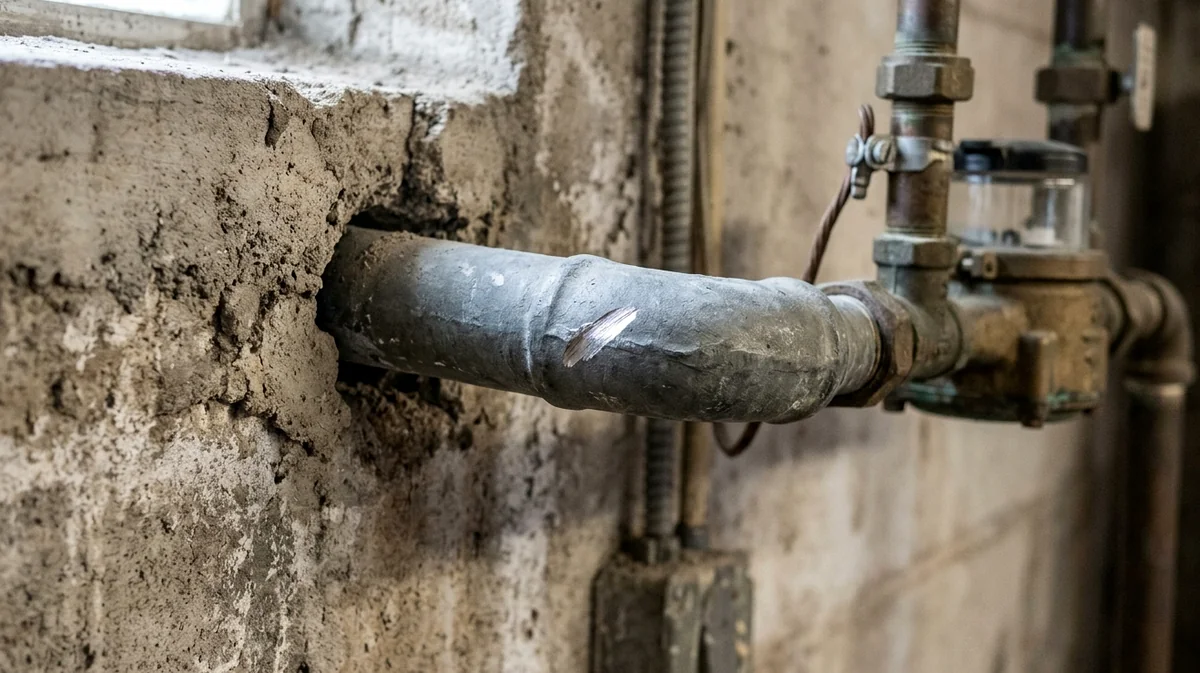
Clear a few inches of that pipe so you can see it well. If it is painted, wrapped or caked with dirt, you may need to work through the coating carefully at one small spot. Use a flashlight and look at the shape too. Lead pipe often has a bulging, rounded joint where it meets the meter or valve, sometimes called a wiped joint, which looks like a smooth swelling.
The scratch and magnet test
Take a house key or a coin and gently scratch a small spot on the pipe. Do not use a knife or file, and do not dig in hard, since a soft lead pipe can be damaged. Then hold a refrigerator magnet against it. The results usually sort the pipe into one of three groups, and a picture of the scratched spot is handy if you want a plumber to look later.
Lead is dull gray outside, scratches easily to a bright shiny silver, and a magnet will not stick. Copper looks like an old penny and scratches to a bright copper color, also with no magnet attraction. Galvanized steel is gray, does not scratch easily, and a magnet will stick to it. Plastic is usually blue, black or white and is easy to recognize.
- Lead: soft, scratches shiny silver, magnet does not stick
- Copper: penny color when scratched, magnet does not stick
- Galvanized steel: hard gray, magnet sticks
- Plastic: blue, black or white
If you find lead, or are not sure
Until the line is replaced, a few habits lower exposure. Use only cold water for drinking, cooking and baby formula, since hot water draws more lead from pipes. If the water has sat for several hours, run the cold tap until it feels noticeably colder before using it. Clean faucet aerators every few months. A filter rated to remove lead, with NSF/ANSI 53 listed on the box, is a good step for drinking water.
To know what is actually in your water, have it tested by a state-approved lab, and follow the lab's directions for taking the sample, which usually call for water that has sat in the pipes overnight. Contact your water utility as well. For Hartford and the MDC member towns, ask the Metropolitan District what its records show for your address and whether it has a replacement program for the public side.
How replacement works
Replacing a lead service line means swapping the old pipe for copper or approved plastic from the curb stop to the house, and ideally coordinating with the utility so its side is replaced too. Replacing only part of a lead line can disturb the pipe and briefly raise lead levels, so full replacement is the goal. The new line can often be pulled through underground with small pits at each end, which limits lawn and sidewalk damage.
The work needs a permit, coordination with the utility, and a call to 811 before any digging so buried utilities are marked. Inside, it is the right time to install a new main shut-off and to look at any galvanized pipe that sat downstream of the lead, since it can hold lead in its scale. Typical Hartford-area costs run about $3,890 to $7,640 depending on length and access, quoted on site before work starts. Call (860) 926-8723 to have the line checked.
Key takeaways
- Check the pipe between the foundation wall and the meter
- Lead scratches shiny silver and a magnet will not stick
- Use cold, flushed water and a lead-rated filter until it is replaced
- Full replacement from the curb is the goal