Why the thaw is the real test
A sump pump can sit quiet for months through a dry fall and a frozen January, then face its hardest work in a few days when snow melts and the ground thaws. Water that cannot soak into frozen soil runs toward the foundation, and groundwater rises around the footings. The pump has to handle all of it, often during a rainstorm that also brings power outages.
That makes late February or early March the right time to check it, before the first warm spell. A pump that hums but does not move water, a float stuck against the side of the pit, or a discharge pipe frozen solid at the outside end will not show itself until the basement is already wet. The steps below take about twenty minutes and need only a bucket and a flashlight.
Check power and the pit first
Start with safety. Most sump pumps plug into an outlet near the pit, which should be a GFCI outlet or on a GFCI circuit. Make sure the cord is not lying in water and the outlet is dry. Do not reach into the pit with the pump plugged in. Unplug it before you touch the pump, clear debris or adjust the float.
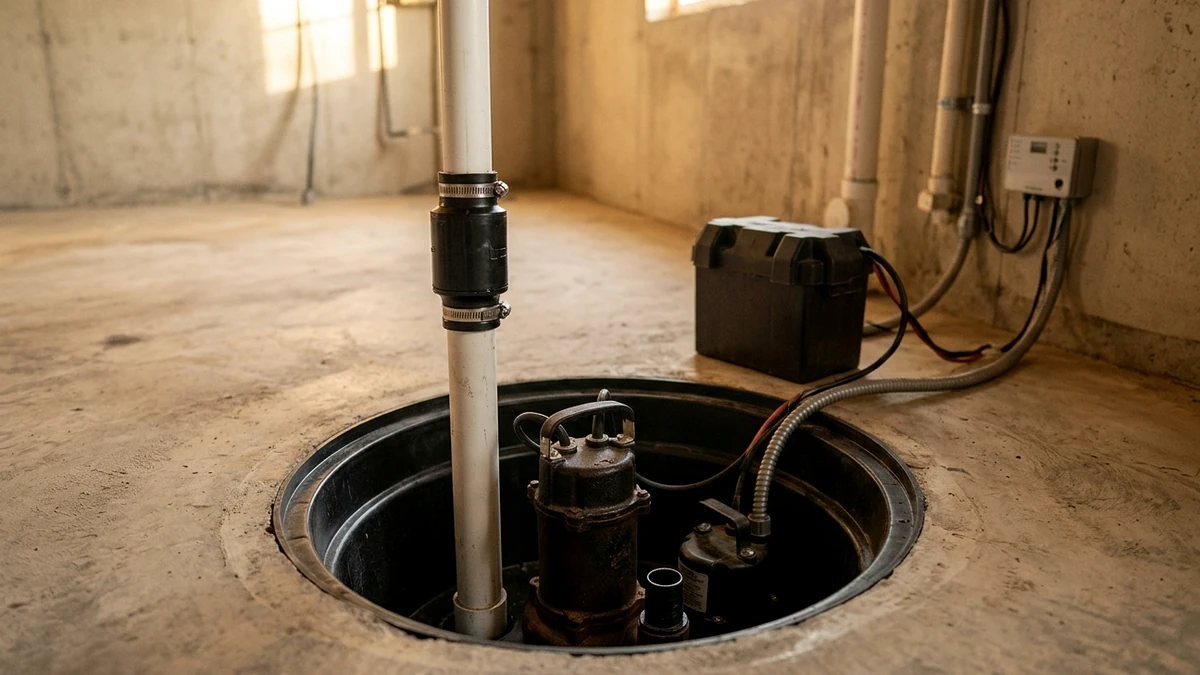
With the pump unplugged, shine a light into the pit. Clear out silt, gravel, leaves and anything that has fallen in, since debris can clog the intake screen or jam the float. Check that the pump sits level and the float has room to move freely without catching on the pit wall or the power cord. Then plug the pump back in.
- Confirm a dry GFCI outlet
- Unplug before reaching into the pit
- Clear silt and debris from the pit
- Make sure the float moves freely
Run a water test
Slowly pour a five-gallon bucket of water into the pit. Watch the float rise. The pump should turn on before the water gets close to the top, empty the pit in a few seconds, and shut off cleanly when the float drops. Listen while it runs. A steady hum is normal. Grinding, rattling or a pump that runs without lowering the water level are warning signs.
Watch the check valve on the discharge pipe, usually a short section a foot or two above the pump. When the pump shuts off, the valve should close with a soft thunk and keep the water in the pipe from rushing back into the pit. If water flows back and the pump restarts on its own a few seconds later, the check valve has failed. That causes extra cycling and early pump wear.
Follow the discharge line outside
The water has to go somewhere useful. Follow the discharge pipe through the wall and outside. Make sure the end is not frozen, crushed, buried in snow or blocked with ice, and that it empties at least several feet from the foundation onto ground that slopes away from the house. Water dumped next to the wall just cycles back into the pit and keeps the pump running.
Make sure the pump does not discharge into a floor drain, laundry sink or sanitary sewer. Besides being against the rules in many towns, sending ground water into the sewer adds to the load on the line during storms, which is exactly when Hartford's older combined sewers struggle. If the discharge line freezes every winter, a plumber can reroute it or add a fitting that lets water escape if the outside section ices over.
- Outlet clear of snow and ice
- Discharge lands several feet from the foundation
- Ground slopes away from the house
- Never into a floor drain or sewer
Plan for power outages
Spring storms and wet snow bring down power lines, and a sump pump with no power is no help. A battery backup pump sits in the same pit, slightly higher than the main pump, and runs on its own float if the main pump fails or the power goes out. Test it too by unplugging the main pump and pouring water in, then check the battery's charge indicator and its age.
Backup batteries wear out over time, so check the maker's suggested replacement interval. Some backup systems include an alarm that sounds when the water rises too high, and a simple battery-powered water alarm on the basement floor next to the pit is a cheap extra warning. Typical Hartford-area costs to add a battery backup pump run about $745 to $1,580, quoted on site before work starts.
When to repair or replace
A pump that has been running for many years, short cycles, runs constantly, trips the GFCI, or struggles to empty the pit is worth replacing before the thaw rather than during it. Replacing the check valve, the float switch or a cracked discharge pipe is a smaller job that often fixes problems with an otherwise sound pump. Typical Hartford-area ranges run about $285 to $560 for a sump pump repair and $585 to $1,240 for a replacement.
If the pit fills constantly even in dry weather, the pump may be too small for the water flow, or groundwater may be higher than the pump was sized for. A plumber can size the pump to the pit and check whether a second pump or a larger pit makes sense. If the pump fails during a storm, call (860) 926-8723. We answer 24/7, and the price is quoted on site before work starts.
Key takeaways
- Check the pump in late winter, before the first warm spell
- Unplug it before clearing the pit or touching the float
- Make sure the discharge line is clear and far from the foundation
- Add and test a battery backup for power outages